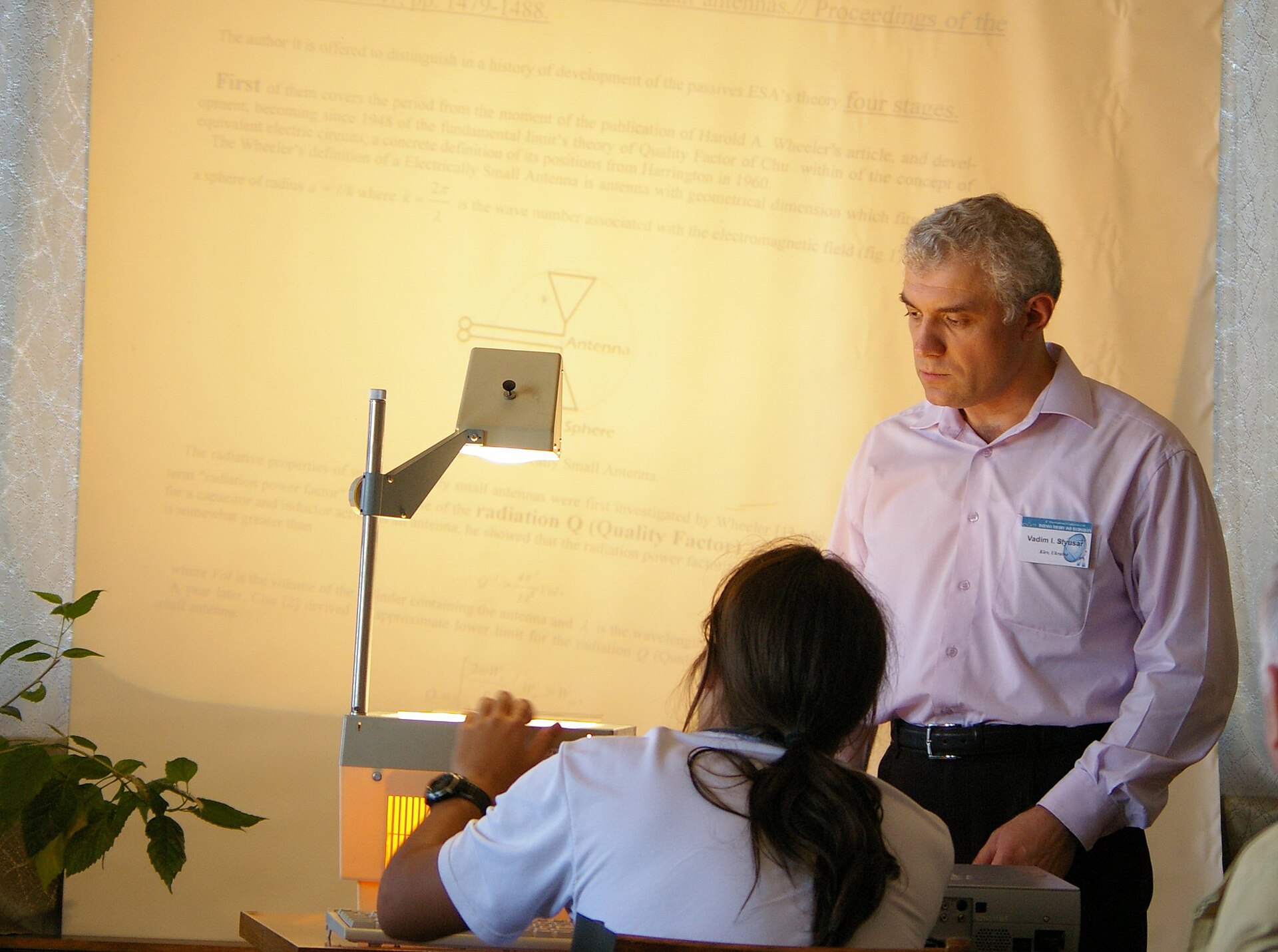
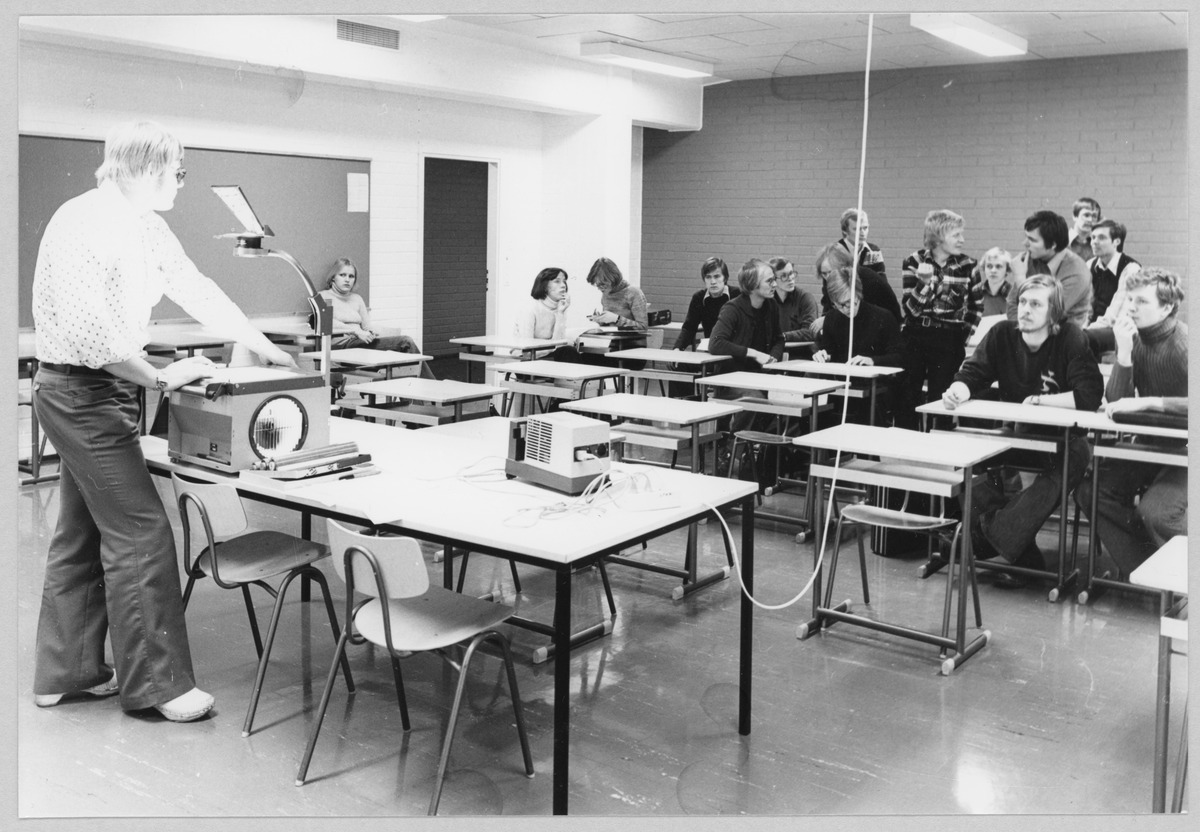
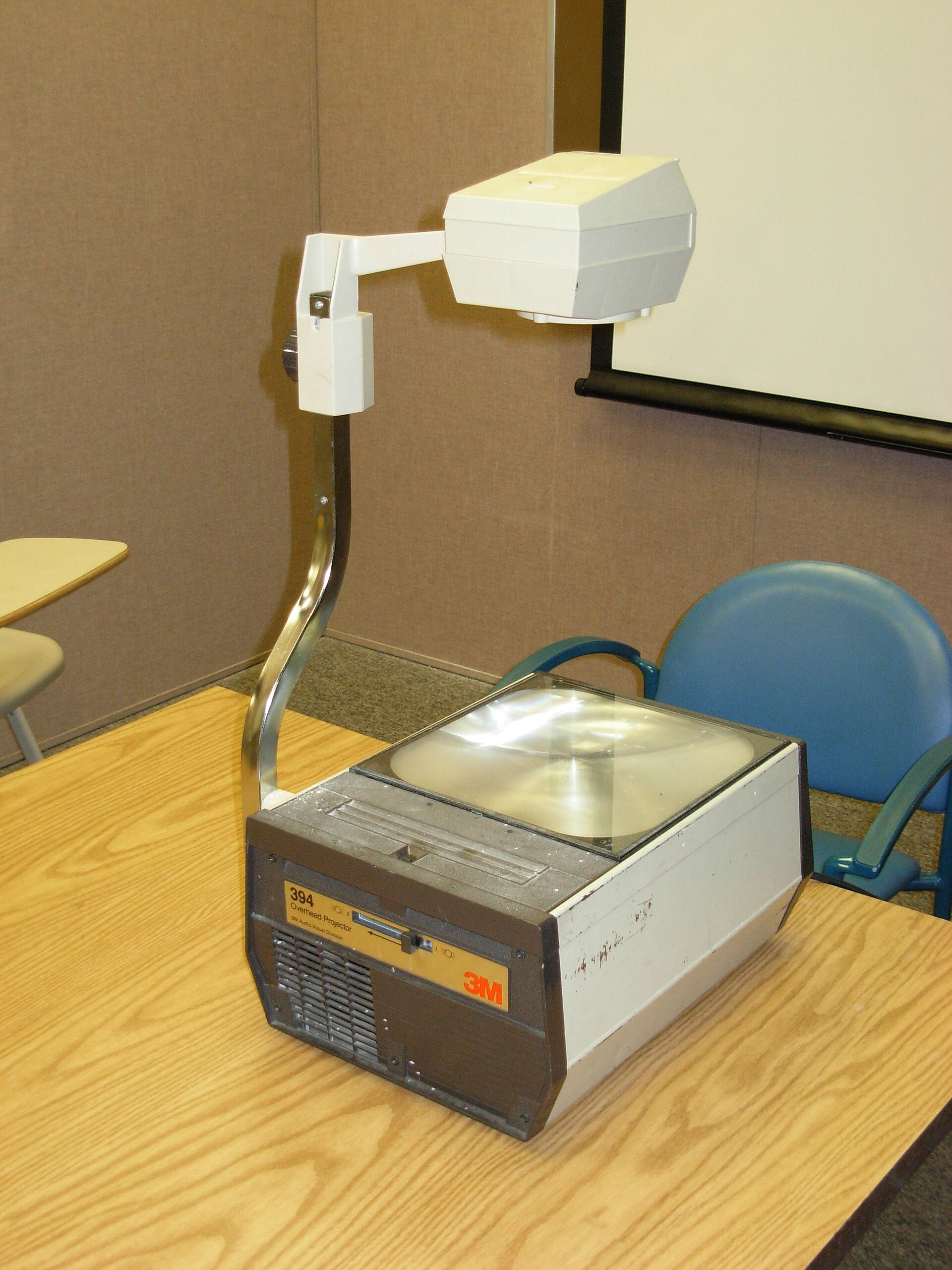
An overhead projector shines a bright lamp up through a horizontal glass stage and a lens-and-mirror arm onto a screen behind the presenter. Clear acetate transparencies sat on the stage; the operator could face the room while writing on them, or slide a sheet of paper down to reveal points one at a time. 3M’s 1962 model, which grew out of surplus transparency film from its Thermo-Fax copier process, brought the technology to mass scale with an affordable plastic Fresnel lens, and schools across North America adopted it through the 1960s. It stayed standard classroom furniture into the 1990s.
The erosion was gradual but total. Data projectors reached boardrooms in the 1990s; through the 2000s, LCD projectors wired to laptops became cheap enough for individual classrooms and made transparencies pointless — you could show live web pages, video and animation straight from a computer. Interactive whiteboards added more. 3M, the category’s defining maker, stopped selling overhead projectors in 2015. Document cameras now do most of what the overhead projector did, with a live video feed instead of an acetate sheet.
Worth remembering
- The US Army used overhead projectors for training during the Second World War, before the technology reached civilian classrooms.
- 3M's mass-market version grew out of a search for a use for transparency film that was a by-product of its Thermo-Fax copier process.
Gallery
Sources
- 3M introduced its mass-market overhead projector in 1962; it became a classroom mainstay through the 1990s, and 3M discontinued sales in 2015. EdTech Magazine
- Overhead projectors became standard in classrooms and offices and were replaced in the 2000s by document cameras, computer projection and interactive whiteboards. Wikipedia
- Overhead projectors were a classroom mainstay through the 1970s, 80s and 90s before laptop-and-ceiling-projector setups replaced them. EdTech Magazine
A graveyard tradition: leave a stone to show you came, and remembered.