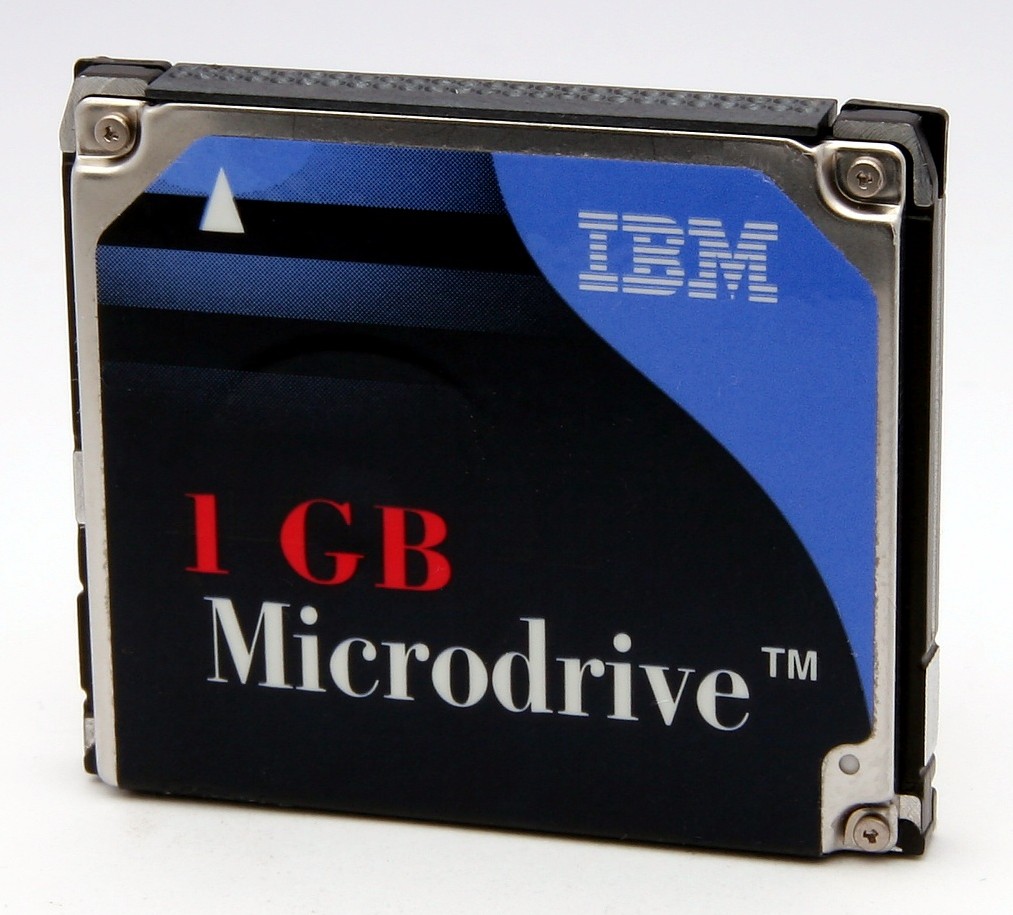
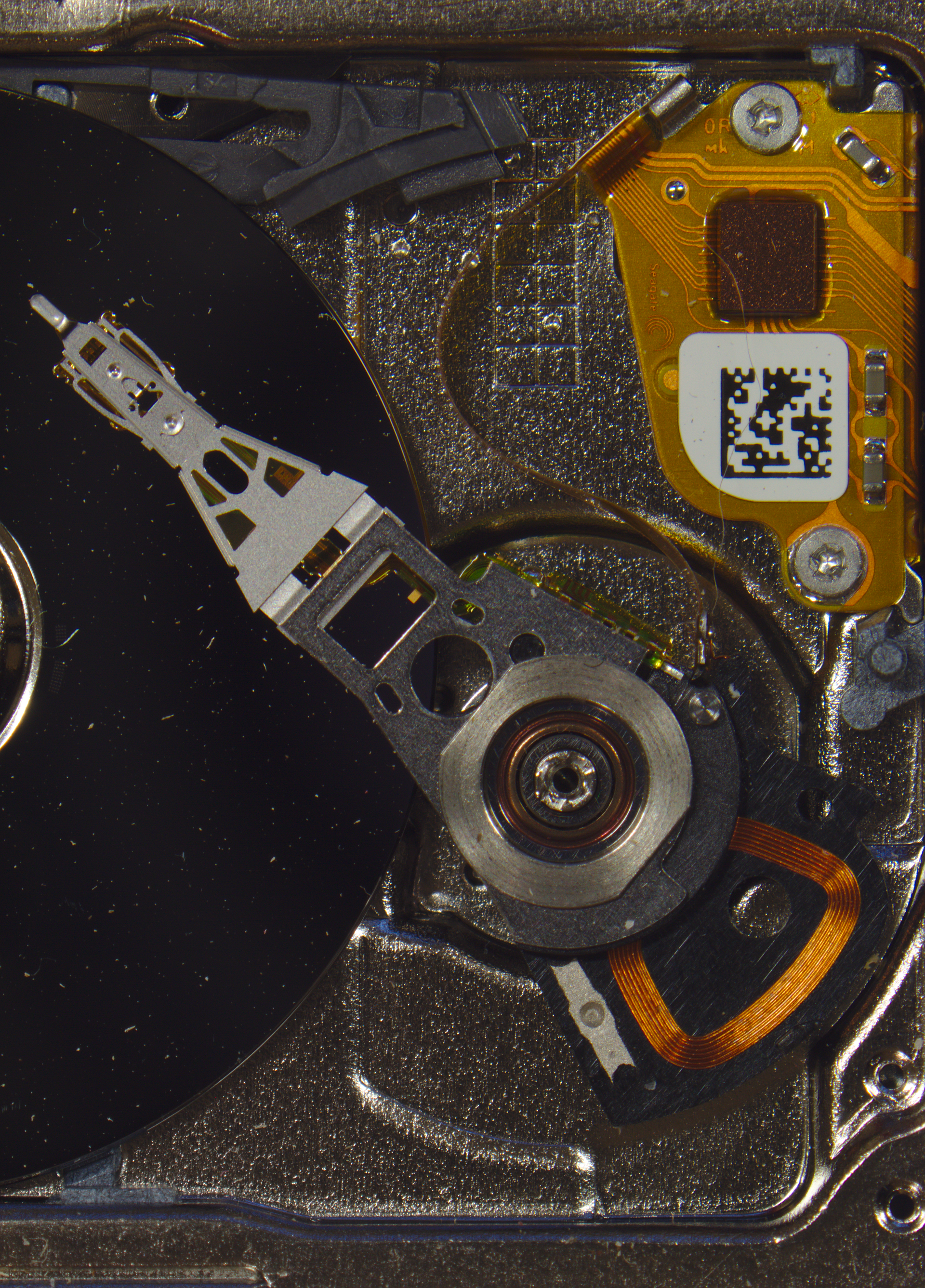
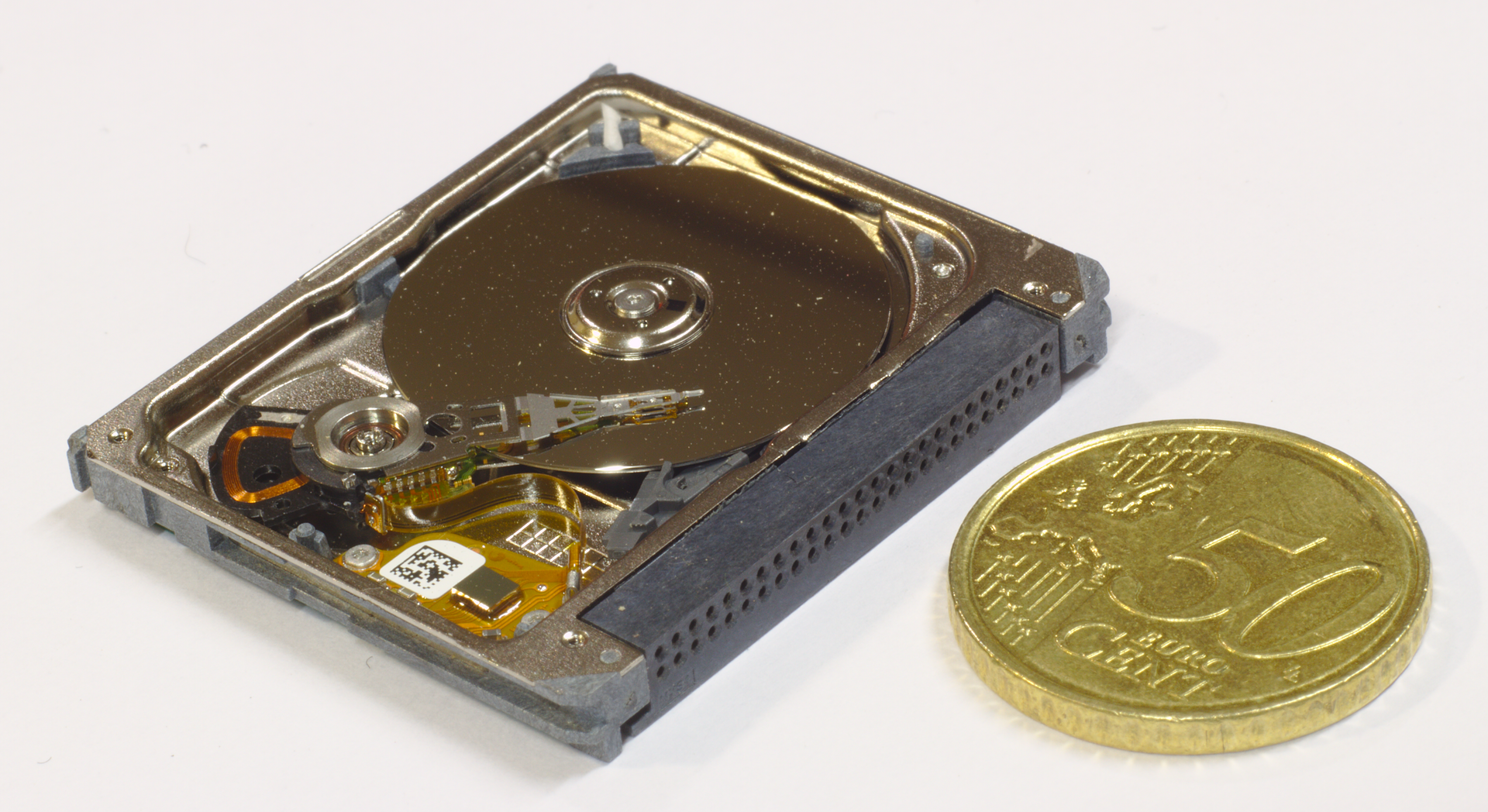
IBM’s Microdrive did something that looked absurd on paper: it put a working hard disk — a spinning platter, an actuator arm, a read/write head — into a card the size and shape of a CompactFlash slot. Announced in September 1998 and launched in June 1999 at 170 MB and 340 MB, it let digital cameras and PDAs hold far more than the flash cards of the era could manage at any sane price, and it became the drive inside the original iPod Mini and a fixture in cameras from Nikon, Casio, and Minolta. IBM sold its hard-drive division into Hitachi Global Storage Technologies around 2002-2003, and Hitachi kept pushing capacity up: 512 MB, then 1, 2, 4, 6, and eventually 8 GB models. The engineering was the point and the problem — a mechanical drive shrunk to the size of a matchbook still had a motor to spin up, a head to seek, and platters that didn’t appreciate being dropped.
Flash memory closed the gap from underneath. It had no moving parts, drew less power, survived shocks that would send a Microdrive’s head crashing into its platter, and by the mid-2000s its cost per gigabyte was falling faster than Hitachi could push mechanical capacity upward. CompactFlash cards overtook Microdrives in maximum size while getting cheaper at the same time, and by 2007 Hitachi’s 1-inch drive line was selling around 3,000 units a quarter — production stopped that year, with remaining stock clearing through 2008. The slot the Microdrive had colonized, CompactFlash Type II, outlived it: it just filled up with silicon instead of spinning metal. Dominance is not eternal — it lasts exactly as long as the next format costs more per gigabyte than yours does.
Worth remembering
- The first Microdrive held 170 MB or 340 MB on a single spinning 1-inch platter, small enough to slot into a CompactFlash Type II bay built for solid-state cards.
- Capacities grew to 512 MB, then 1, 2, 4, 6, and finally 8 GB by 2008, but flash cards in the same CompactFlash slot kept outpacing it on both size and price.
Gallery
Sources
- IBM Japan announced the 340 MB Microdrive on June 24, 1999, for ¥58,000 (about $475 USD), conforming to the CompactFlash Type II standard Wikipedia
- The first-generation Microdrive measured 1.65 x 1.42 x 0.197 inches and came in 170 MB and 340 MB capacities, fitting the CompactFlash Type II form factor used by digital cameras and PDAs Hot Chips (IBM Almaden Research Center paper)
- The Microdrive shipped inside the original iPod Mini and was adopted by camera makers including Nikon, Casio, and Minolta; IBM's hard-drive business merged into Hitachi Global Storage Technologies around 2002-2003, after which the line was sold as the Hitachi Microdrive Wikipedia
- By 2007 Hitachi halted 1-inch Microdrive production because flash-based CompactFlash cards had surpassed Microdrives in maximum capacity and, over time, became cheaper per gigabyte; quarterly sales had fallen to about 3,000 units Kiddle (Wikipedia-derived encyclopedia)
A graveyard tradition: leave a stone to show you came, and remembered.