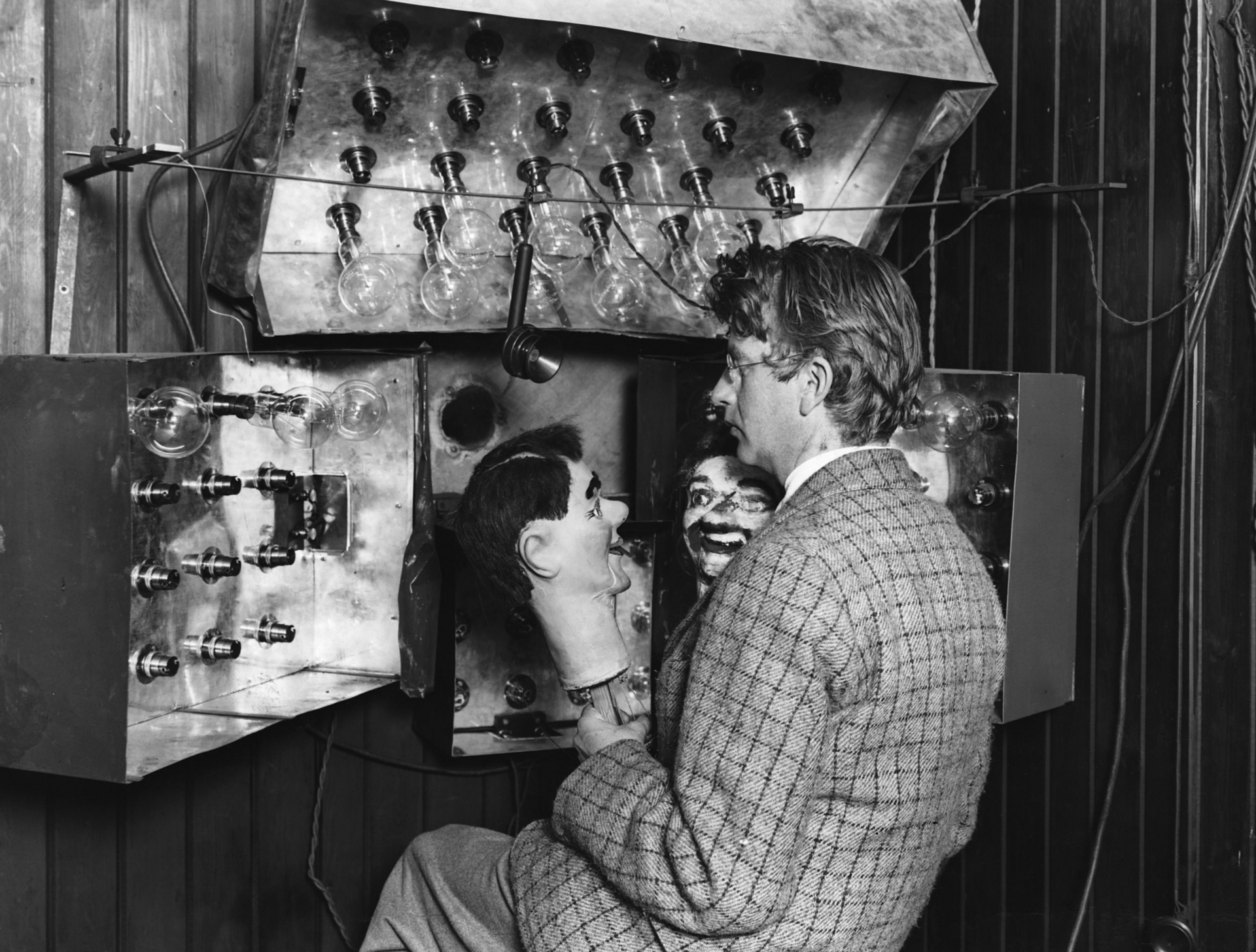
Television began as a mechanical contraption. The core idea was Paul Nipkow’s 1884 scanning disk: a spinning plate pierced with a spiral of holes, so that as it turned, each hole swept across the scene and sampled one horizontal line of light. Run a matching disk at the receiving end in step with the first, modulate a lamp behind it, and a crude moving image appears. Nipkow never built a working system, but in January 1926 the Scottish inventor John Logie Baird did, showing recognisable live moving faces to members of the Royal Institution in London — the first real television demonstration. His test subject was a dummy’s head called “Stooky Bill,” because the lamps were too hot and bright for a person to sit in front of for long.
For about a decade the mechanical system was television. The BBC broadcast a regular 30-line service from 1929, and by 1936 Baird had pushed his apparatus to 240 lines by scanning developed film on the fly. Millions of people saw their first moving picture on a screen this way: small, dim, flickering, tinged orange by the neon lamp, but unmistakably alive. It was a genuine medium, years ahead of anyone else.
Its limits were built into the hardware. Resolution and frame rate were both prisoners of a physical disk — how many holes you could fit, how fast you could spin it, how reliably you could keep two of them synchronised across miles of broadcast. Electronic scanning, using camera tubes and a cathode-ray screen with no moving parts, had none of those ceilings. The BBC settled the matter with a direct trial in 1936, alternating Baird’s mechanical 240-line system with Marconi-EMI’s electronic 405-line system week by week from Alexandra Palace. The electronic picture was sharper and steadier, and on 6 February 1937 the BBC dropped the Baird system outright. Within two years mechanical television had no broadcaster anywhere — the format that invented the medium, killed by the better way of doing the same thing.
Worth remembering
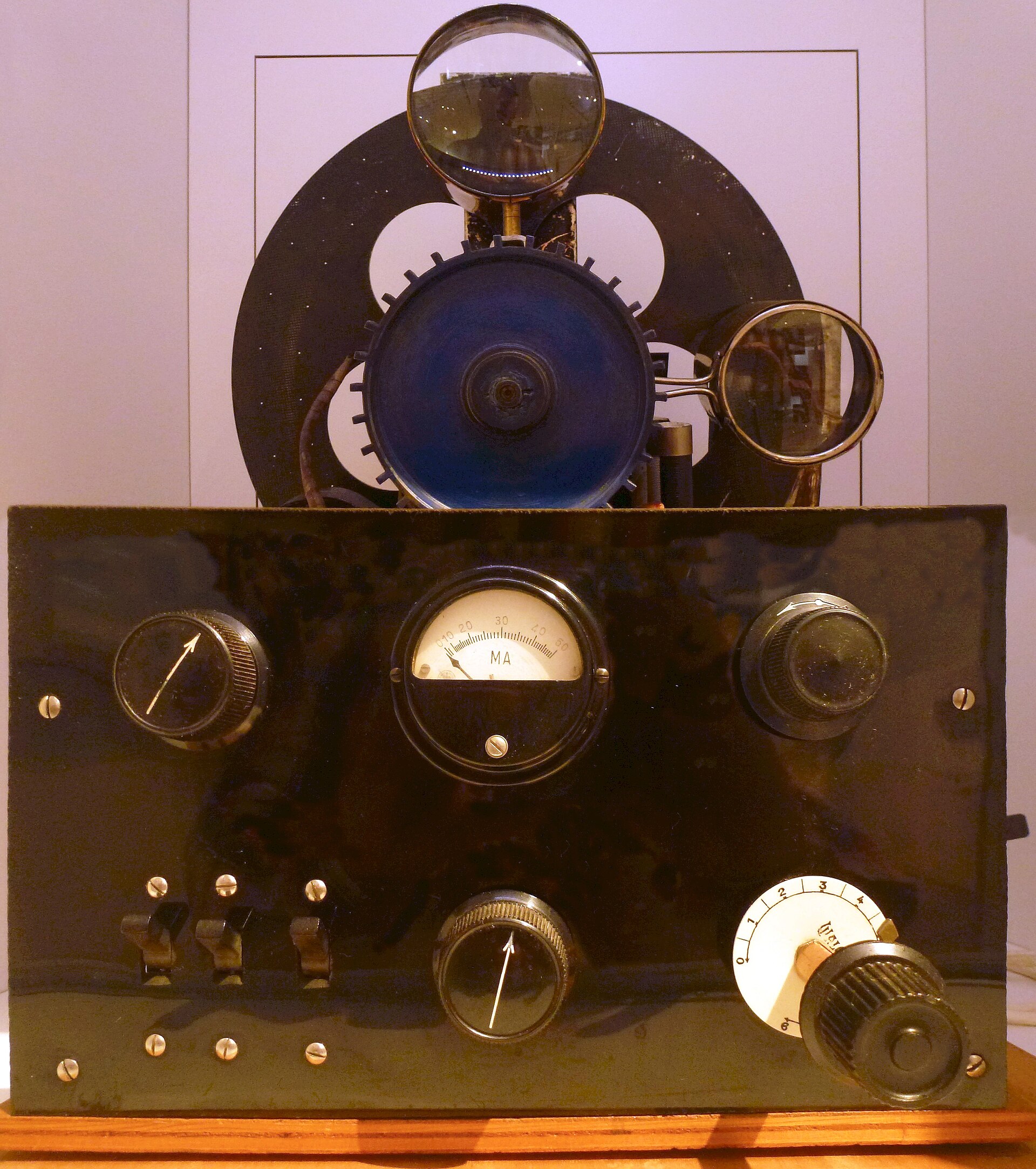
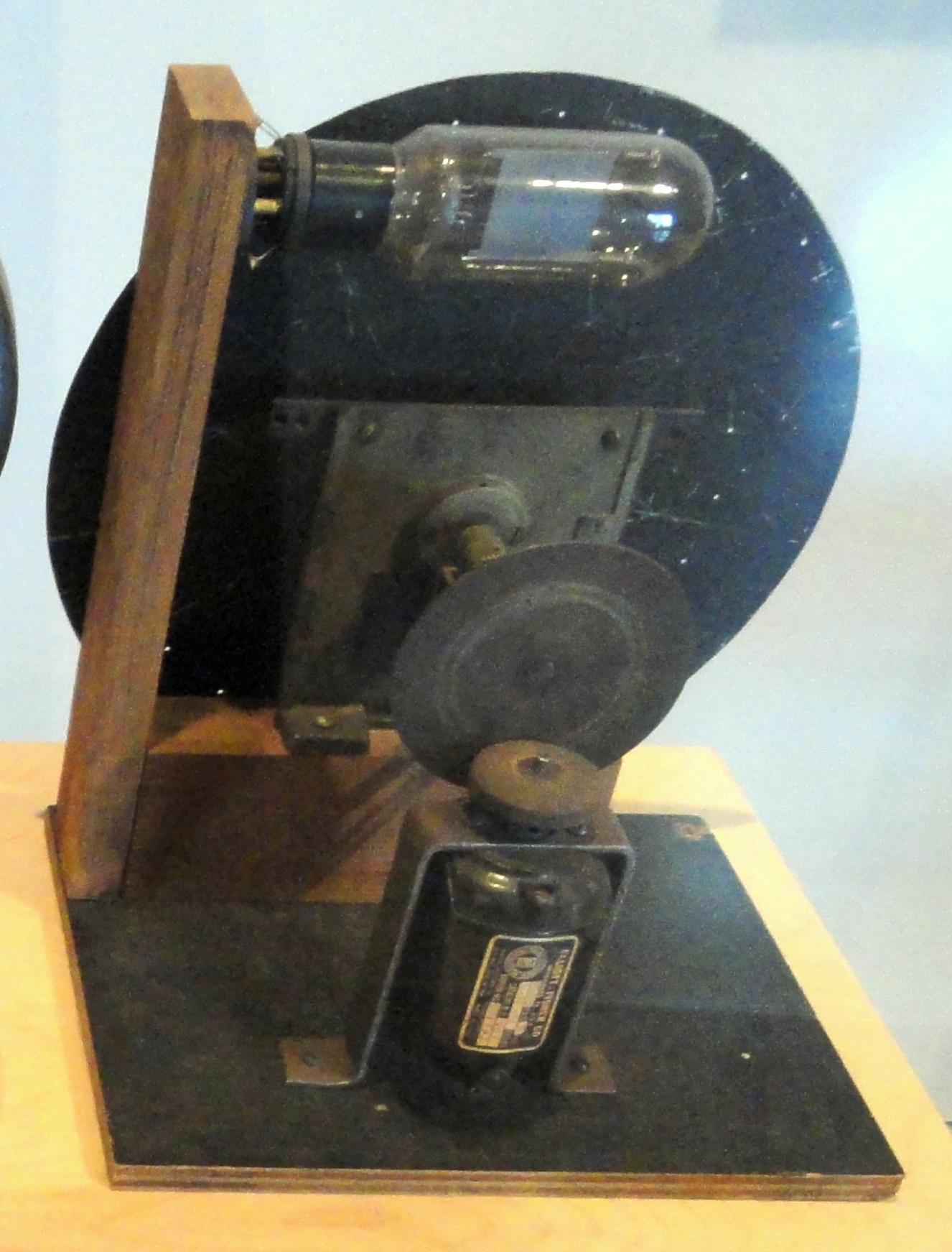
- The image was scanned by a Nipkow disk — a spinning plate with a spiral of holes, each hole sweeping one line across the picture. At 30 holes it gave 30 lines: enough to make out a face, and nothing finer. Baird's first subject was a ventriloquist's dummy, 'Stooky Bill', because the heat and glare of the early apparatus were too much for a person to sit under.
- The BBC ran a regular mechanical service from 1929. The picture was small, dim, and orange, and the disk's size and spin speed set a hard ceiling on how good it could ever get — exactly the wall that the no-moving-parts electronic systems walked straight through.
Gallery
Watch
Sources
- The BBC launched its television service on 2 November 1936 alternating Baird's 240-line mechanical system and Marconi-EMI's 405-line electronic system, and abandoned the Baird system on 6 February 1937 Science and Media Museum
- Paul Nipkow received a German patent for the spiral-hole scanning disk in 1884–85; mechanical television became obsolete as electronic cathode-ray systems proved superior in the 1930s Encyclopaedia Britannica
A graveyard tradition: leave a stone to show you came, and remembered.