
GeoCities began in November 1994 as Beverly Hills Internet, a company offering free web space organized around a conceit: pick a “neighborhood” that matched your interests, and get a homepage inside it, next to strangers with the same interests. Renamed GeoCities in December 1995, the model spread fast because it solved a real problem — in the mid-1990s, almost nobody who wanted a personal website could get one without paying for hosting and knowing what an FTP client was. GeoCities gave anyone a slice of the web, tiled background and blinking text included. By 1999 it was the third-most-visited site on the internet, behind only AOL and Yahoo.
Yahoo bought it in January 1999 for $3.6 billion in stock, near the peak of the dot-com bubble, folding tens of millions of homepages into its portfolio. The garish, ungoverned, deeply personal character of the site didn’t survive contact with a public company much past that: GeoCities became a Yahoo product line, its wilder edges managed down, its growth eventually overtaken by MySpace and then Facebook, both of which offered the same impulse — publish yourself — with less HTML and less friction.
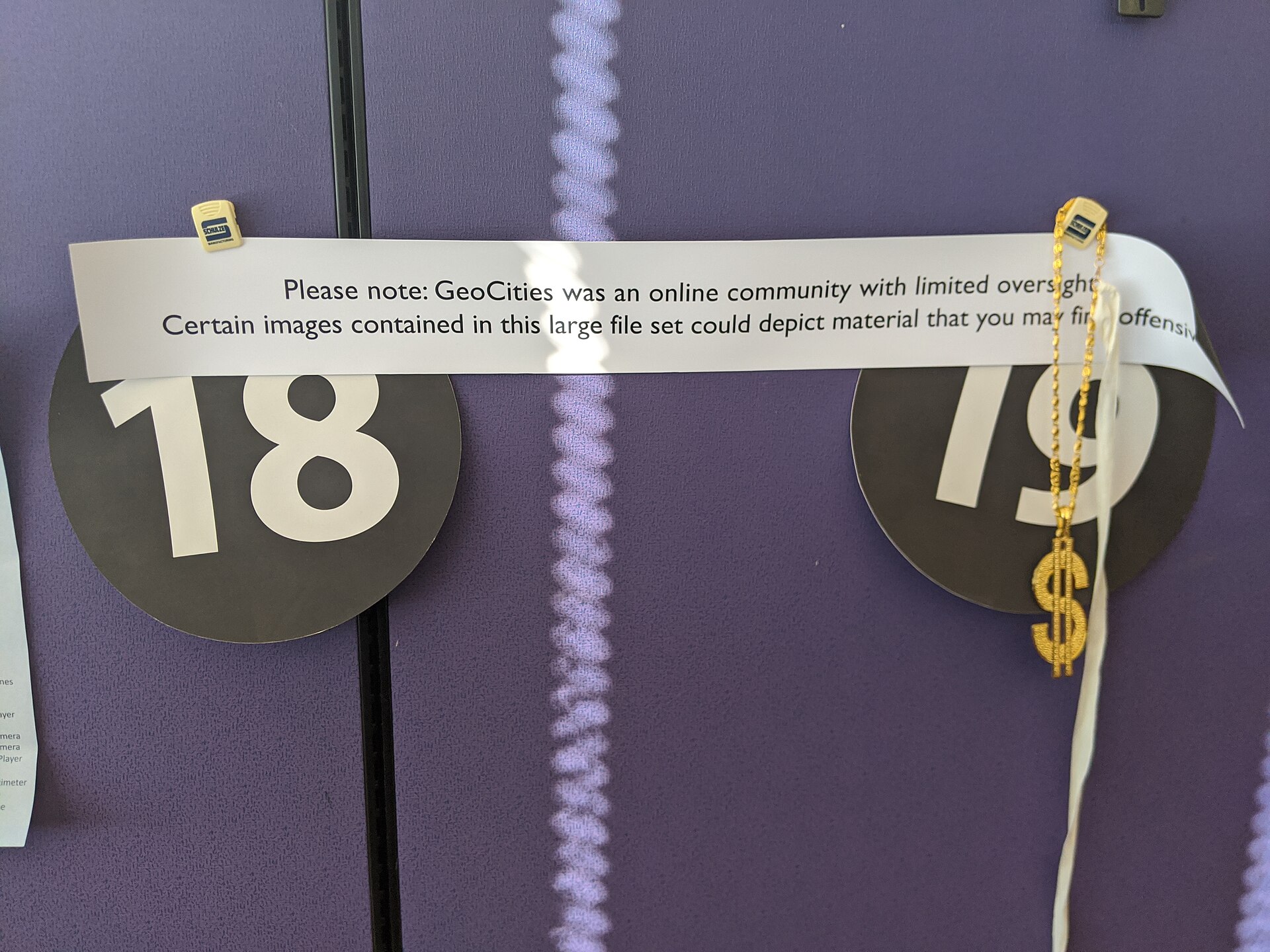
Yahoo announced in April 2009 that it would close the US GeoCities service; it went dark on October 26, 2009, taking down millions of pages with no official archive. Yahoo did not preserve the content itself. Archive Team and the Internet Archive spent the months before the deadline scraping what they could, eventually saving roughly 900 gigabytes of pages, images, and guestbooks on their own initiative — a scramble to preserve a graveyard before the site hosting it was demolished.
Yahoo Japan, which ran its own separate GeoCities Japan service, kept it running for almost another decade before closing it on March 31, 2019. By then the US version had been gone for close to ten years, and the version everyone remembered — third-most-visited site on Earth, worth $3.6 billion, home to millions of strangers’ first websites — had already been dead for a decade. Being acquired for billions at the top of the market bought it no more time than any other dead technology gets.
Worth remembering
- Every new member picked a themed 'neighborhood' to live in — SiliconValley for tech pages, Hollywood for entertainment, Area51 for sci-fi, Heartland for family sites — and got a street address inside it, like 'www.geocities.com/SiliconValley/Lab/1234'.
- The aesthetic was unmistakable: tiled backgrounds, marquee text, MIDI files that autoplayed, animated 'under construction' GIFs, hit counters, and guestbooks — built by people who had never had a publishing platform of their own before.
- Before the October 2009 shutdown, Archive Team and the Internet Archive raced to scrape as much of GeoCities as they could reach, eventually preserving on the order of 900 gigabytes of pages, images, and guestbooks that Yahoo itself was not archiving.
Gallery

Sources
- GeoCities launched in November 1994 as Beverly Hills Internet and was renamed GeoCities on December 15, 1995; users chose a themed 'neighborhood' (e.g. SiliconValley, Hollywood, Area51) to host a free homepage; at least 38 million pages existed before termination Wikipedia
- By 1999 GeoCities was the third-most-visited site on the World Wide Web, behind AOL and Yahoo! Wikipedia
- Yahoo announced it would acquire GeoCities in a stock swap valued at $3.6 billion, one of the largest deals of the dot-com boom The Washington Post
- Yahoo announced in April 2009 that it would shut down the US GeoCities service; the service closed on October 26, 2009 Computerworld
- GeoCities Japan, operated separately by Yahoo Japan, was the last surviving version of the service and was shut down on March 31, 2019 — nearly a decade after the US shutdown Engadget
- Archive Team ran the GeoCities Project from April to October 2009 to scrape and preserve as much of GeoCities as possible before Yahoo's shutdown, ultimately releasing an archive of roughly 900GB (compressed to about 641GB) as a torrent Archive Team wiki
A graveyard tradition: leave a stone to show you came, and remembered.