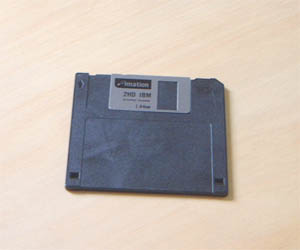
IBM introduced the floppy disk in 1971 — the 8-inch 23FD, nicknamed the “Minnow” — and for two decades after it was how data left the computer. You saved your work to a thin magnetic disc in a plastic sleeve, slid it into your pocket, and carried your files to another machine — software shipped on them, students handed in essays on them, whole companies ran on shoeboxes of them. At the mid-1990s peak some five billion were in circulation.
Then storage outgrew it on every axis at once. A single CD held hundreds of floppies’ worth of data; a USB flash drive held thousands and never wore out; the cloud meant you didn’t carry files at all. Capacities that once seemed generous — 1.44 megabytes — became smaller than a single photograph. Sony, the last major manufacturer, stopped making 3.5-inch floppies in 2011. The disk itself is gone, but it achieved a strange immortality: it survives as the “Save” icon on screens everywhere, a picture of an object that a whole generation has tapped a thousand times and never once held.
Worth remembering
- The 3.5-inch 'floppy' wasn't floppy — a rigid plastic shell hid the still-flexible magnetic disc inside, but the old name stuck.
- A 1.44 MB floppy holds less than a single modern smartphone photo — yet for two decades it was how the world moved its files.
The people
-
David L. Noble — Led IBM's original 8-inch floppy team, 1918–2004
Turned a flexible oxide-coated disc into IBM's first removable mainframe storage in 1971.
-
Alan Shugart — Floppy-drive pioneer, 1930–2006
Drove the floppy from mainframe loader to mass-market drive; later co-founded Seagate.
Gallery
Watch
Further reading
Sources
- Floppy disk introduced by IBM in 1971; Sony ended production in 2011 Wikipedia
- Sony to halt floppy disk sales in 2011 Computerworld
- IBM introduced the first 8-inch floppy disk drive in 1971 (the 23FD 'Minnow'), originally a read-only device for loading mainframe microcode. IBM
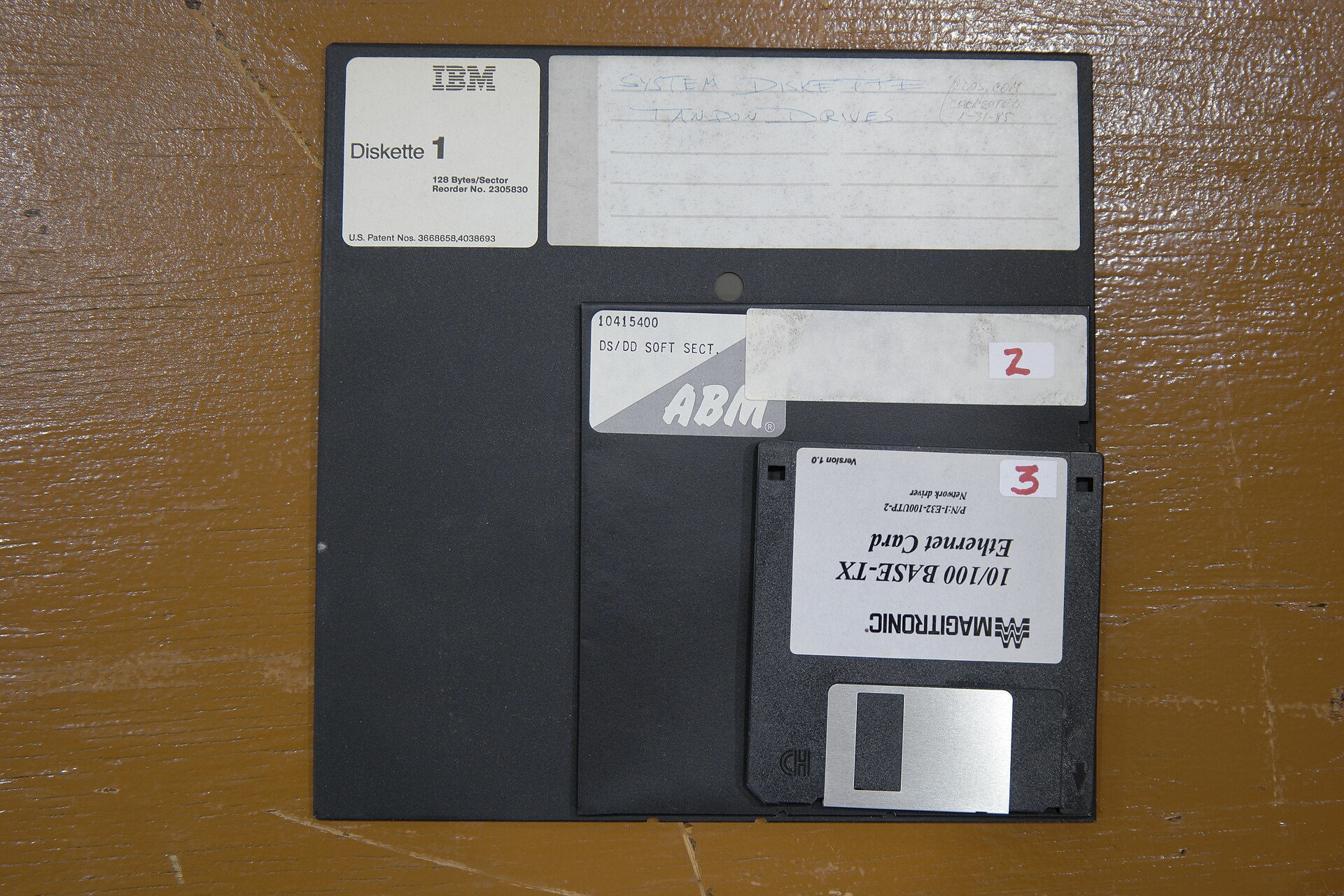
- The floppy disk passed through 8-inch, 5.25-inch, and 3.5-inch generations before being displaced by optical discs, USB drives, and networked storage. Britannica
A graveyard tradition: leave a stone to show you came, and remembered.