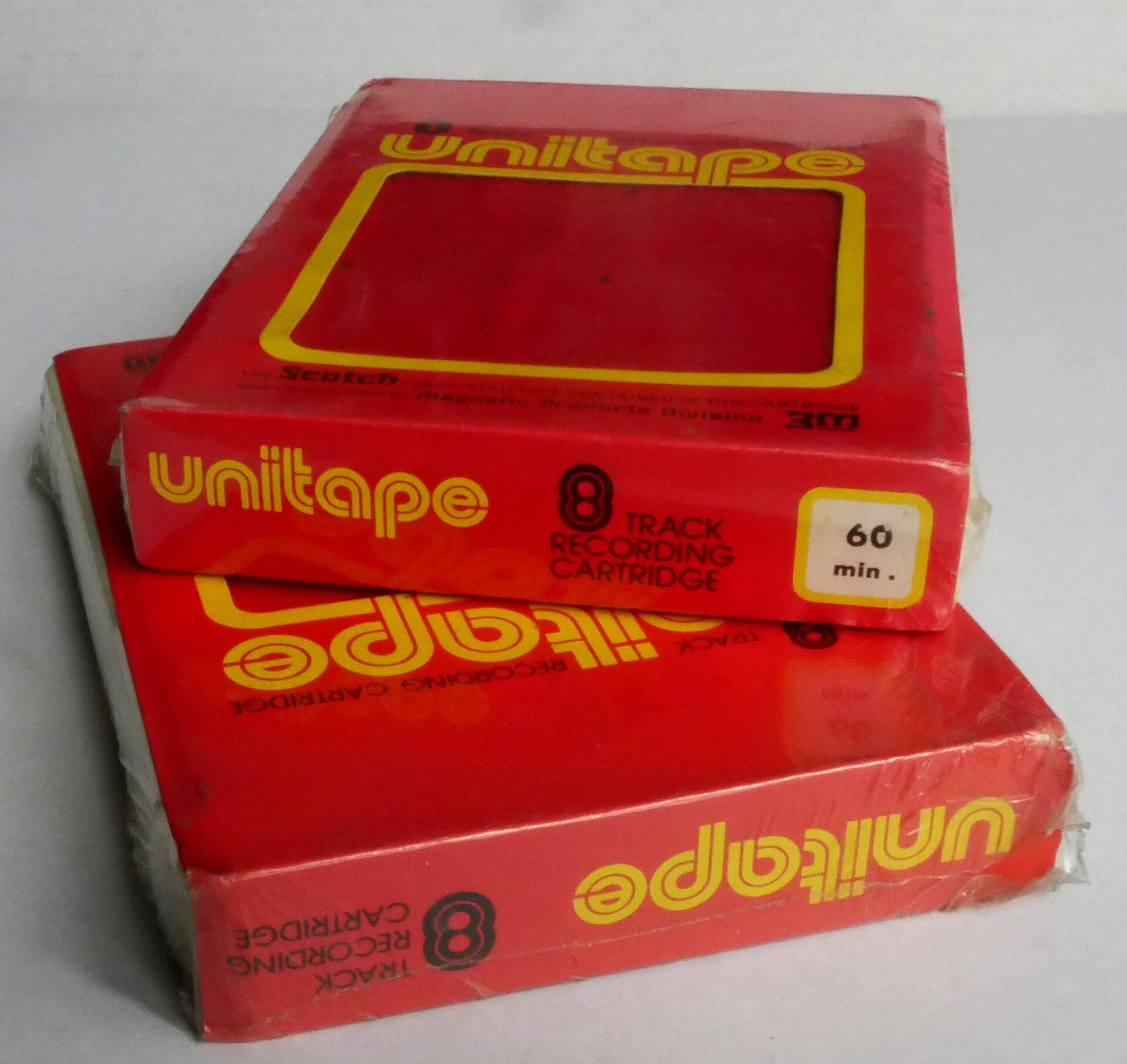
William P. Lear's Stereo 8 cartridge: the car-radio format that clunked between programs mid-song and lost to the smaller cassette.
Born
1964 CE
Died
1988 CE
Lived
24 years
Dead for
38 yrs
At its peak
Dominant U.S. car audio format of the early-to-mid 1970s
Cause of death
Replaced
Replaced by
The compact cassette
The Obituary
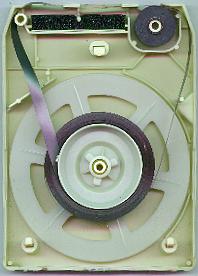
The Stereo 8 cartridge, developed by William P. Lear and introduced in 1964 before Ford pushed it into 1966 Mustang, Thunderbird, and Lincoln models, made recorded music a feature of the American automobile. Its endless loop of tape ran through four stereo “programs,” and the player’s mechanical clunk as it switched programs often interrupted a song. The compact cassette was smaller, rewindable, and recordable, and as cassette players improved through the 1970s the 8-track lost ground fast. Record labels stopped issuing them by the early 1980s, and U.S. retail sales ended around 1988.
Worth remembering
A loud 'ka-chunk' announced the player switching tracks, sometimes splitting a song in half.
Backed by Ford and RCA, it became the dominant car audio format of the early 1970s.
Gallery
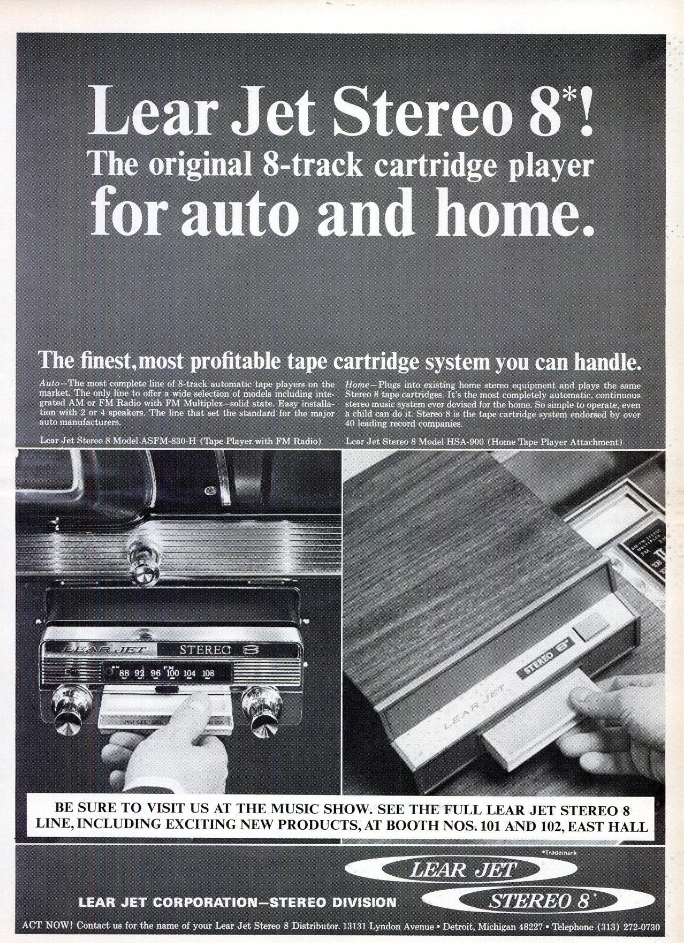
Inside of an 8-track tape cartridge showing the single tape reel mechanismUser Isis on en.wikipedia · CC BY-SA 3.01966 Billboard advertisement for the Lear Jet Stereo 8 cartridge player for car and homePublic domain
Watch
The 1975 Pioneer HR-99 8-track recorder — Techmoan
Sources
The Stereo 8 cartridge was introduced in 1964 and offered in 1966 Ford models Wikipedia
8-track sales collapsed in the late 1970s; retail ended by the late 1980s Britannica
William P. Lear developed the Stereo 8 (8-track) cartridge for automobiles in the mid-1960s, building on his career in vehicle electronics and the Learjet. Britannica
Ford offered factory-fitted 8-track players as an option in 1966 Mustang, Thunderbird, and Lincoln models, the partnership that launched the format in cars. Jalopnik
A graveyard tradition: leave a stone to show you came, and remembered.
Buried nearby — by shared fate or a neighbouring lifespan.