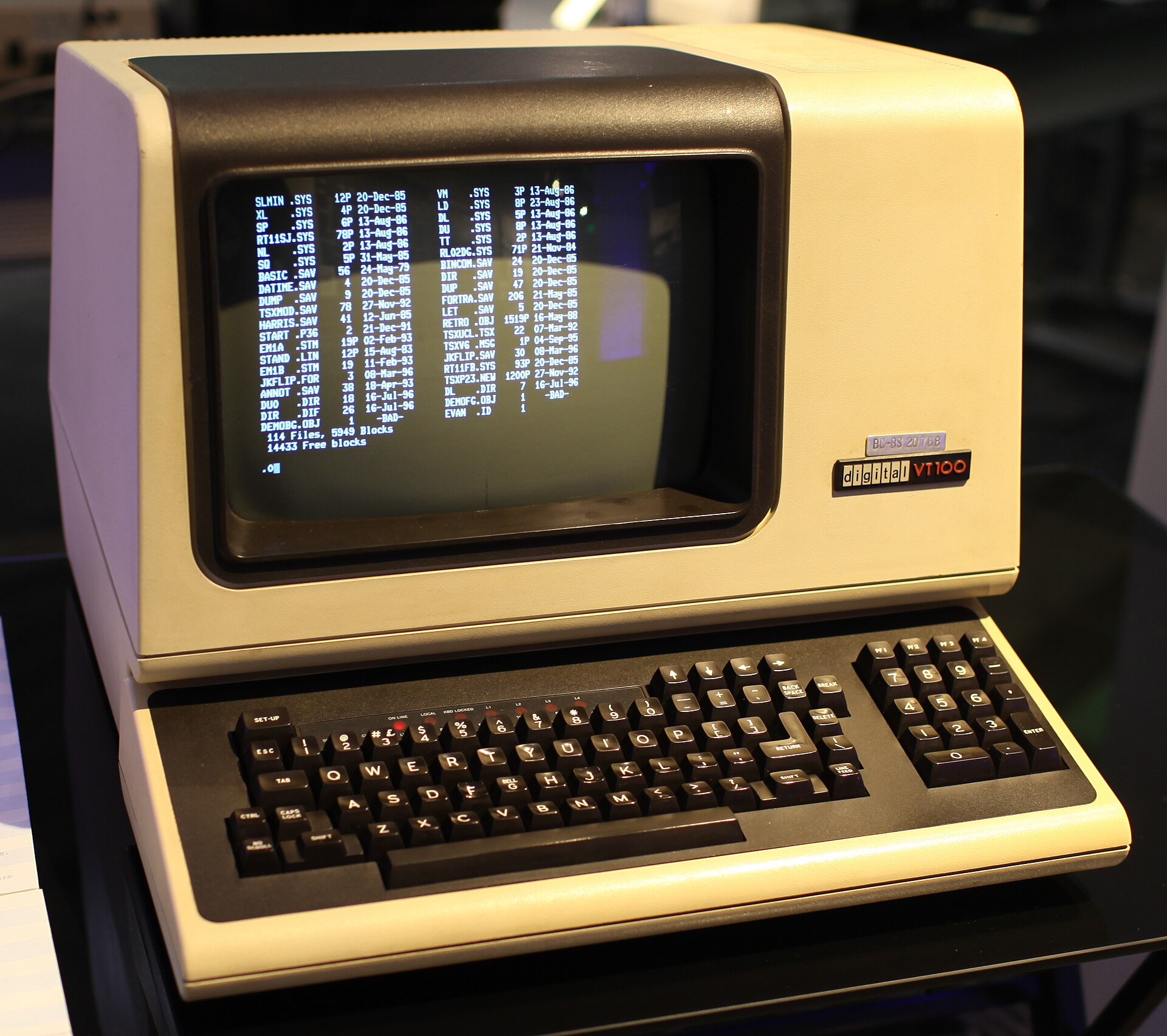
A dumb terminal was a keyboard and CRT screen with no local processing beyond sending keystrokes and displaying characters. All computation happened on a central mainframe or minicomputer; the terminal was purely a window. Time-sharing in the early 1970s made this economical, letting one expensive computer serve dozens or hundreds of users. DEC’s VT100, launched in 1978, became the canonical example, implementing ANSI escape codes that rivals soon adopted; DEC sold over six million terminals in the VT series and held about 43% of the async terminal market in 1980.
The IBM PC arrived in 1981 and the economics inverted. A personal computer gave every desk its own processor for comparable cost to a terminal plus a time-share allocation. Displacement was slow at first, as enterprise IT moved cautiously, but through the late 1980s and 1990s networked PCs replaced terminal clusters at scale — a PC running emulator software could impersonate a VT100 while also running local programs. By the mid-1990s new terminal installations were rare. The idea persists in thin clients and browsers, but the physical dumb terminal — glass, keyboard, one serial cable — was gone.
Worth remembering
- DEC's VT100 implemented ANSI escape codes for cursor control — a standard so durable that Linux and macOS terminal apps still emulate a VT100 today.
- A 1980 office might wire hundreds of terminals to a single minicomputer; if the central machine went down, every desk in the building went dark at once.
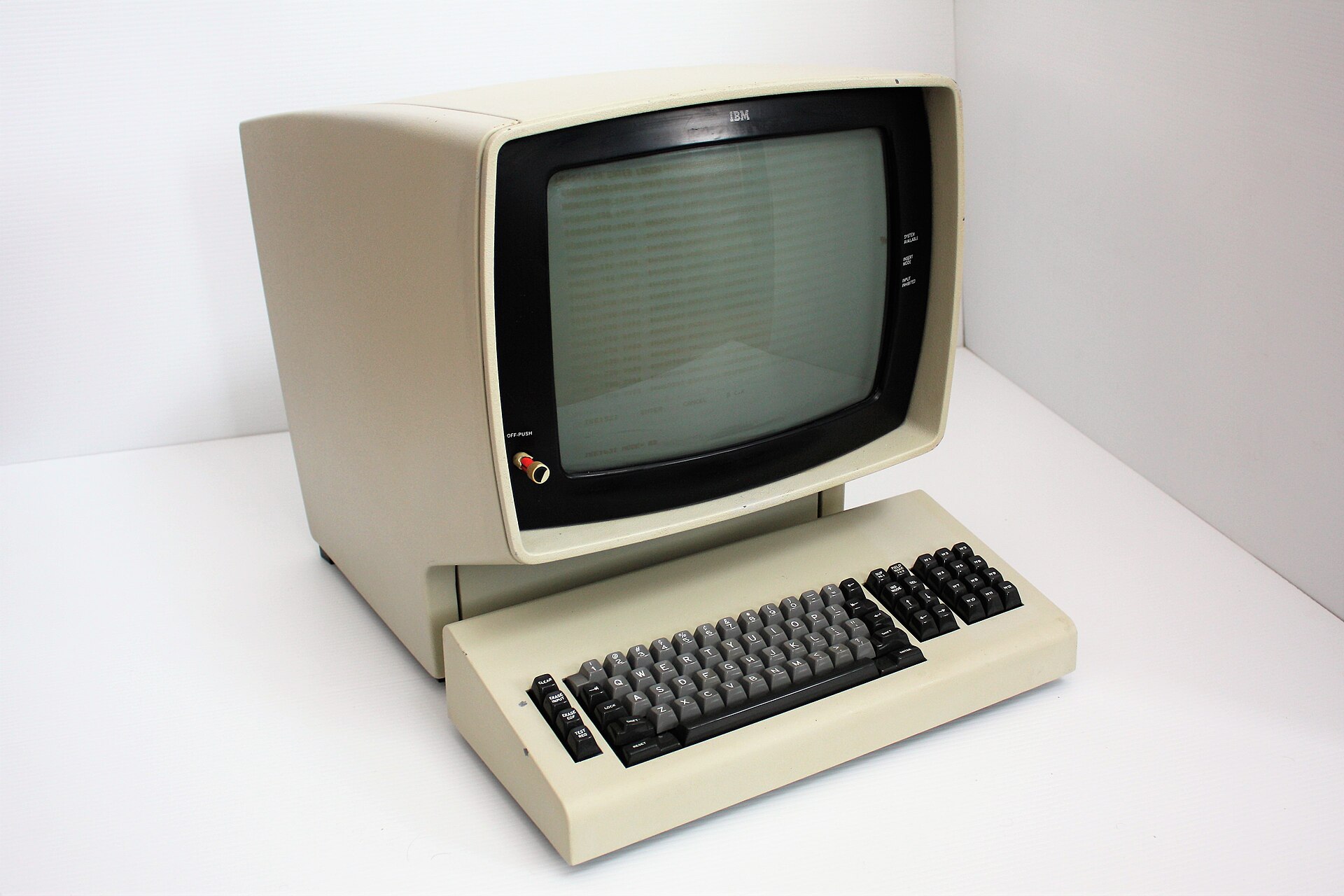
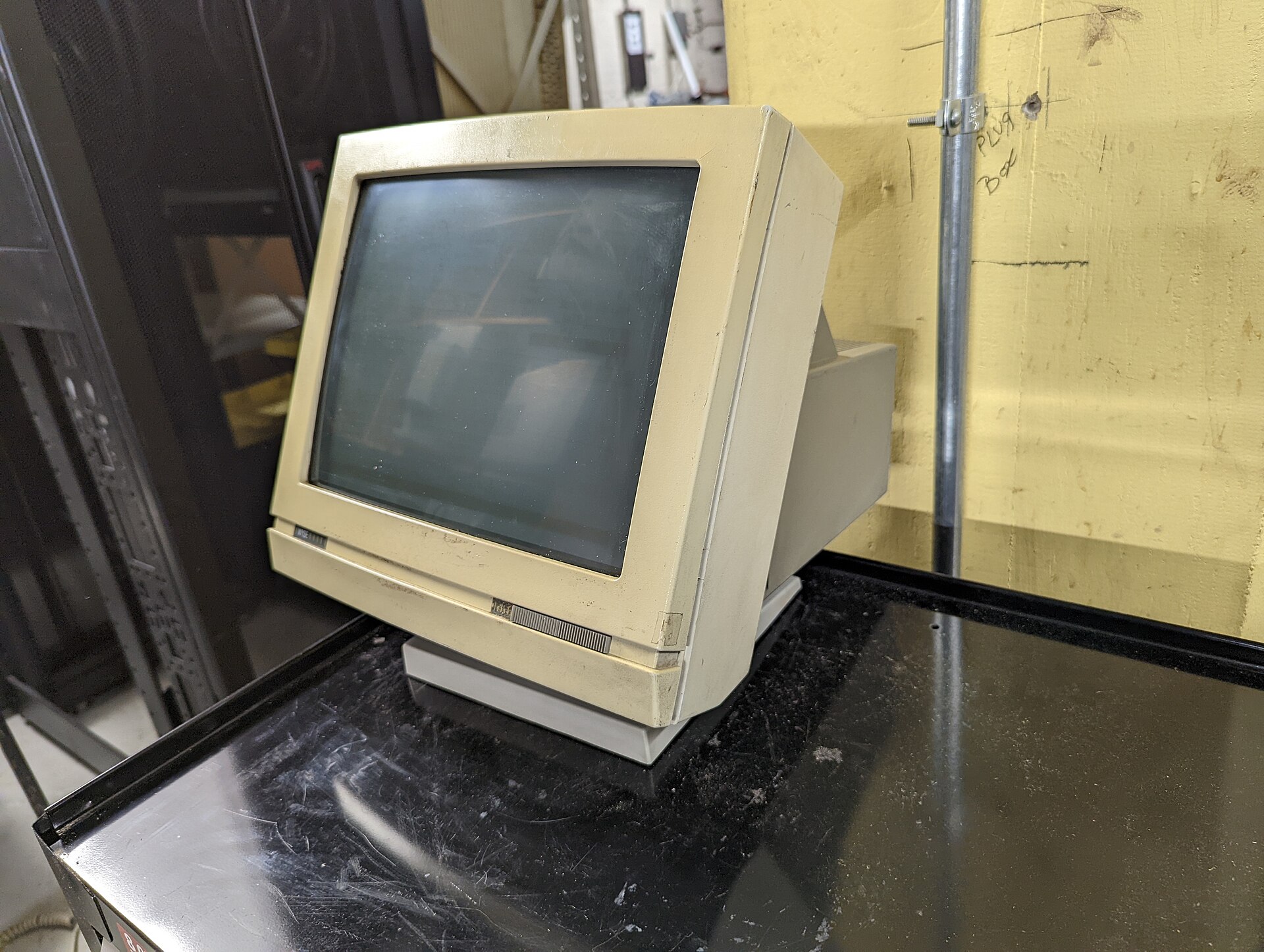
Gallery
Sources
- The classic display-terminal era began in the early 1970s; terminals were displaced by networked PCs slowly after 1985 and rapidly through the 1990s. Wikipedia
- DEC's VT100, introduced in 1978, was extremely successful; over six million terminals were sold in the VT series. Columbia University
- The VT100 introduced ANSI escape codes for cursor control and made DEC the leading terminal vendor of its time. Wikipedia
A graveyard tradition: leave a stone to show you came, and remembered.