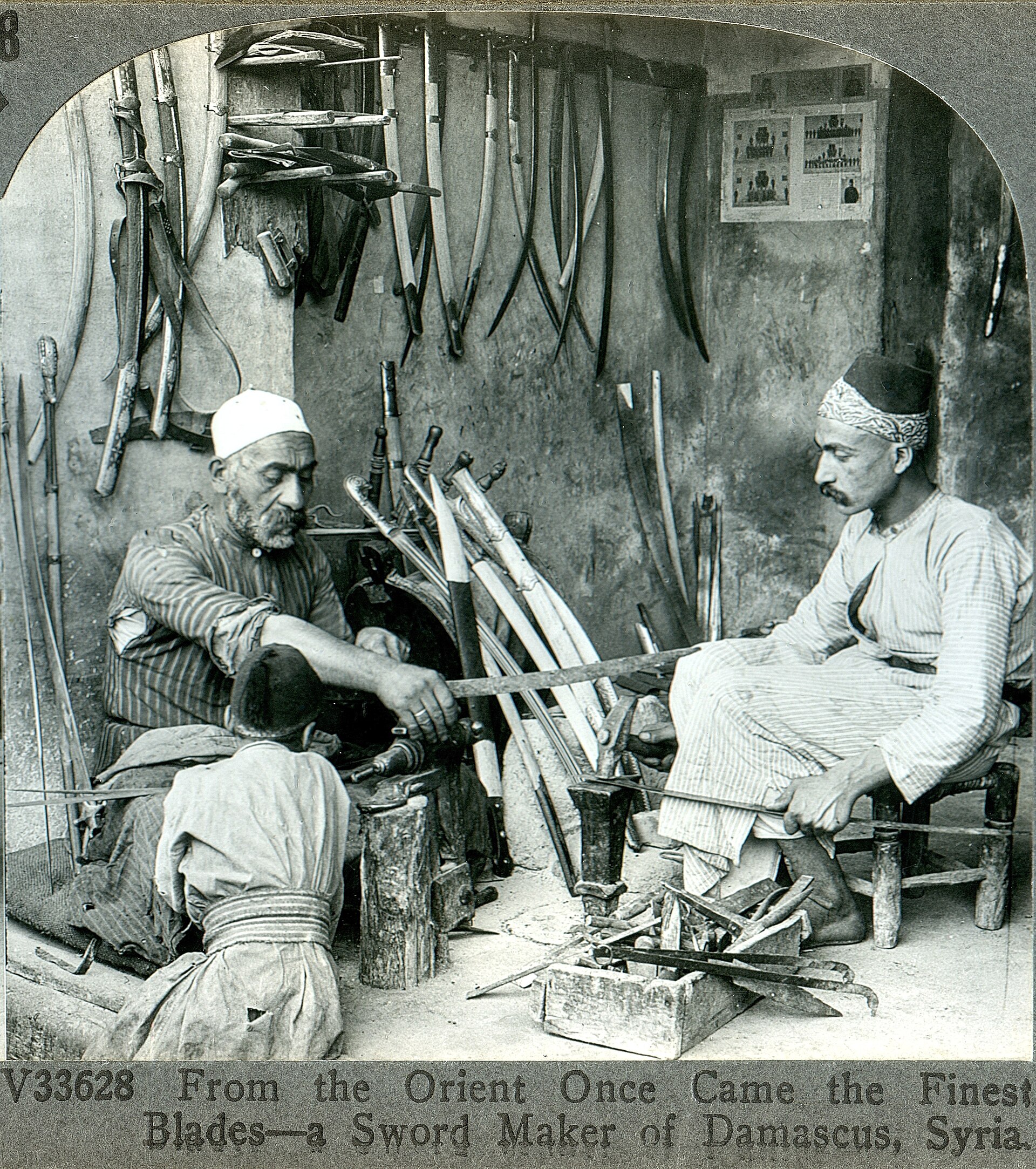
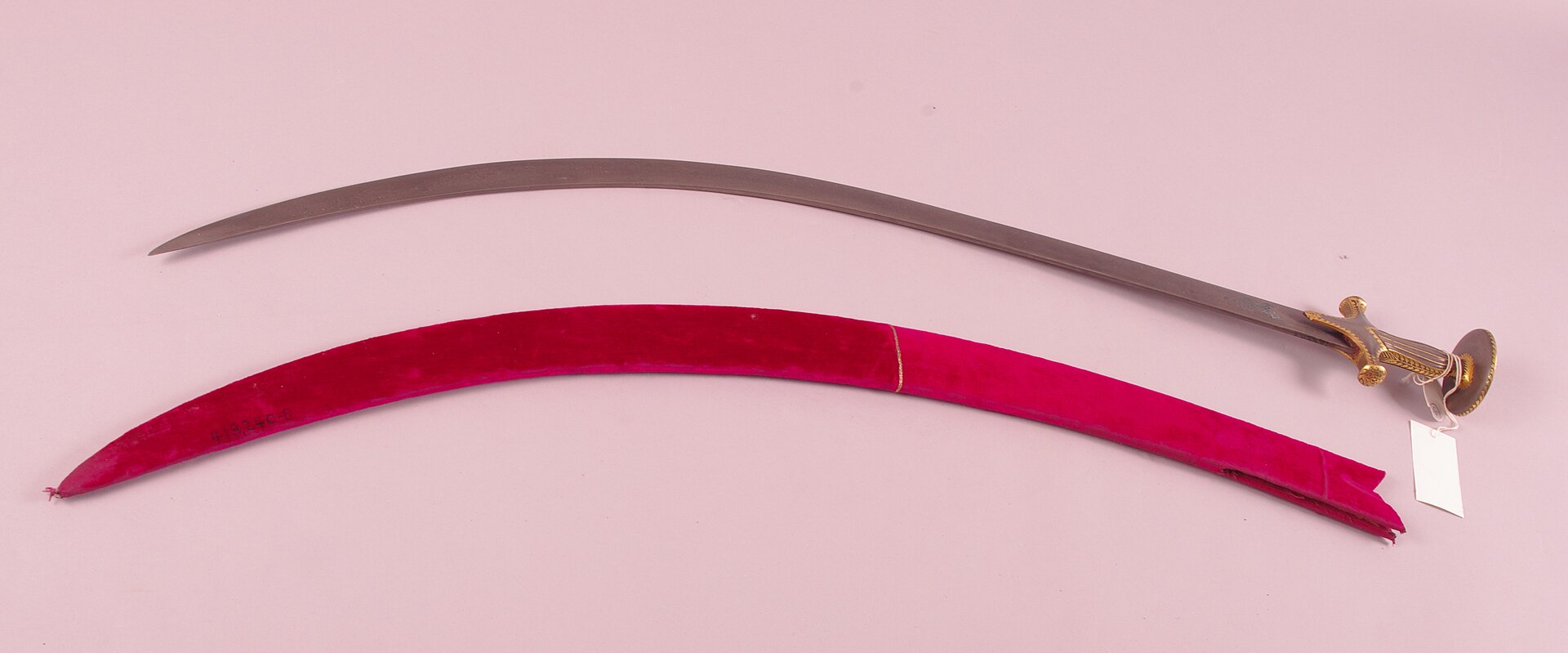
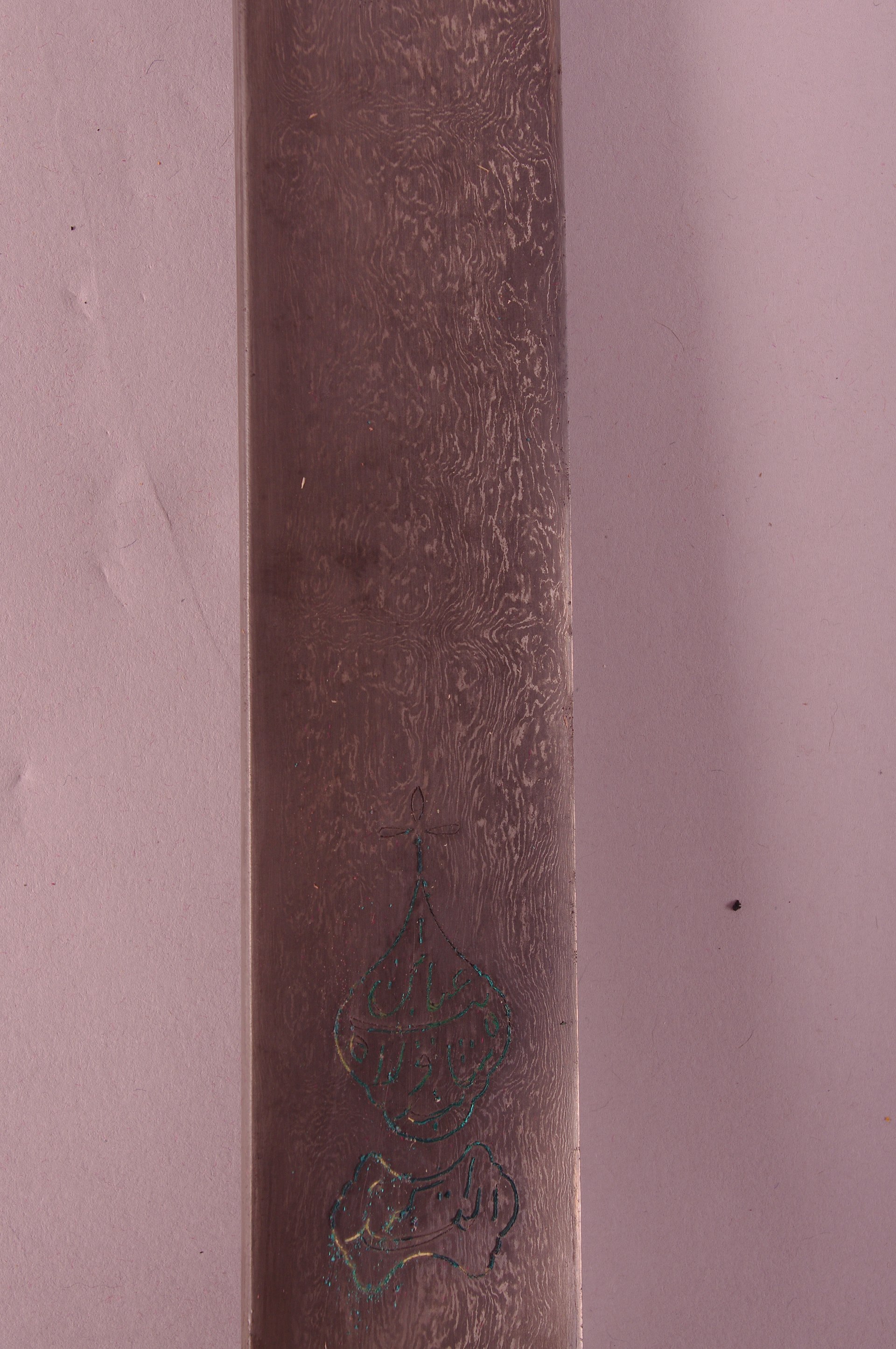
Damascus steel blades were forged from wootz — ingots of high-carbon crucible steel produced in South India and shipped west along Arabian Sea trade routes from around the 3rd century CE. Damascus itself was a forging and trading hub, not the source; the steel came from Golconda and other South Indian centers, carrying trace elements — vanadium, tungsten — picked up from local ores. Under specific forging and thermal-cycling conditions, those trace elements caused carbide particles to cluster into bands, producing the characteristic “watered” pattern: not applied decoration, but a structure already present in the metal, drawn out by acid etching.
The technique never survived as a written recipe. It was carried in the ore sources, the trade routes, and the hands of smiths who inherited a process without a full theoretical account of why it worked. When European colonial trade restructuring disrupted the India-Middle East supply chain and the specific ore deposits carrying the necessary trace elements were depleted, the finest damascene patterns stopped appearing — probably by 1750, with lower-quality wootz blades trailing off into the early 19th century. By then the chain of ore, trade, and transmitted craft that had produced it for over a thousand years was broken.
In 1998, J.D. Verhoeven and Alfred Pendray published a chemical and metallurgical account of the mechanism: microsegregation of trace carbide-forming elements combined with repeated thermal cycling during forging. It is a real answer to a real mystery — but it is a laboratory reconstruction of a mechanism, using modern steel deliberately doped with the right trace elements, not a revival of the historical wootz industry. No commercial production chain resumed. What is sold today as “Damascus steel” is almost always pattern-welding — folding and forge-welding together different steels, a technique popularized in the 1970s that produces a bold, engineered pattern by a completely different route. It looks the part. It is not the same steel, made the same way, by the people who could once make it and then, for reasons partly known and partly not, could not.
Worth remembering
- The pattern was never decorative overlay. It was already in the metal — a banded microstructure formed during smelting and forging — and etching with a mild acid only revealed what was there. This is the technical fact that separates true wootz Damascus from every modern knife sold under the same name.
- Arab poets and traders used the term muhannad — 'Indianized' — for genuine Indian wootz blades, prizing them above locally forged iron centuries before Damascus lent the steel its European name.
The people
-
J.D. Verhoeven — Metallurgist who reconstructed the mechanism
With bladesmith Alfred Pendray, published the chemical explanation for the watered pattern in 1998 — trace carbide-forming elements plus specific thermal cycling. Proved how the dead process worked. Did not bring it back as a craft or an industry.
Gallery
Sources
- Damascus steel blades were forged from wootz ingots imported from South India (present-day Telangana, Tamil Nadu, Karnataka, Kerala) from roughly the 3rd century CE through the 17th-18th centuries; Damascus was a trading and forging hub, not the source of the ore or the crucible process Wikipedia
- The date of the last blades produced with the highest-quality damascene pattern is uncertain but probably around 1750; it is unlikely low-quality damascene blades were produced later than the early 19th century; the decline is attributed to disrupted India-Middle East trade routes and depletion of ore sources carrying trace tungsten/vanadium needed for the characteristic banding Wikipedia
- Wootz steel was produced by melting iron with carbon-bearing plant matter in sealed clay crucibles; J.D. Verhoeven and A.H. Pendray chemically analyzed extant Damascus blades in the late 20th century and demonstrated that the watered pattern results from microsegregation of trace carbide-forming elements (notably vanadium at concentrations around 0.005%) combined with specific forging thermal cycles — a laboratory reconstruction of the mechanism, not a revival of the historical production chain JOM / The Minerals, Metals & Materials Society (TMS)
- Most 'Damascus steel' knives sold today are pattern-welded — multiple steel types forge-welded and folded together, a technique popularized by bladesmith William F. Moran in 1973 — which is a different, independently developed process from historical crucible-steel Damascus and produces a different kind of pattern Wikipedia
A graveyard tradition: leave a stone to show you came, and remembered.