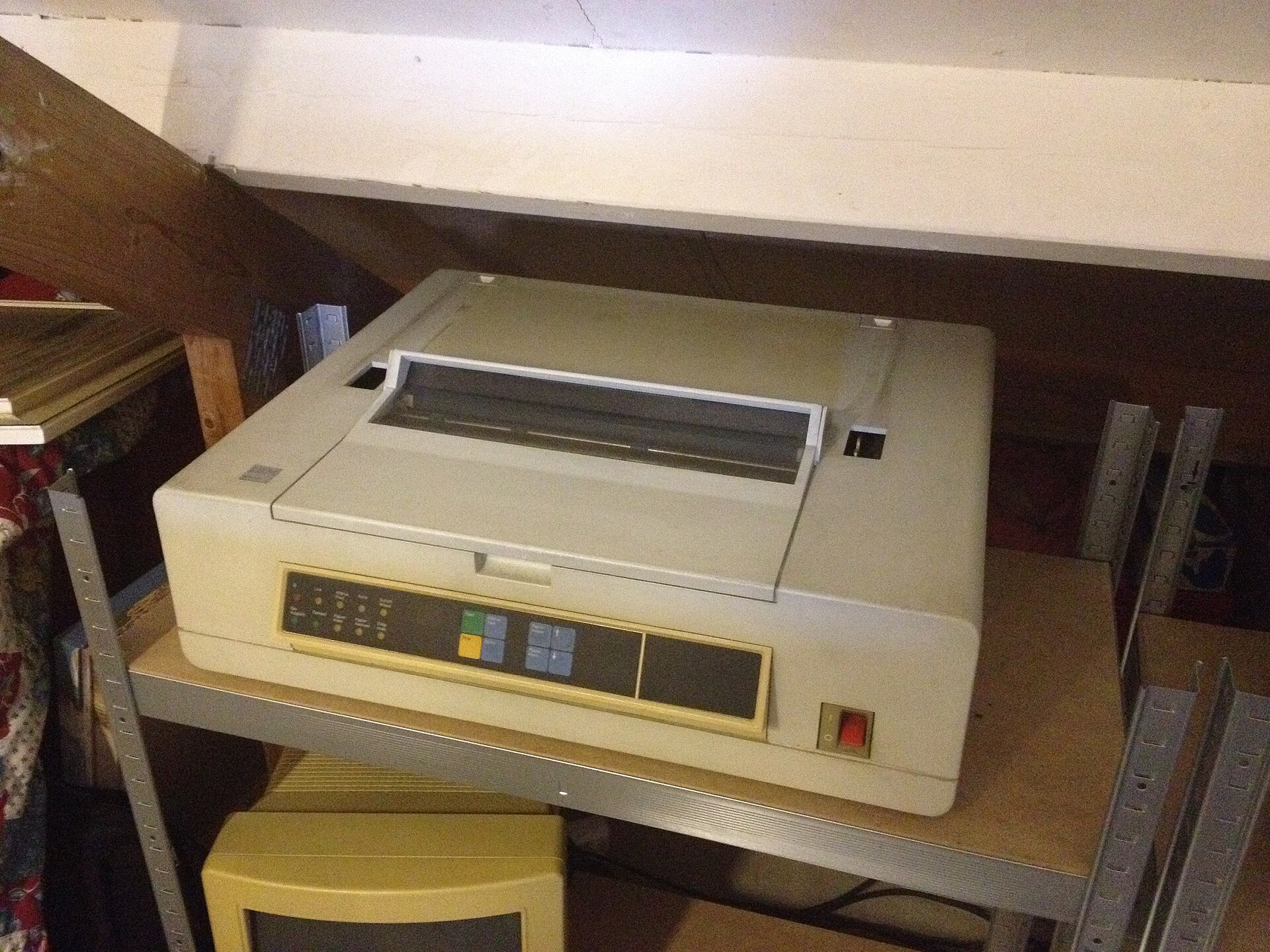
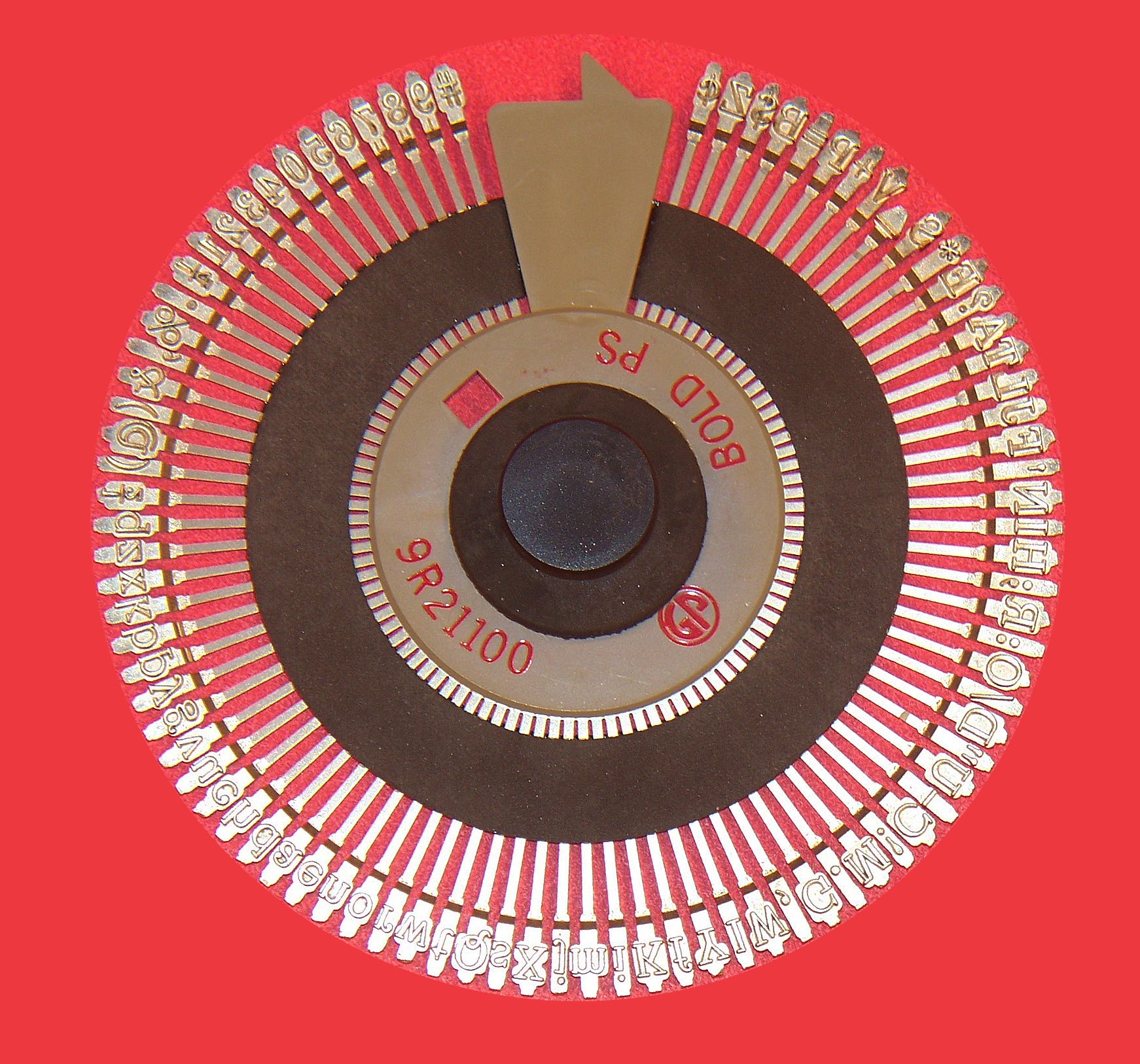
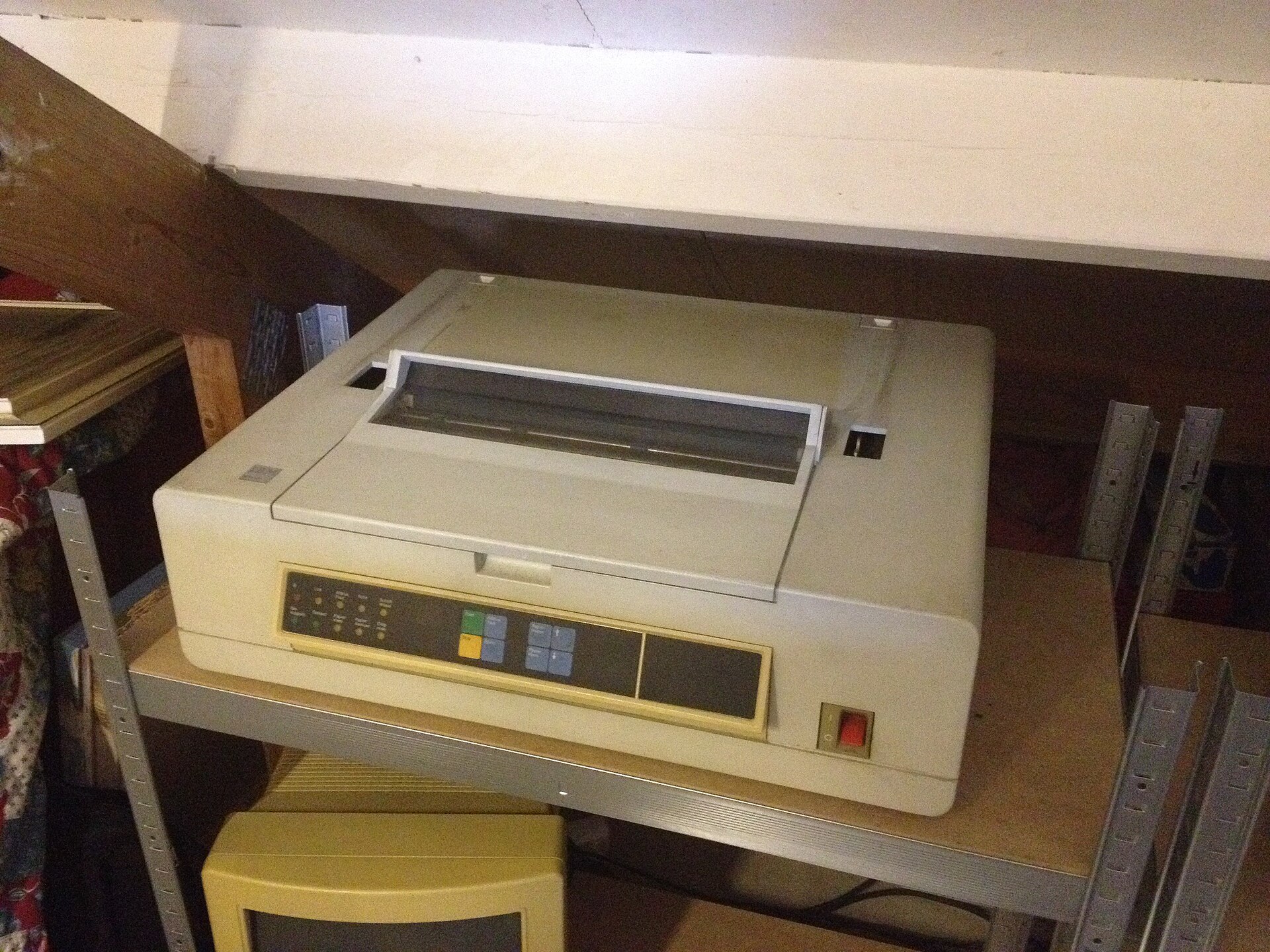
The daisy-wheel printer gave early word processors the look of a fine typewriter. Introduced by Diablo Data Systems around 1970 — with the Diablo 630 becoming the canonical letter-quality office machine of the late 1970s and early 1980s — it used a flat wheel whose spokes each ended in a single molded letter, arranged like a daisy’s petals. The wheel spun to the right character, and a hammer struck it through a ribbon onto the page, producing sharp “letter-quality” text that the era’s crude dot-matrix printers could not match. The trade-offs were noise, slowness, and a fixed typeface you changed by swapping the wheel. Laser and inkjet printers, which were quiet, fast, and could print any font or graphic, swept it away by the mid-1990s.
Worth remembering
- The print element was a flat wheel of spokes, each tipped with one molded character, like a daisy's petals.
- Changing fonts meant physically swapping the wheel — and the machine was loud enough to need a sound hood.
Gallery
Sources
- Daisy wheel printing introduced by Diablo Data Systems around 1970 Wikipedia
- Daisy-wheel printers gave 'letter-quality' output before laser printers Britannica
- The Diablo 630 was the canonical daisy-wheel printer, dominating letter-quality office printing in the late 1970s and early 1980s. Computer History Museum
- Diablo Systems co-founder George Comstock documented how the daisy-wheel print mechanism was engineered in his first-hand account 'The Daisy Wheel Story.' Computer History Museum
- The daisy-wheel printer produced typewriter-quality output by spinning a wheel of molded characters and striking them through an inked ribbon. Britannica
A graveyard tradition: leave a stone to show you came, and remembered.