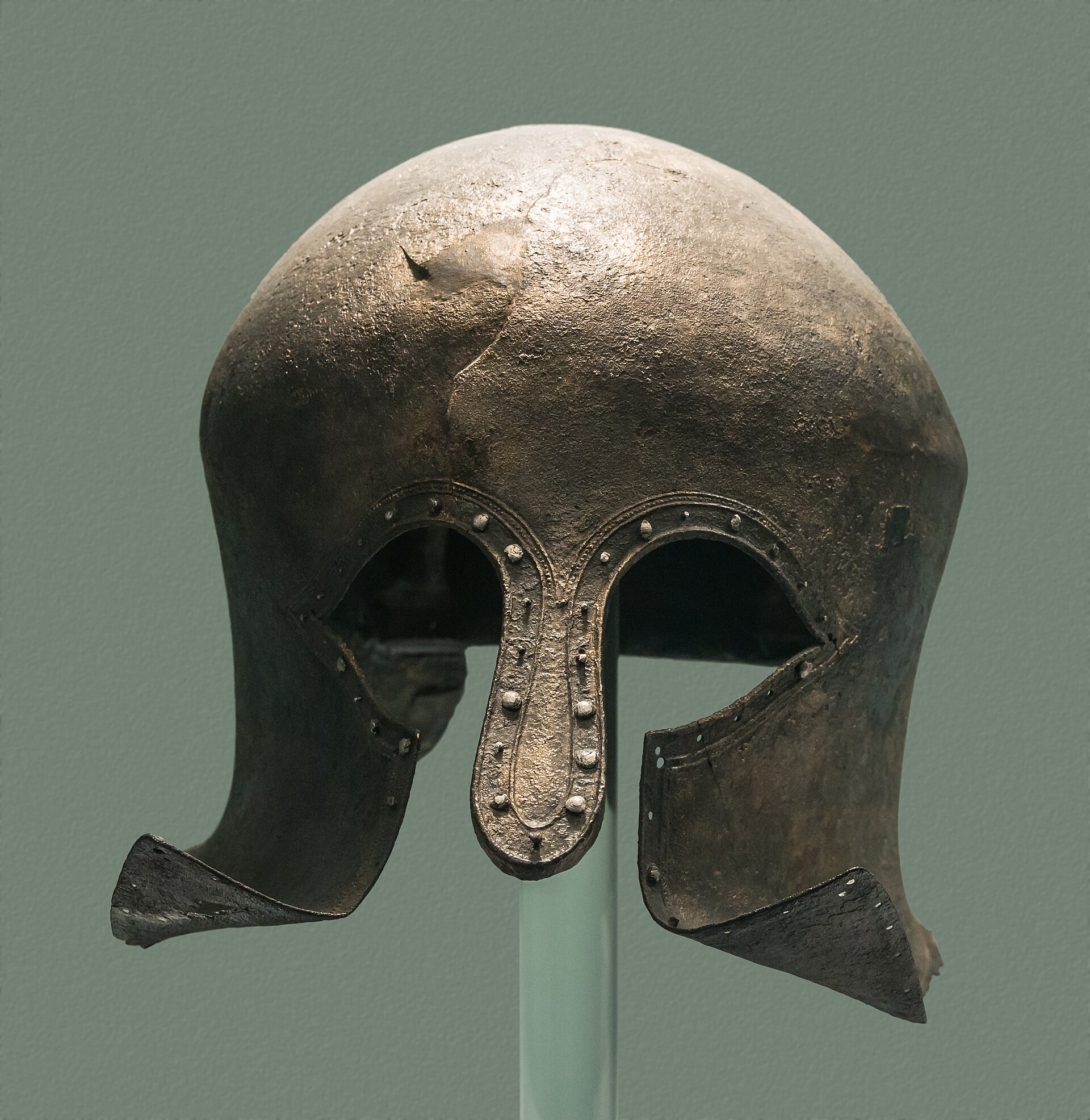
Corinthian bronze — an alloy of copper, gold, and silver — was, by ancient Roman testimony, the most prized material in the world. Pliny the Elder, writing in 77 CE, describes wealthy collectors who devoted more care to their Corinthian bronzes than to their gold, and who checked them with a touchstone like misers with coin. He identifies three varieties — goldish, silver-toned, and a third in balanced proportion — all producing a characteristic dark, lustrous patina unlike ordinary bronze. Julius Caesar’s estate auction sent the crowd into a frenzy over the Corinthian pieces.
The paradox is that Pliny was already writing about it as something lost. The knowledge of how to produce it — the specific alloy composition, the surface treatment, the firing or chemical patination technique — was in the keeping of Corinthian craftsmen. When Rome sacked Corinth in 146 BCE and destroyed the city’s workshops and scattered or killed its artisans, the transmission chain was broken. Within a generation the alloy could not be reliably reproduced. Romans inherited the objects — the statues, the vessels, the fittings — but not the making of them.
Not a single object has been securely identified as authentic Corinthian bronze today. Modern analyses have examined candidates and produced ambiguous results — the proposed composition (a copper-gold-silver ternary alloy with specific surface patination) is plausible, but no surviving piece can be confirmed as the original. What we have is a detailed ancient literary record of a material that was priceless, distinctive, and already gone in Roman times — mourned by the people who collected what they could not make.
Worth remembering
- Pliny the Elder described three varieties — one golden, one silver-toned, one showing equal proportions of all three metals — and reported that Julius Caesar's estate auction included Corinthian bronzes so coveted that the crowd pressed in despite his orders against it.
- Ancient writers were specific about its appearance: a dark, liver-brown to purple-black patina with flashes of iridescence, different from ordinary bronze's green, and said to carry a faint smell from the mineral patination treatment. It was used for the most prestigious statues, vessels, and fittings that money could buy.
Gallery
Sources
- Corinthian bronze was an alloy of copper with gold and silver, prized above all other metals in the Roman world; Pliny the Elder (77 CE) describes it as coming in three varieties and having been lost — Romans valued it more than silver or gold but could no longer produce it Wikipedia
- Corinthian bronze objects were among the most treasured possessions of wealthy Romans; the alloy's composition and the technique for producing its characteristic patina remain unknown; no securely identified surviving specimens exist World History Encyclopedia
A graveyard tradition: leave a stone to show you came, and remembered.