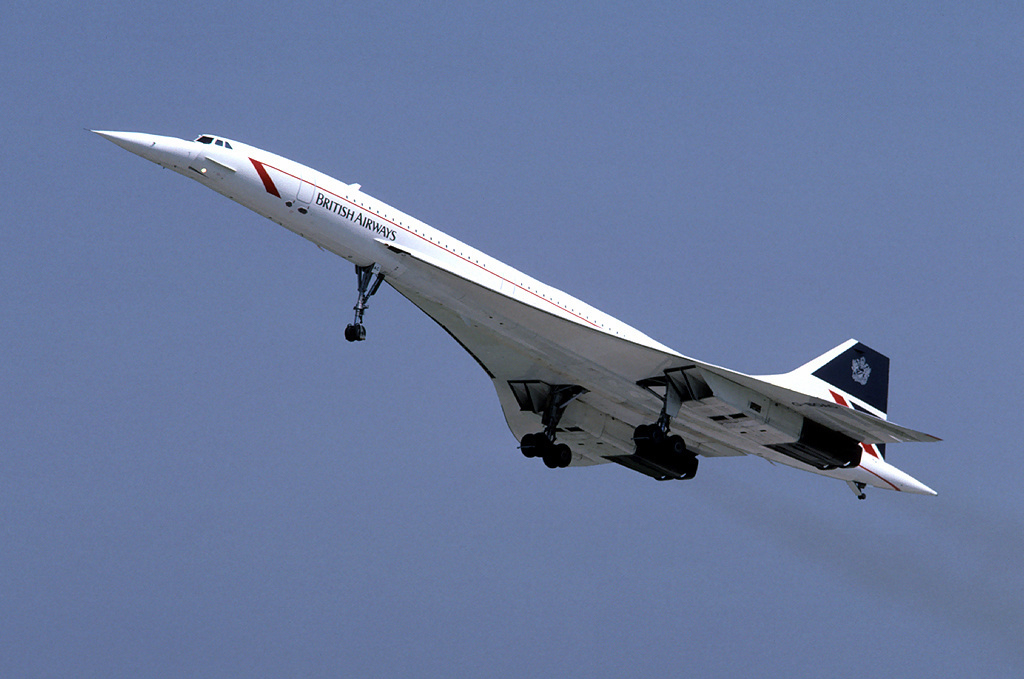
For 27 years Concorde was the future made real: a slender white delta with a drooping nose that carried a hundred passengers across the Atlantic at twice the speed of sound, London to New York in about three and a half hours. It was a feat of national engineering pride for Britain and France, and a flying symbol of a coming age when everyone would travel supersonic.
That age never arrived. Only 20 Concordes were ever built and just 14 flew commercially; the planes were thirsty, deafeningly loud, and astronomically expensive to maintain. The turning point was the crash of Air France Flight 4590 in July 2000, killing 113 people — its only fatal accident — after a strip of metal on the runway burst a tyre. Passenger confidence never fully recovered, and the post-9/11 travel slump finished the economics. On 24 October 2003 Concorde flew its last commercial flight, and humanity, having once flown at Mach 2 as a matter of routine, went back to subsonic and has stayed there since.
Worth remembering
- Flying west at Mach 2, it outran the sun: leave London at 10:30 and land in New York at about 09:25 local time — you arrived before you left.
- In 27 years of service it had only one fatal crash, making it statistically one of the safest airliners ever — undone by that single accident.
The people
-
André Turcat — Chief test pilot (France), 1921–2016
Flew Concorde 001's maiden flight in 1969 and its first supersonic flight.
-
Brian Trubshaw — Chief test pilot (UK), 1924–2001
First to fly the British-assembled Concorde 002 in April 1969.
Gallery
Watch
Further reading
Sources
- Concorde entered service 1976, retired 24 October 2003; only 20 built, 14 in commercial service; cruised at Mach 2.04 Wikipedia
- The 25 July 2000 Air France 4590 crash, high costs, and the post-9/11 downturn ended Concorde Wikipedia
- After Concorde's 2003 retirement, its 20 airframes were dispersed to museums around the world, including the Smithsonian's Udvar-Hazy Center. Smithsonian National Air and Space Museum
- Concorde made its final commercial flight on 24 October 2003, and no supersonic passenger service has replaced it in the two decades since. NPR
- Concorde cruised at Mach 2.04 and carried up to 128 passengers; it was retired in 2003 following the 2000 Paris crash and a post-9/11 fall in air travel. Britannica
A graveyard tradition: leave a stone to show you came, and remembered.