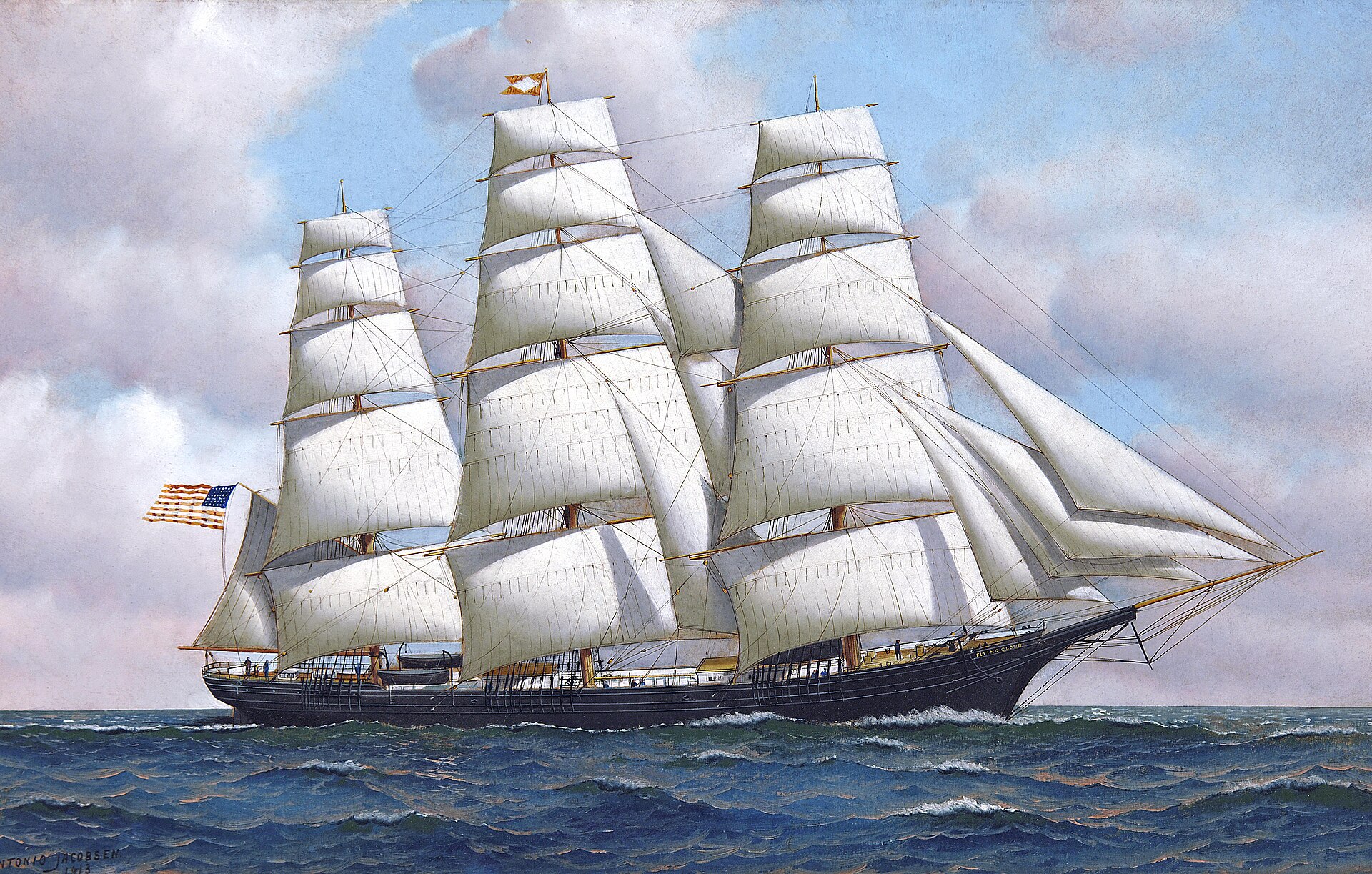
The clipper was the sailing ship pushed to its absolute limit. Where an ordinary merchantman was built fat to carry the most cargo, the clipper was built long, narrow, and overpowered with canvas to carry cargo fast. The American “extreme clippers” of the mid-1840s — the Rainbow, the Sea Witch — set the pattern, and the California Gold Rush of 1848 turned it into a boom: freight and passenger rates to San Francisco were so high that a single fast voyage round Cape Horn could pay for the ship. The Flying Cloud — launched in 1851 by Donald McKay — made her run of 89 days from New York to the Golden Gate in 1854, a record that stood for over a century.
The economics only worked for cargo that paid a premium for speed: the first tea of the Chinese season, gold-rush passengers, Australian wool. On those routes the clippers raced in earnest. The Great Tea Race of 1866 is the one everyone remembers — Taeping beating Ariel into London by twenty-eight minutes after ninety-nine days and fourteen thousand miles — and the rivalry between the Cutty Sark and the Thermopylae kept it going into the 1870s. For a couple of decades these were the most thrilling machines on the ocean.
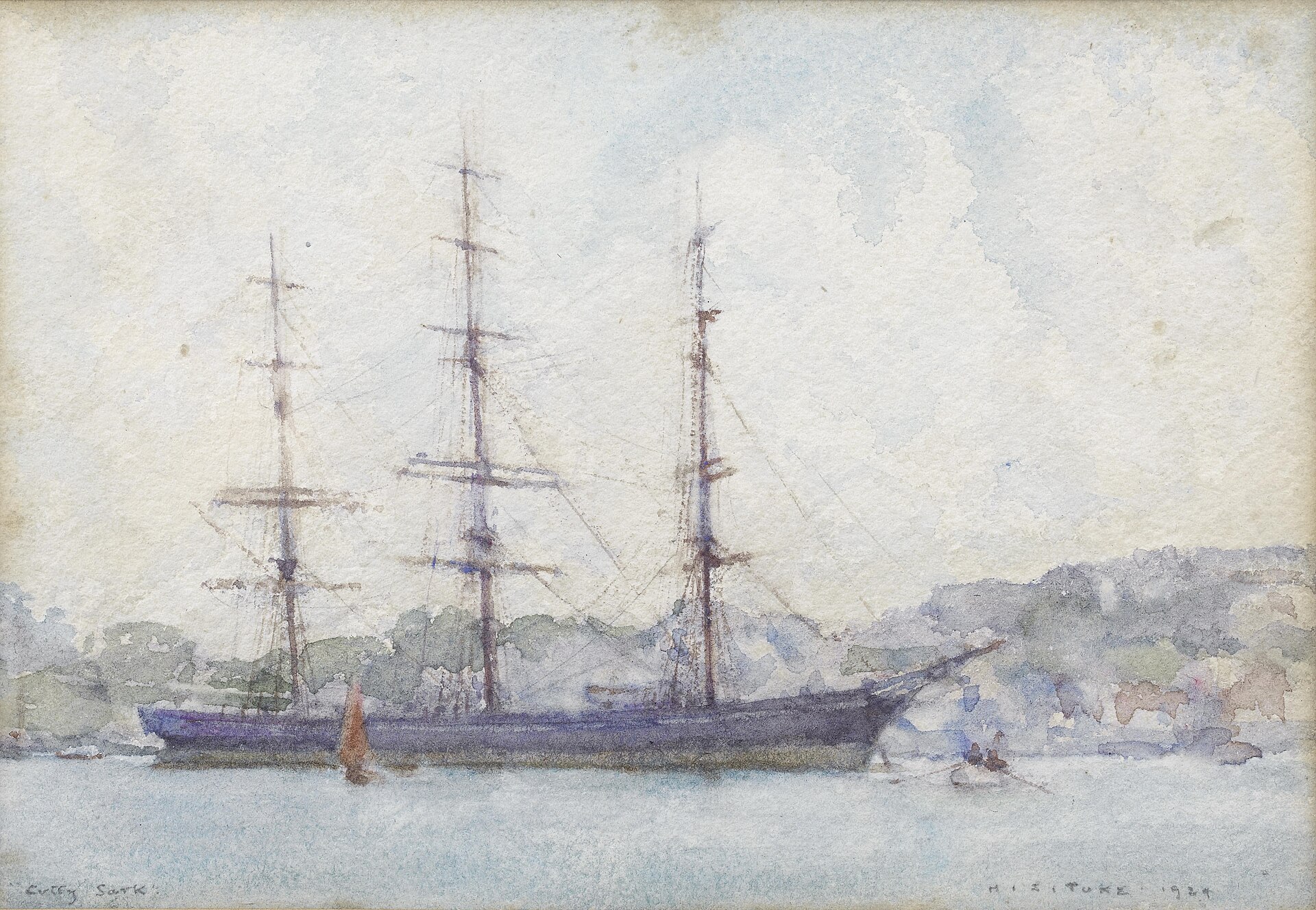
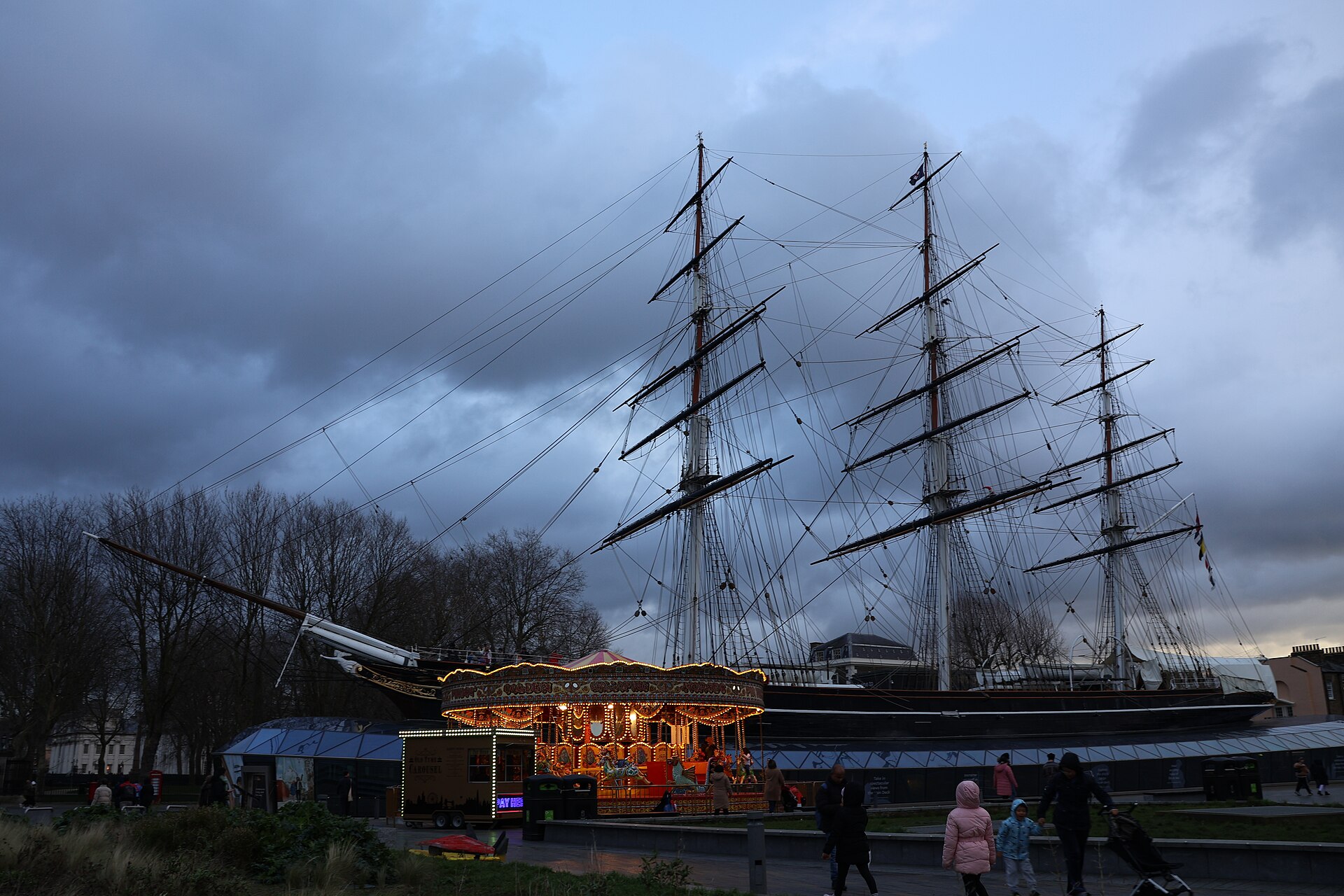
What killed them was not a faster sailing ship but a different kind of ship entirely. Alfred Holt’s compound steam engine (1866) finally let a steamer carry enough cargo to China on one load of coal, and the Suez Canal (1869) handed steamers a four-thousand-mile shortcut that sailing ships, dependent on wind through the Mediterranean and Red Sea, could not use. No tea clipper was built after 1869. Within a few years the China trade was all steam, and the clippers were pushed onto the wool run and then out of work altogether. The Cutty Sark survives in a dry berth at Greenwich — preserved, not sailing, the last of the fastest ships of the age of sail.
Worth remembering
- Clippers traded cargo space for speed on purpose: a long, narrow hull and an enormous spread of sail — the Cutty Sark carried about 3,000 m² of canvas and could touch 17 knots — meant less room in the hold, paid for by the premium freight on fresh-season tea and gold-rush passengers.
- The 1866 Great Tea Race remains the legend: five ships left the same Chinese tide together and three reached London within an hour and a quarter of each other after three months at sea. It was also almost the last of its kind — the Suez Canal opened three years later.
Gallery
Sources
- The clipper Flying Cloud set an 89-day, 8-hour record from New York to San Francisco in 1854; she was launched in 1851 by Donald McKay Encyclopaedia Britannica
- In the 1866 Great Tea Race, Taeping docked in London 28 minutes ahead of Ariel after 99 days and 14,000 miles from China; no more tea clippers were built after 1869, the year the Suez Canal opened Smithsonian Magazine
A graveyard tradition: leave a stone to show you came, and remembered.