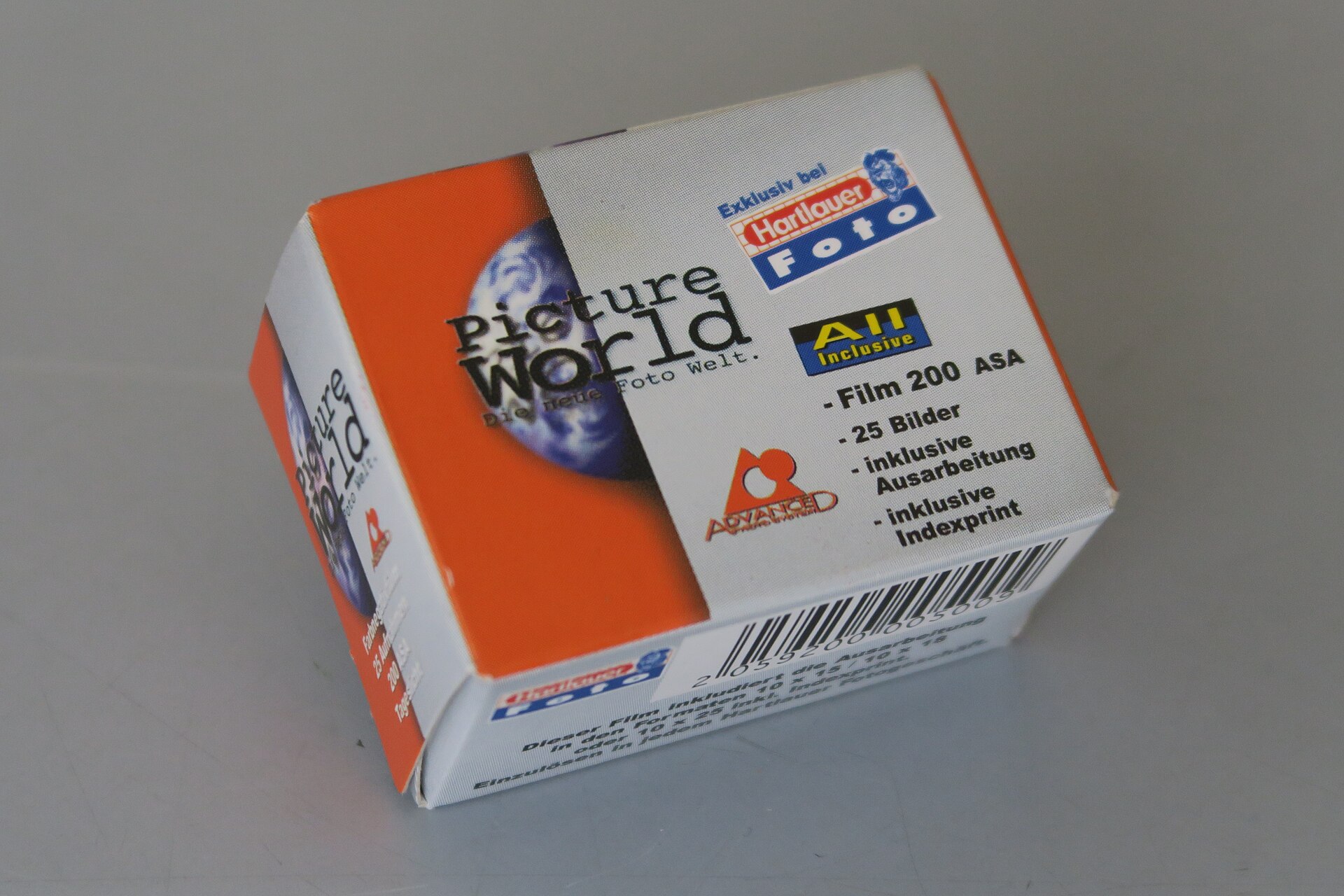
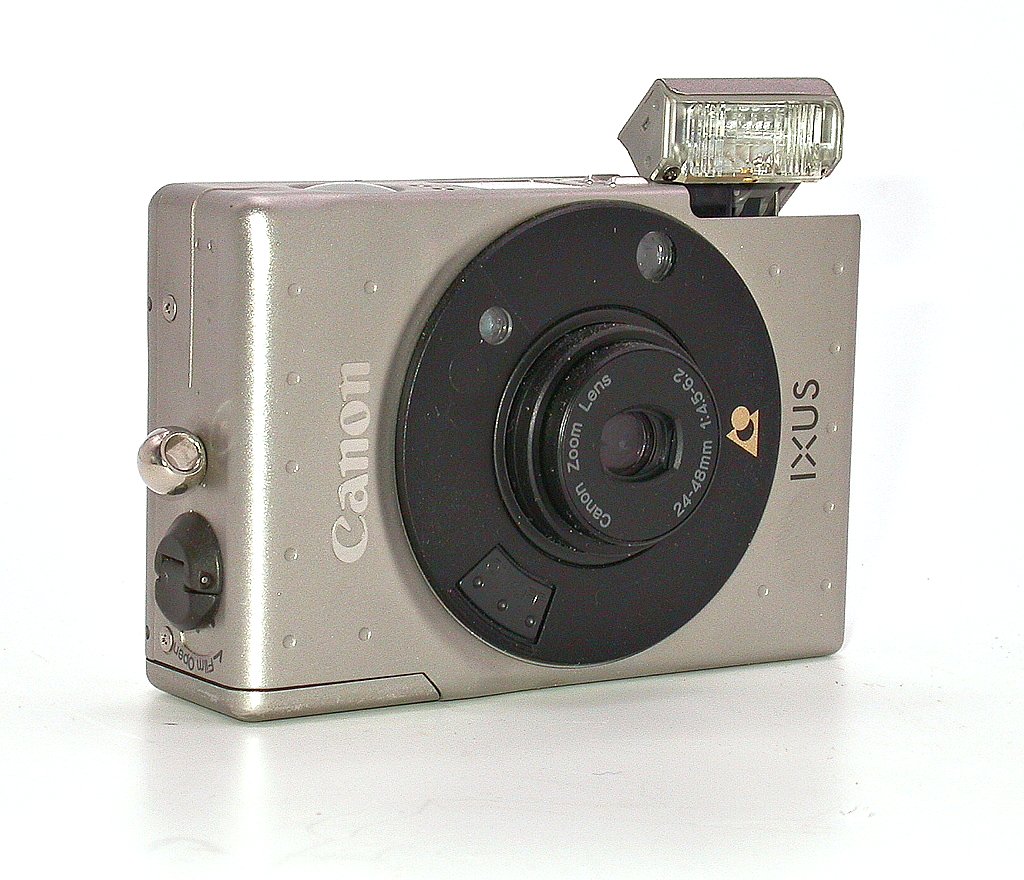
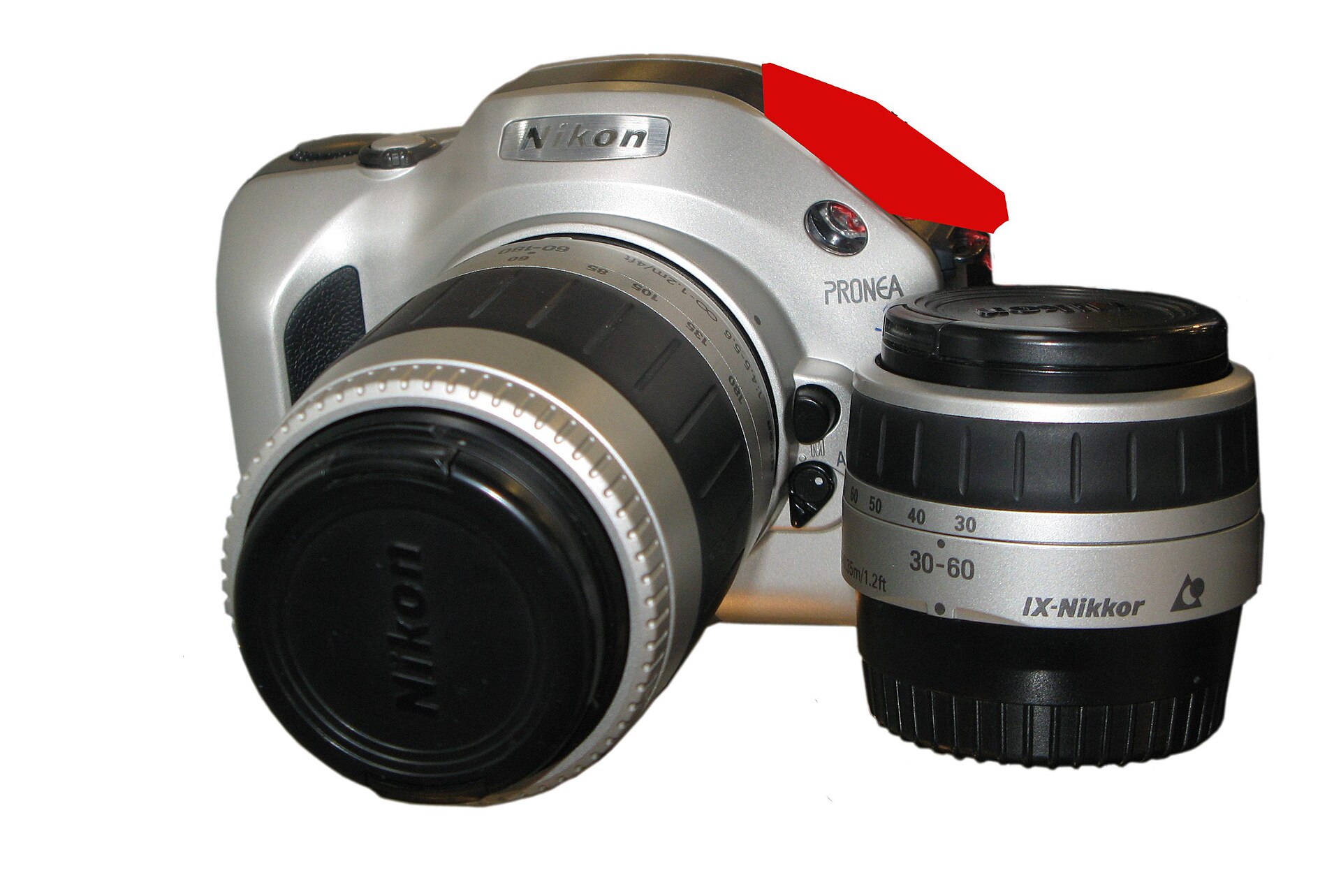
Advanced Photo System was a 24mm film format meant to modernise consumer photography. Canon, Fujifilm, Kodak, Minolta and Nikon formed the development group in the early 1990s and launched it in February 1996. APS cameras were notably compact — drop-in cartridge loading allowed slimmer bodies than 35mm — and a switch let the photographer choose one of three print shapes per frame, the choice stored magnetically on the film. Kodak’s Advantix, Fuji’s Nexia and Canon’s ELPH found buyers who wanted a more foolproof film experience.
The timing was fatal. Kodak’s own DC20 digital camera arrived only months after APS, and through the late 1990s digital cameras fell in price faster than APS could establish itself. By the early 2000s, affordable cameras matched film for most consumer uses while removing development costs entirely. Kodak stopped making APS cameras in 2004; Fujifilm and Kodak ended film production in 2011. The format’s lasting trace is the ‘APS-C’ sensor size still named in digital cameras.
Worth remembering
- APS film carried a magnetic strip that stored exposure data — date, time, print format — letting photofinishers adjust prints automatically and print an index sheet of thumbnails for the roll.
- The cartridge never opened during loading; the camera pulled the film in, advanced automatically, and sealed it back, so a part-shot roll could be swapped mid-way without fogging.
Gallery
Sources
- APS launched in February 1996, developed by a Canon, Fujifilm, Kodak, Minolta and Nikon consortium; Kodak ended APS cameras in 2004 and film production stopped in 2011. Wikipedia
- APS film launched in 1996; both Fujifilm and Kodak discontinued production in 2011, with digital the primary cause. Analogue Wonderland
- APS was unveiled in February 1996; Kodak's DC20 digital camera launched only months after, and APS used 24mm film with a magnetic coating for format modes. Digital Camera World
A graveyard tradition: leave a stone to show you came, and remembered.