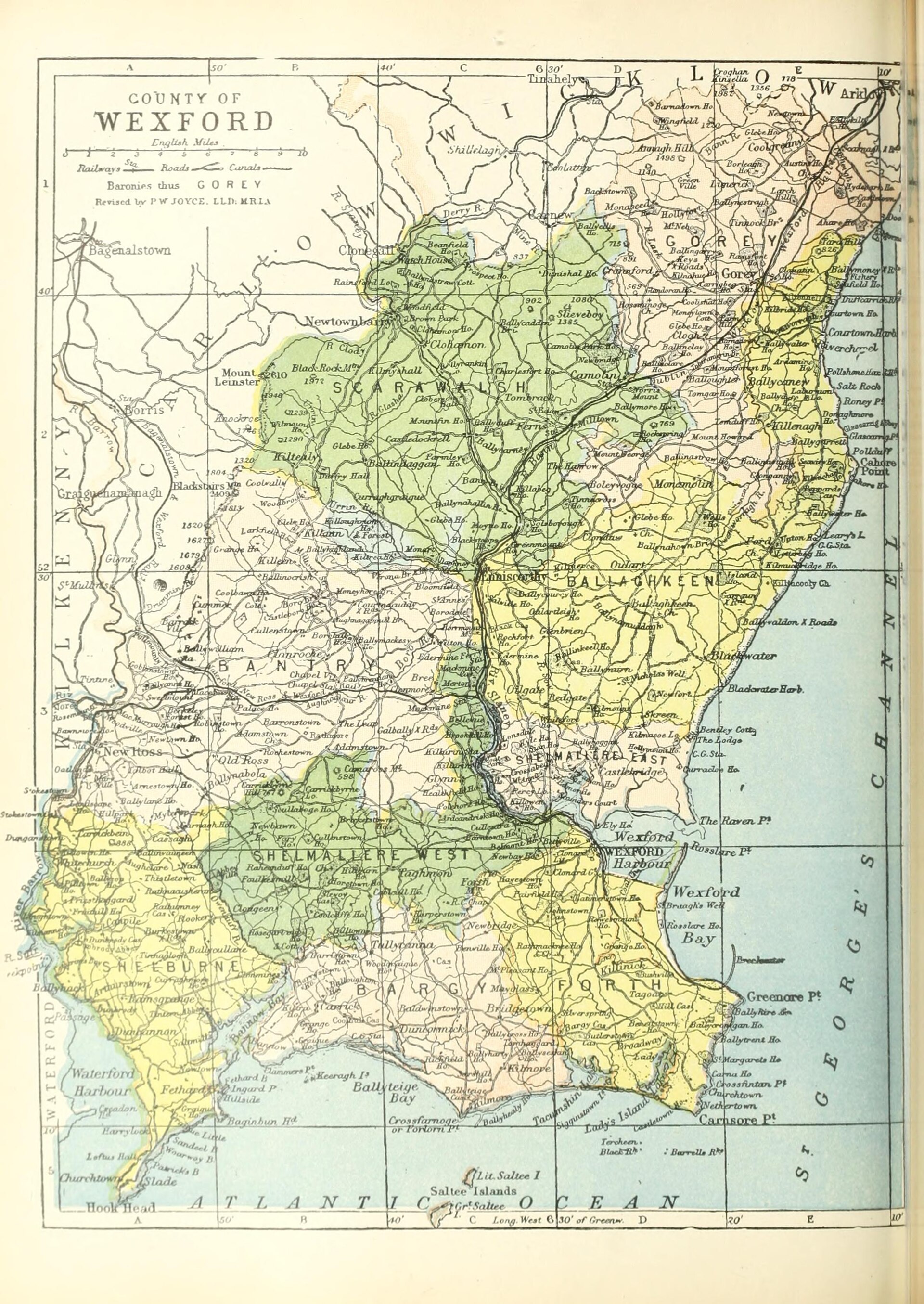
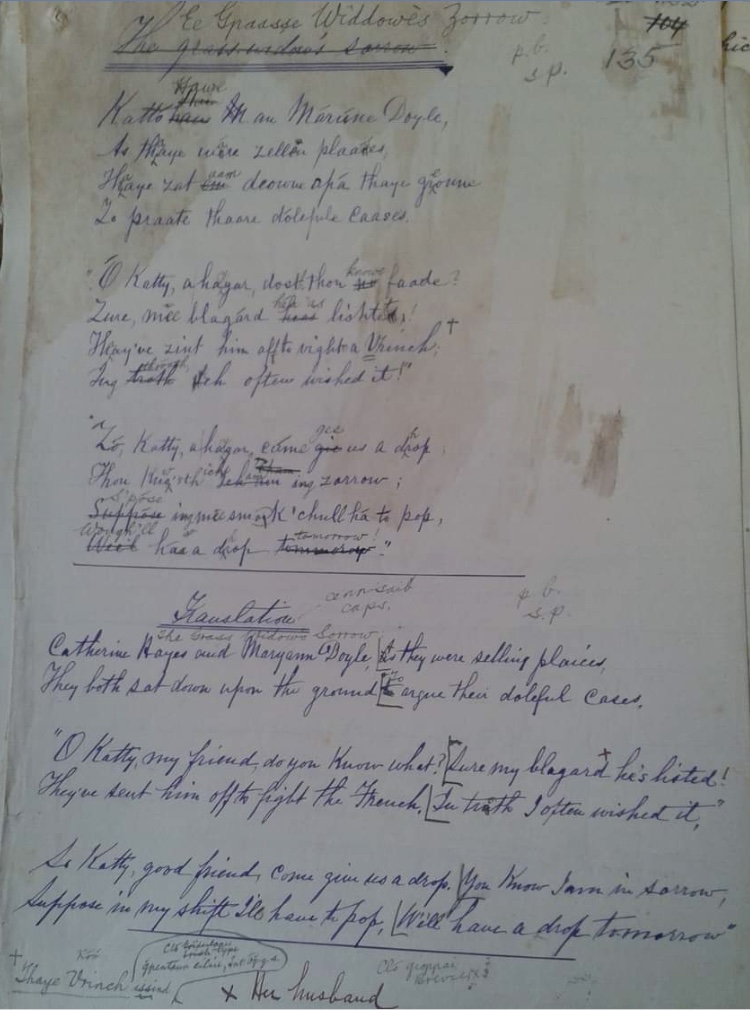
Yola was a form of English carried to the baronies of Forth and Bargy in County Wexford by settlers after the Norman invasion of Ireland in 1169, picking up Norman French and Flemish along the way, then left to drift in isolation for seven hundred years. Cut off from the mainstream of the language, it never passed through the Great Vowel Shift and held medieval features — old vowel qualities, archaic plurals like tren for trees and been for bees — that standard English had shed by Shakespeare’s day.
Its name came from its own word for old. By the nineteenth century it was a curiosity, written down by antiquarians as it faded into ordinary Hiberno-English. Edmund Hore, one of the last to speak it, died in 1897, and the dialect is reckoned gone by about 1898.
Worth remembering
- Cut off in County Wexford, it never underwent the Great Vowel Shift and preserved medieval English vowels lost everywhere else by the 16th century.
- It kept old plural endings — tren for trees, been for bees — that standard English had dropped by Shakespeare's time.
Gallery
Sources
- Yola was brought to Forth and Bargy after the 1169 Norman invasion, resisted the Great Vowel Shift, and became extinct around 1898; Edmund Hore, a late speaker, died 1897 Wikipedia
- Yola is classified as an extinct Anglic variety of southeastern Ireland Glottolog
- Yola evolved from Middle English brought by Norman settlers in 1169, absorbing influences from Norman French and Flemish, and was spoken in the baronies of Forth and Bargy until the late 19th century; the name 'Yola' is the dialect's own word for 'old'. Omniglot
A graveyard tradition: leave a stone to show you came, and remembered.