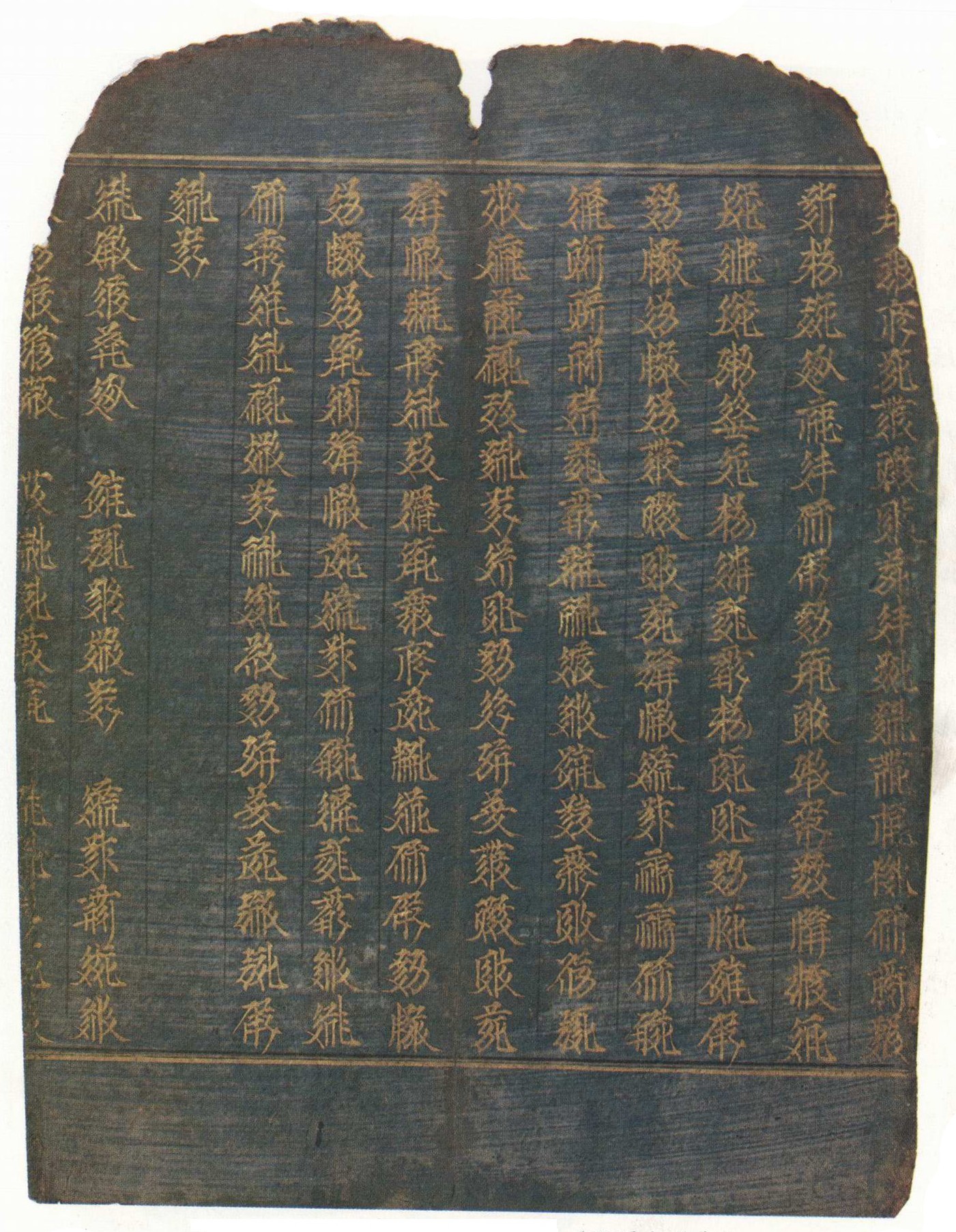
The state language of the vanished Western Xia empire, written in thousands of fiendishly intricate characters and silenced by Genghis Khan's last campaign.
Died
1500 CE
Dead for
526 yrs
Cause of death
Conquest
Replaced by
Chinese and Tibetan
The Obituary
Tangut was the language of the Western Xia, a Buddhist empire that ruled northwestern China from the 11th to the 13th centuries. Its speakers created a logographic script of nearly 6,000 dense characters — devised by a scholar known as Teacher Iri in 1037 — to record their literature and scriptures. When Genghis Khan’s Mongols destroyed Western Xia in 1227, the language lost its state, though it lingered in pockets for generations, likely dying out by the 16th century. A buried library unearthed at Khara-Khoto in 1908 rescued the language from total oblivion.
Worth remembering
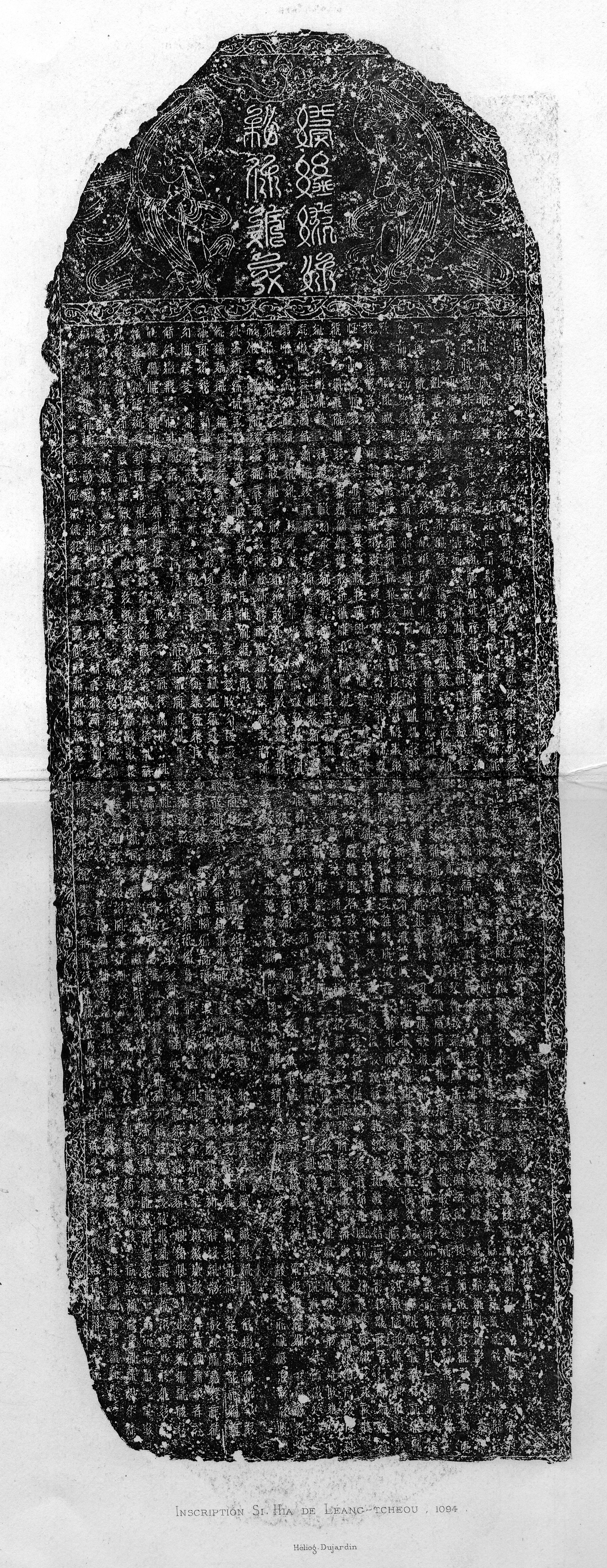
Its writing system had close to 6,000 characters, each more visually dense than Chinese, invented around 1036.
A vast Tangut library was found preserved in the dead city of Khara-Khoto in the Gobi Desert in 1908.
Gallery
Rubbing of the Tangut-script text on the 1094 Liangzhou Stele, Wuwei, GansuPublic domain
Sources
Tangut was the language of the Western Xia state, written in its own logographic script and extinct after the Mongol conquest. Wikipedia
The Tangut script comprised nearly 6,000 complex characters created in the 11th century. Encyclopaedia Britannica
The Tangut script comprised about 6,600 characters and was apparently devised by a scholar known as 'Teacher Iri' in 1037; the language belonged to the Qiangic branch of Sino-Tibetan and was used as an official language of the Western Xia dynasty until the Mongol conquest. Omniglot
A graveyard tradition: leave a stone to show you came, and remembered.
Buried nearby — by shared fate or a neighbouring lifespan.