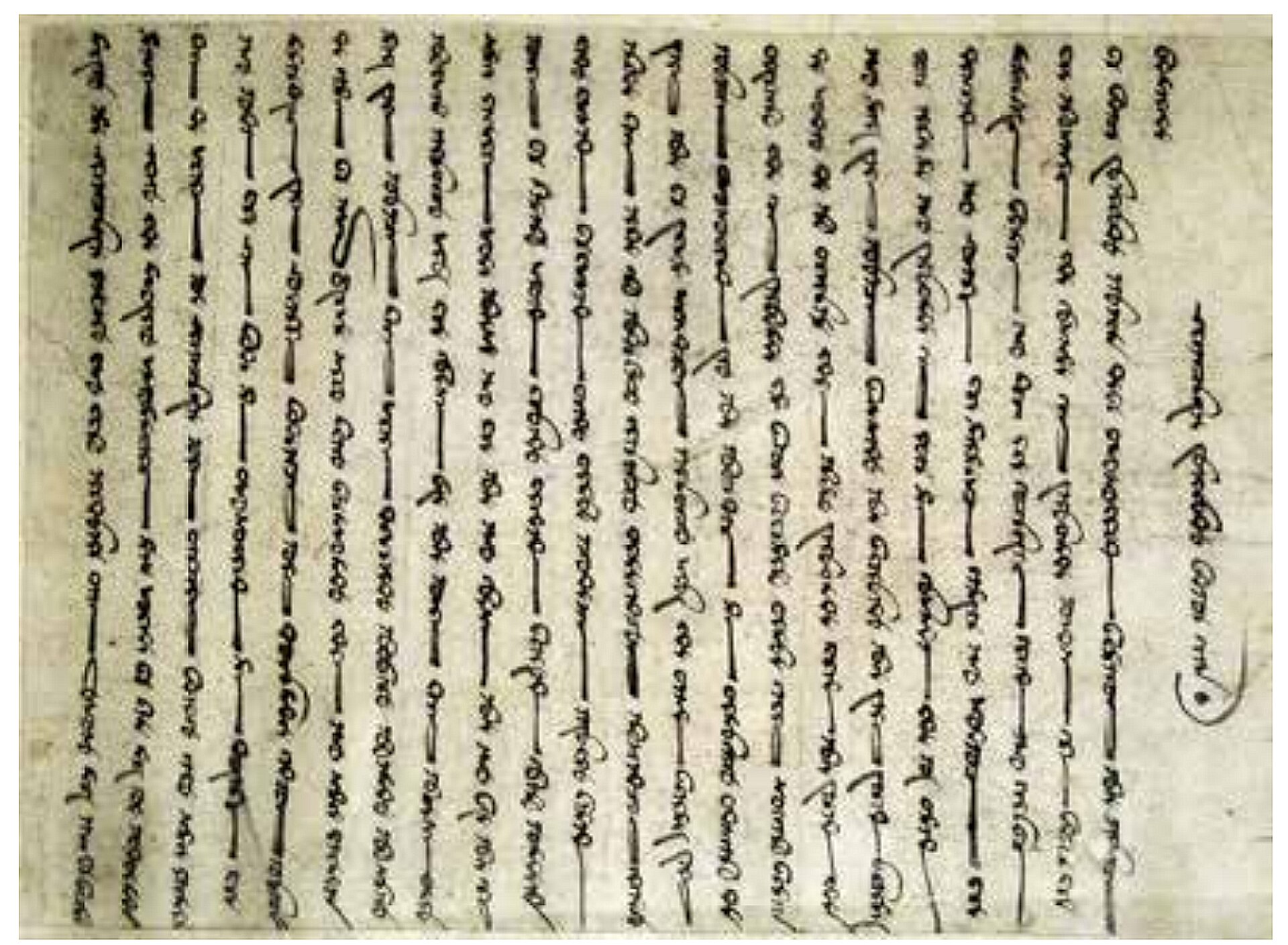
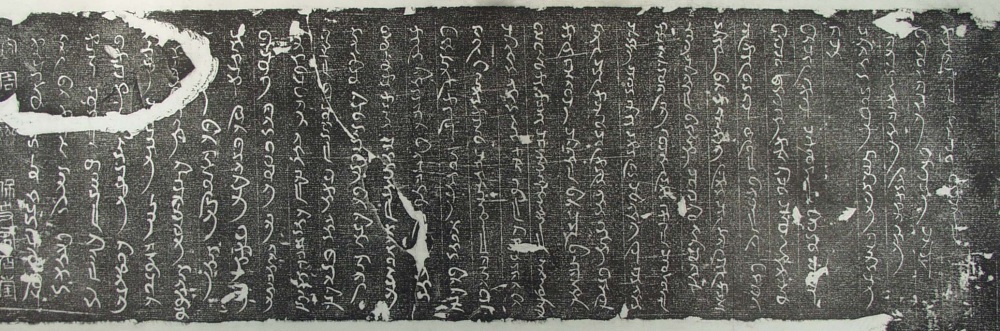
For most of a millennium, Sogdian was the language money spoke along the Silk Road. The Sogdians, an Eastern Iranian people of the great oasis cities of Samarkand and Bukhara, were the road’s pre-eminent traders, and their tongue travelled with their caravans from the Chinese capitals to the edge of Byzantium. It carried Buddhist sutras, Manichaean hymns and Christian gospels, written in three different scripts; the oldest substantial Sogdian we have, the “Ancient Letters” of around 313 CE, is a merchant’s correspondence dropped in the sand west of Dunhuang.
A language that belonged to no single state died when the states around it changed. The Arab conquest of Sogdiana in the early eighth century brought Persian and Islam; over the next three centuries the cities Persianised and the steppe Turkified, and Sogdian was squeezed out of both. By about 1025 it had ceased to be spoken or written, leaving a single living thread — Yaghnobi, a mountain descendant of one Sogdian dialect, which is a separate language rather than a survival. What endured most was its alphabet, which passed to the Uyghurs, the Mongols and the Manchus: the script of the dead trade-tongue outlived the trade, and the tongue, by centuries.
Worth remembering
- Around 313 CE a Sogdian merchant named Nanai-vandak wrote home from Gansu reporting that 'the Indians and the Sogdians there had all died of starvation' in the collapse of the Western Jin — one of five letters abandoned in a watchtower, lost for sixteen centuries until Aurel Stein found them in 1907.
- Sogdian script became the administrative hand of the Uyghur Khaganate and the parent of the Old Uyghur alphabet, which in turn fathered the Mongolian and Manchu scripts — so a language that died as speech still shaped how two later empires wrote.
Gallery
Sources
- Sogdian ceased to be used as a written language after the eleventh century, superseded by Persian and Arabic in Sogdiana and by Turkic and Chinese farther east along the Silk Road. Smithsonian Institution — The Sogdians
- The five 'Ancient Letters', found in a watchtower near Dunhuang and dated c. 313–314 CE, are the oldest substantial body of Sogdian writing and document a merchant network reaching from Samarkand to Luoyang. University of Washington — Silk Road Seattle
- Sogdian is an Eastern (Northeastern) Iranian language, recorded in Manichaean, Buddhist and Christian texts from Turfan and Dunhuang in three distinct scripts. Encyclopaedia Iranica
A graveyard tradition: leave a stone to show you came, and remembered.