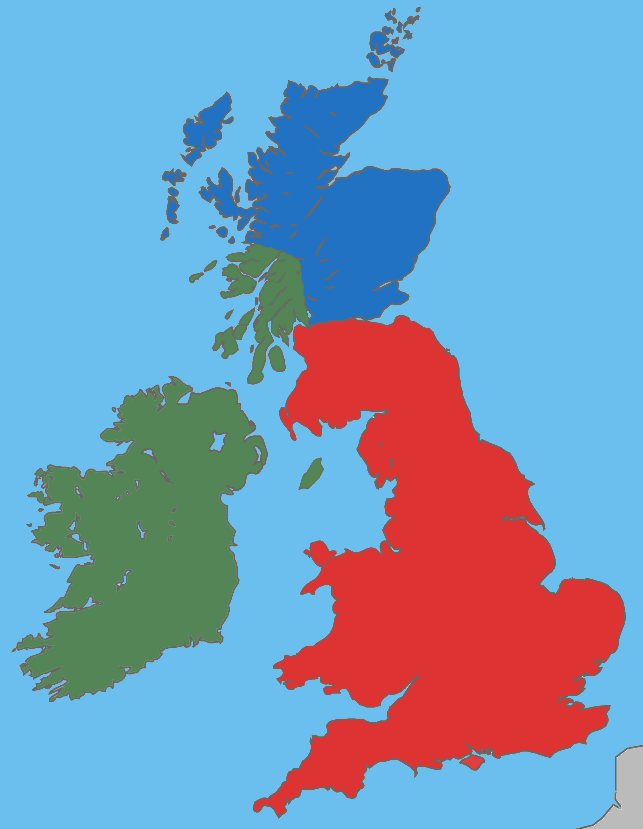
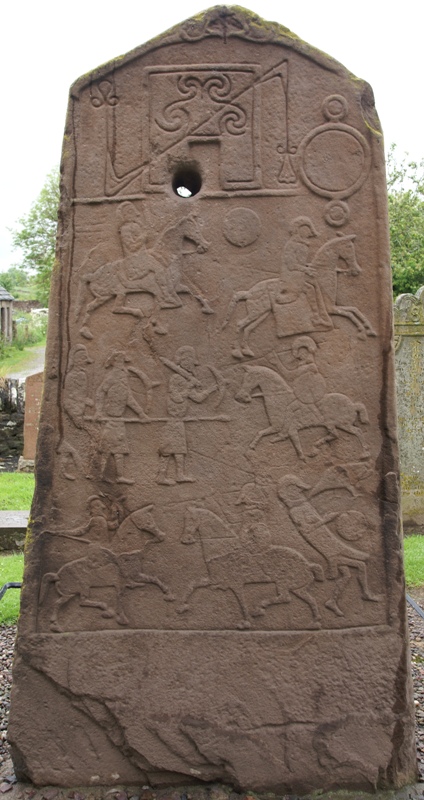
Pictish was the language of the Picts, who held northern and eastern Scotland from Roman times through the early medieval period. It is the worst-attested language in this wing that scholars still argue was a real, distinct tongue rather than a label of convenience. No connected text in Pictish survives. What’s left is place names (the aber- and pit- elements scattered across the map of Scotland), personal names recorded by Irish, Anglo-Saxon and Scottish scribes writing in their own languages, and around forty Ogham-inscribed stones — most of which remain undeciphered. It is the only corpus of undeciphered inscriptions anywhere in the British Isles.
That gap in the evidence produced a real scholarly fight, not a settled footnote. For much of the 20th century, researchers including John Rhŷs and Kenneth Jackson argued Pictish carried a non-Indo-European substrate — an older language surviving under a thin Celtic veneer, unrelated to anything else in Britain. The theory leaned heavily on the failure to read the Ogham stones as Celtic. As Iron Age archaeology filled in a clearer picture of the north, that argument weakened, and most scholars today favor Pictish as a Brittonic (P-Celtic) language, a cousin of Welsh and Cumbric. But the stones haven’t gotten any more legible since Rhŷs’s day, and a 2020 reassessment of the five best-preserved Ogham inscriptions concluded that they still don’t read convincingly as Celtic — the language of the corpus, on that account, remains unidentified. The debate over what the Picts actually spoke has run for more than two hundred years and hasn’t fully closed.
The end is better documented than the beginning. After a Norse raid killed the leadership of both the Picts and their Gaelic-speaking neighbors in Dál Riata in 839, Kenneth MacAlpin became king of the Picts, and the two kingdoms began merging. By the reign of his grandson Caustantín mac Áeda, around 900, outsiders had stopped calling the place the Kingdom of the Picts and started calling it the Kingdom of Alba. The shift from Pictish to Gaelic wasn’t a conquest with a date on it — it was Gaelicisation, generation by generation, until by around the 11th century everyone in the old Pictish north was a Gaelic-speaking Scot, and Pictish identity itself had been forgotten. There is no last speaker on record, and nothing that leads anywhere: not a dialect, not a substrate detectable in modern Scots or Gaelic, nothing anyone can point to and say this is where Pictish still is. It simply stopped being spoken, inside a kingdom that had stopped calling itself Pictish.
Worth remembering
- Its clearest inscriptions are around 40 Ogham stones — and most of them are still unread; the corpus is the only body of undeciphered inscriptions anywhere in the British Isles.
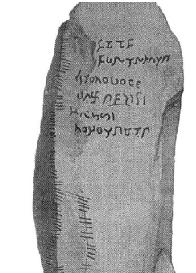
- The Newton Stone in Aberdeenshire carries two inscriptions side by side: one in Ogham, one in a script no one has ever identified.
- For most of the 20th century the leading theory held that Pictish wasn't even Indo-European — an idea driven largely by the failure to read the Ogham stones, later undercut as archaeology filled in the picture of an Iron Age Celtic-speaking north.
Gallery
Sources
- Pictish was the language of the Picts of northern and eastern Scotland, attested only fragmentarily and extinct by the medieval period; the Pictish language did not disappear suddenly, but through a gradual process of Gaelicisation under way during the reigns of Donald II and his successors Wikipedia
- Pictish is left in a very limited number of inscriptions, mainly in the Ogham alphabet, most of them undeciphered; the current consensus is that Pictish was a P-Celtic (Brythonic) language, though earlier 20th-century scholarship (Rhŷs, Jackson) argued for a non-Indo-European substrate, a view since undermined by advances in Iron Age archaeology Wikipedia
- The Pictish kingdom merged with Dál Riata after 839; during the reign of Caustantín mac Áeda (900-943) outsiders began calling the realm the Kingdom of Alba rather than the Kingdom of the Picts, and by the 11th century all inhabitants of northern Alba had become fully Gaelicised Scots, with Pictish identity forgotten Wikipedia
- The corpus of 'Pictish' Oghams from early medieval Scotland is the only insular corpus of undeciphered inscriptions; scholars remain divided on whether the underlying language is Celtic, and some analyses of the clearest inscriptions conclude the language remains unidentified Aberystwyth University (Rodway, 'The Ogham Inscriptions of Scotland and Brittonic Pictish')
A graveyard tradition: leave a stone to show you came, and remembered.