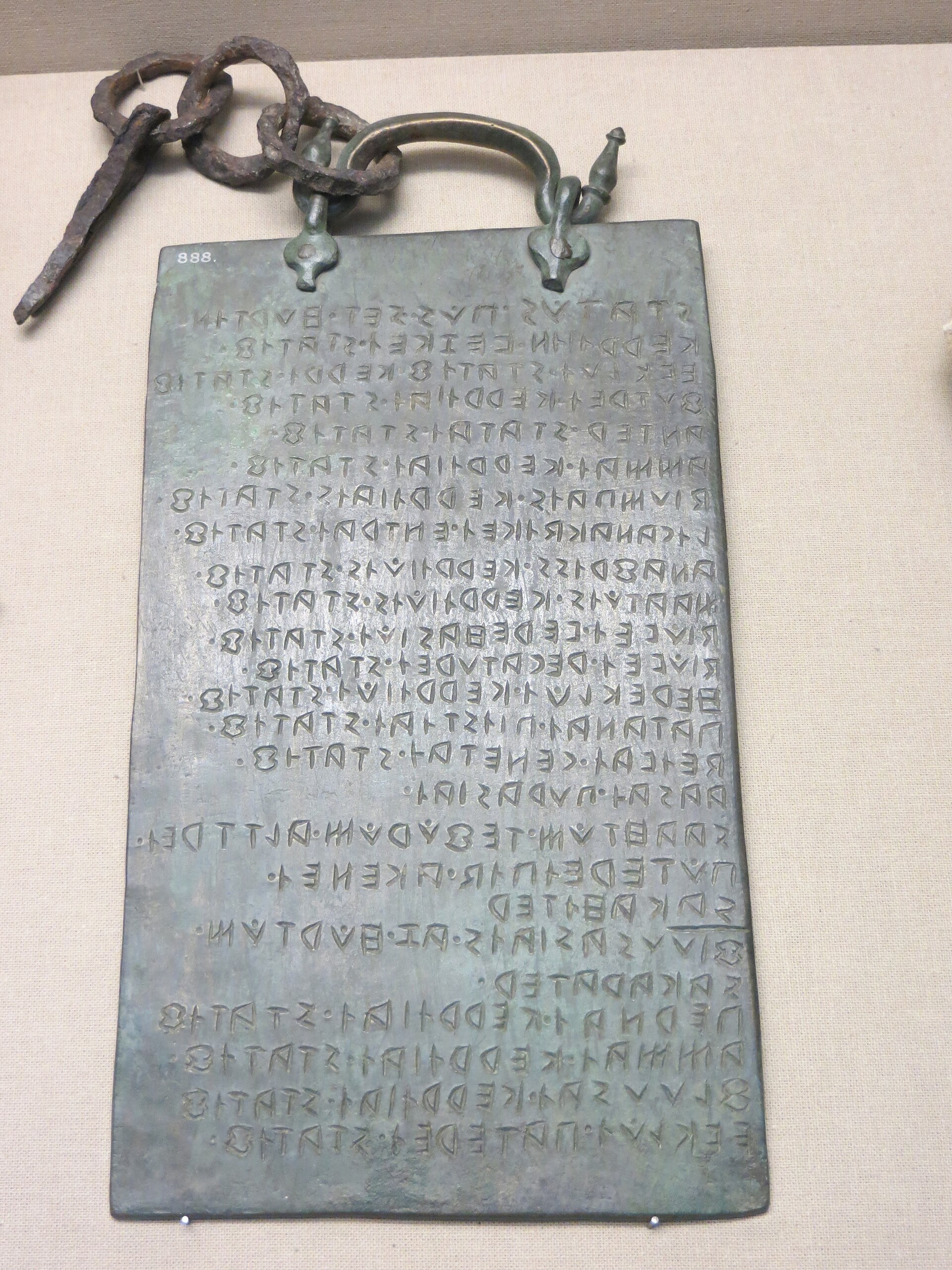
Oscan was the language of the Samnites and their neighbours across south-central Italy — Campania, Lucania, the mountains of Samnium — a Sabellic cousin of Latin in the Italic family. Where Latin wrote qu, Oscan wrote p: pis against Latin quis for who. It was set down for six hundred years in three different alphabets — one borrowed from the Etruscans, one Greek, and finally the Latin — leaving some eight hundred inscriptions.
Rome’s expansion pressed Latin on the whole peninsula, and Oscan retreated into local and informal use. Its last datable traces are graffiti on the walls of Pompeii, scratched between the earthquake of 62 and the eruption of Vesuvius in 79 — the volcano that destroyed the town sealing the language’s final words under ash.
Worth remembering
- Where Latin used qu, Oscan used p — pis against Latin quis for who.
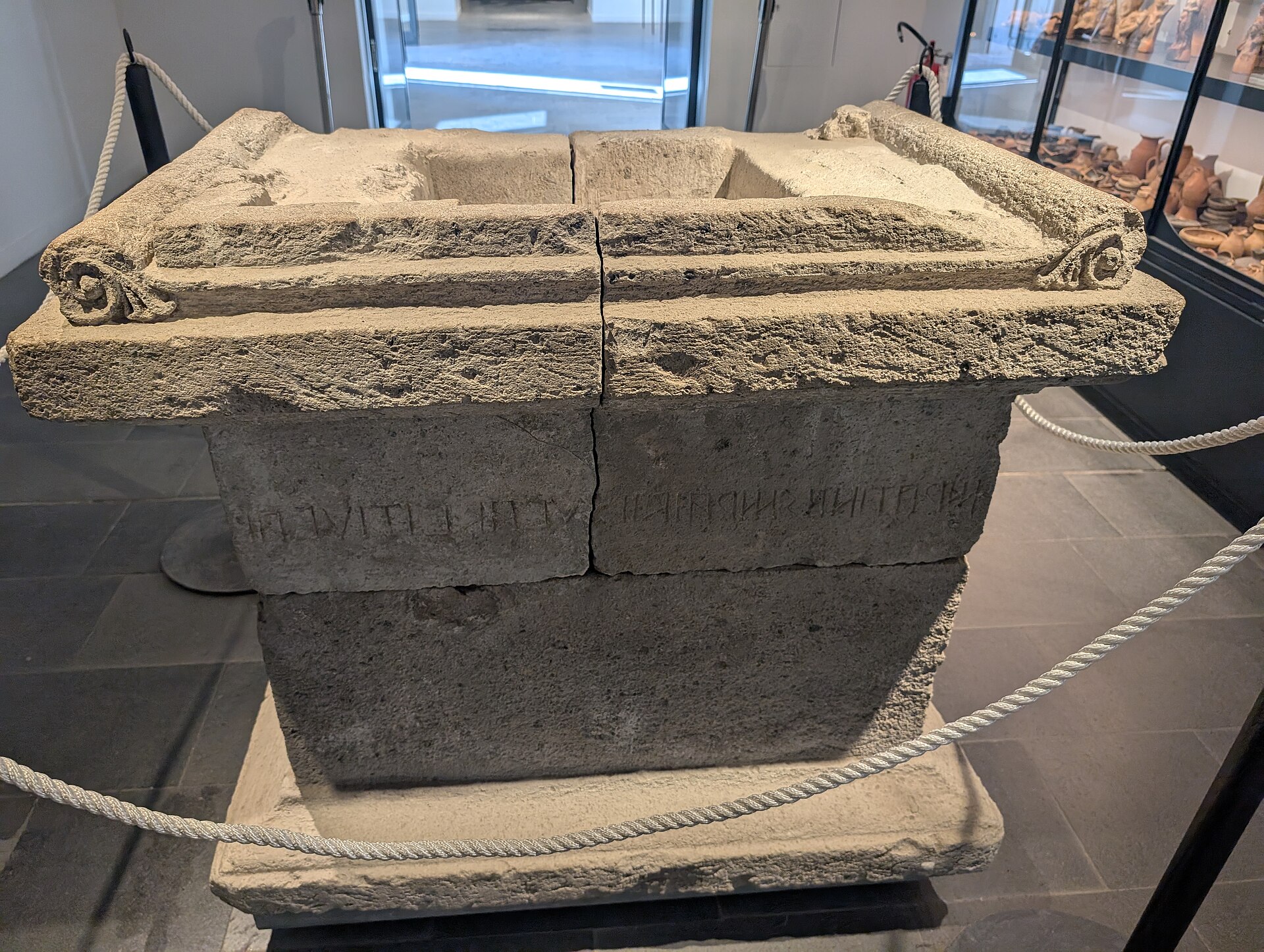
- It was written for some six hundred years in three scripts — Etruscan-derived, Greek, and Latin — leaving around 800 inscriptions.
Gallery
Sources
- Oscan was a Sabellic Italic language of southern Italy; its last datable texts are graffiti at Pompeii sealed by the AD 79 eruption of Vesuvius Wikipedia
- Oscan is an extinct language of the Italic branch, spoken in south-central Italy Britannica
- Oscan was written from right to left using an alphabet adapted from Etruscan script in the 7th century BC, and later also in Greek and Latin alphabets — three distinct scripts across its roughly six centuries of attestation. Omniglot
A graveyard tradition: leave a stone to show you came, and remembered.