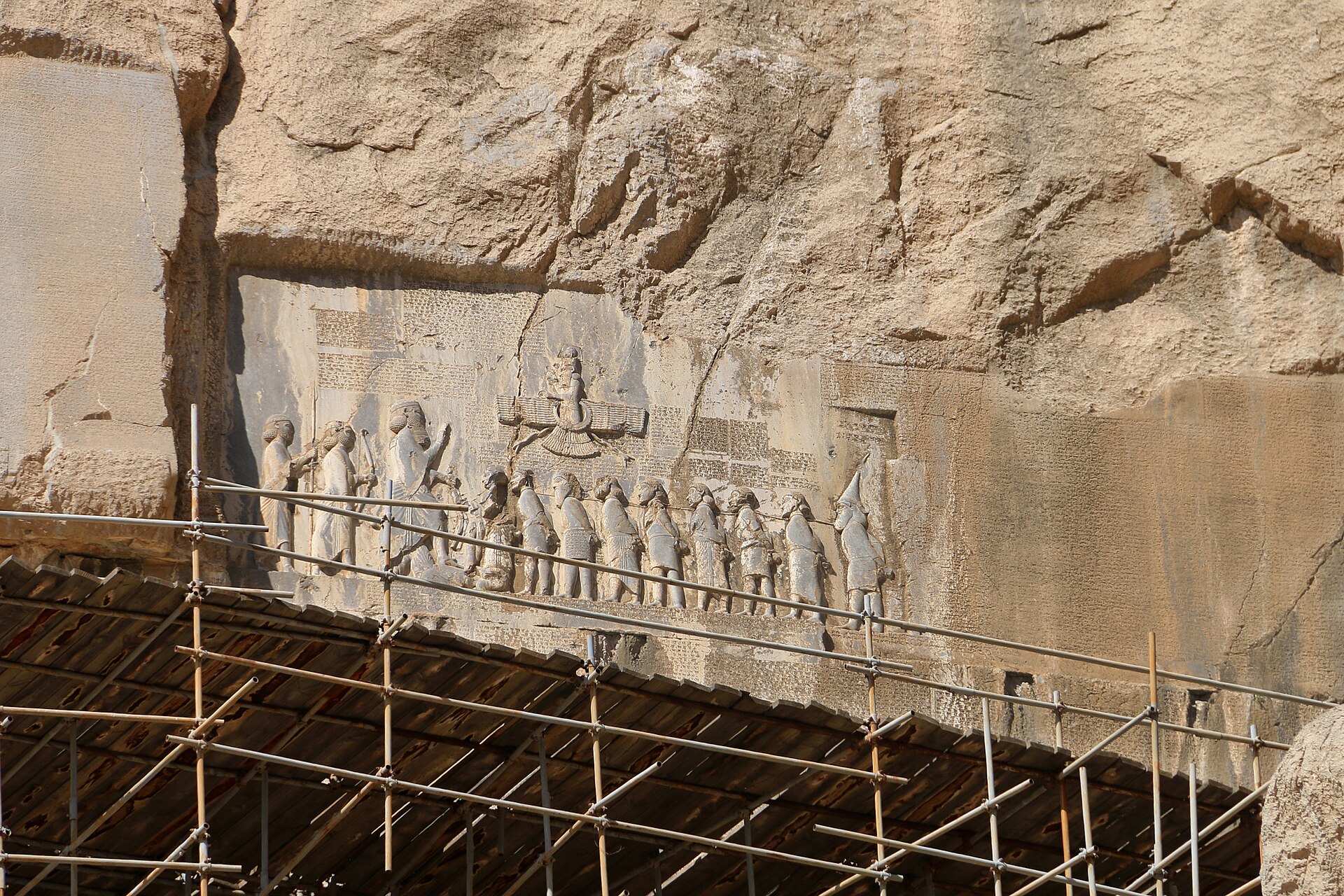
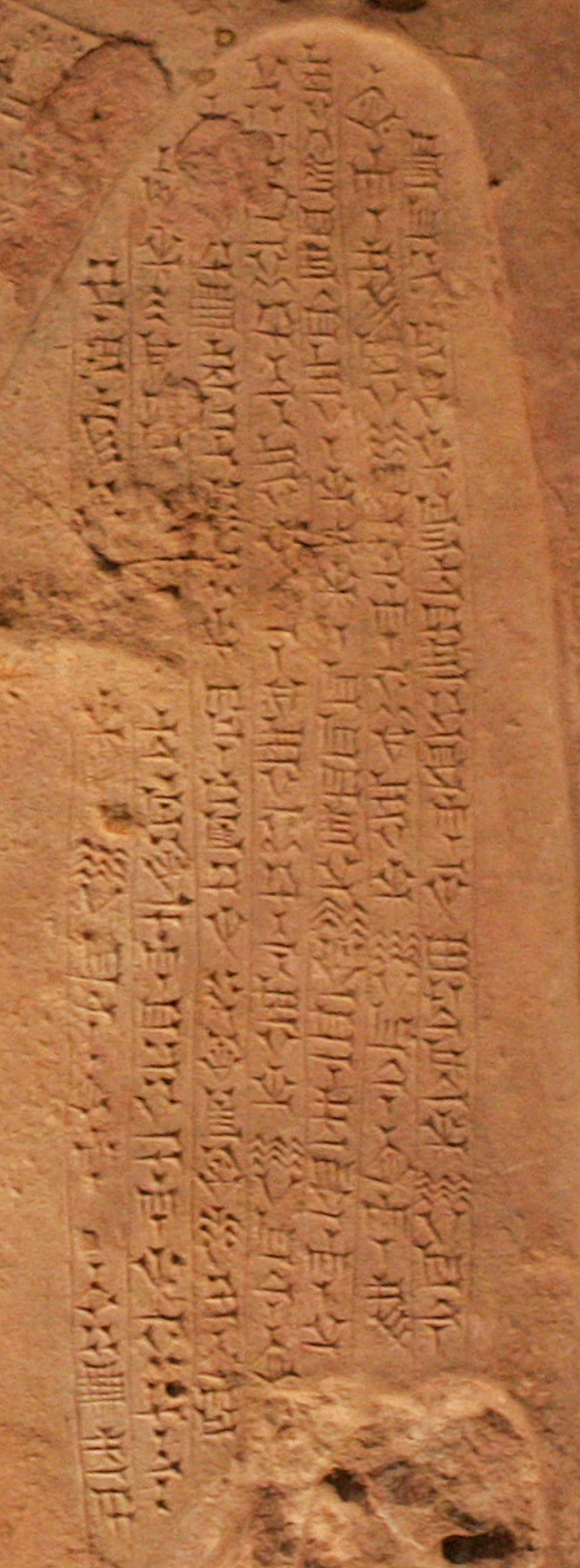
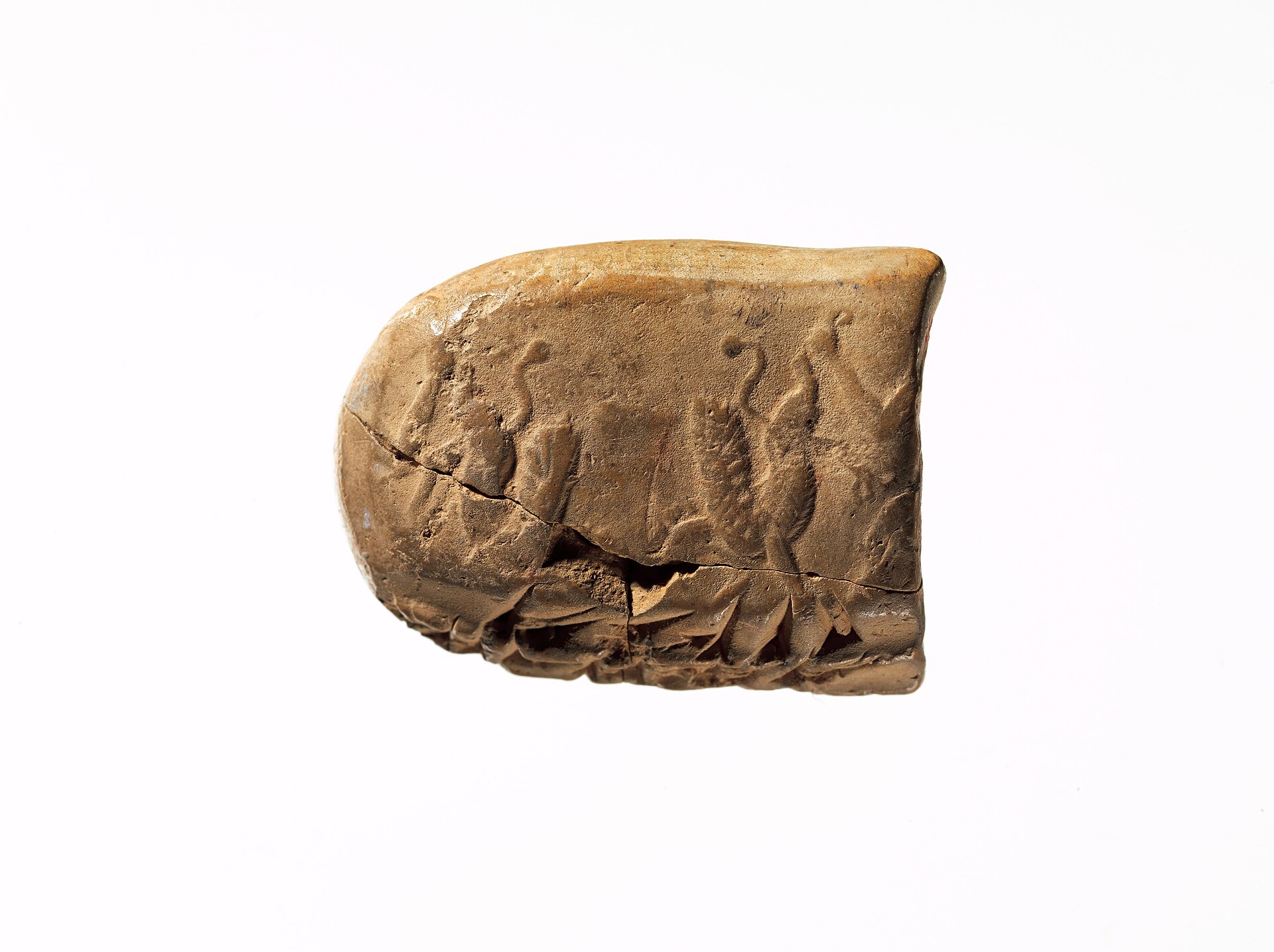
Elamite was spoken in Elam, centered on the cities of Susa and Anshan in what is now southwestern Iran, from at least the mid-third millennium BCE. It shares no securely established kinship with Sumerian, Akkadian, or the Indo-Iranian languages that eventually surrounded it — it remains a language isolate, one end of a linguistic lineage with no other known members. Elam built and lost its own kingdoms for over two thousand years before the Achaemenid Persians absorbed it in the sixth century BCE, and even then Elamite did not disappear from public life: it became one of the three official languages of the Persian court, cut alongside Old Persian and Babylonian into the cliff face at Behistun, and used for the great majority of the tens of thousands of Persepolis Fortification and Treasury tablets that ran the empire’s day-to-day accounts. Aramaic and Old Persian steadily crowded it out of administration over the following decades, and the last securely dated Elamite texts belong to the Achaemenid period, trailing off with the empire’s collapse around 330 BCE. No descendant language survives it, and because so few reliable bilingual keys exist, scholars still argue over basic points of its grammar. The language that once filed the paperwork for the largest empire on Earth is now legible only in fragments — the empire it served is long gone, and most of its own verb system went down with it.
Worth remembering
- The Persepolis Fortification Archive holds tens of thousands of clay tablets, the majority in Elamite, recording the rations, wages, and travel of the Achaemenid Persian empire's workforce — the paperwork of the largest state the ancient world had yet seen.
- Darius I had his res gestae carved three times into the cliff at Behistun: once in Old Persian, once in Babylonian, and once in Elamite.
Gallery
Sources
- Elamite is an extinct language spoken by the ancient Elamites, generally considered a language isolate with no demonstrable relatives; the lack of established relatives makes its interpretation difficult Wikipedia
- Elamite was spoken in the Elamite Empire between about 3,100 BC and 330 BC in the provinces of Khuzestan and Ilam in southwestern Iran; its cuneiform script, adapted from Akkadian and using about 130 symbols, was used from about 2500 BC to 331 BC Omniglot
- Elamite civilization spanned roughly 3200 to 539 BCE; Elamite continued as an official chancery language under the Achaemenid Persians, appearing alongside Old Persian and Babylonian on the trilingual Behistun inscription of Darius I, and the Proto-Elamite script was only deciphered between 2017 and 2020 World History Encyclopedia
A graveyard tradition: leave a stone to show you came, and remembered.