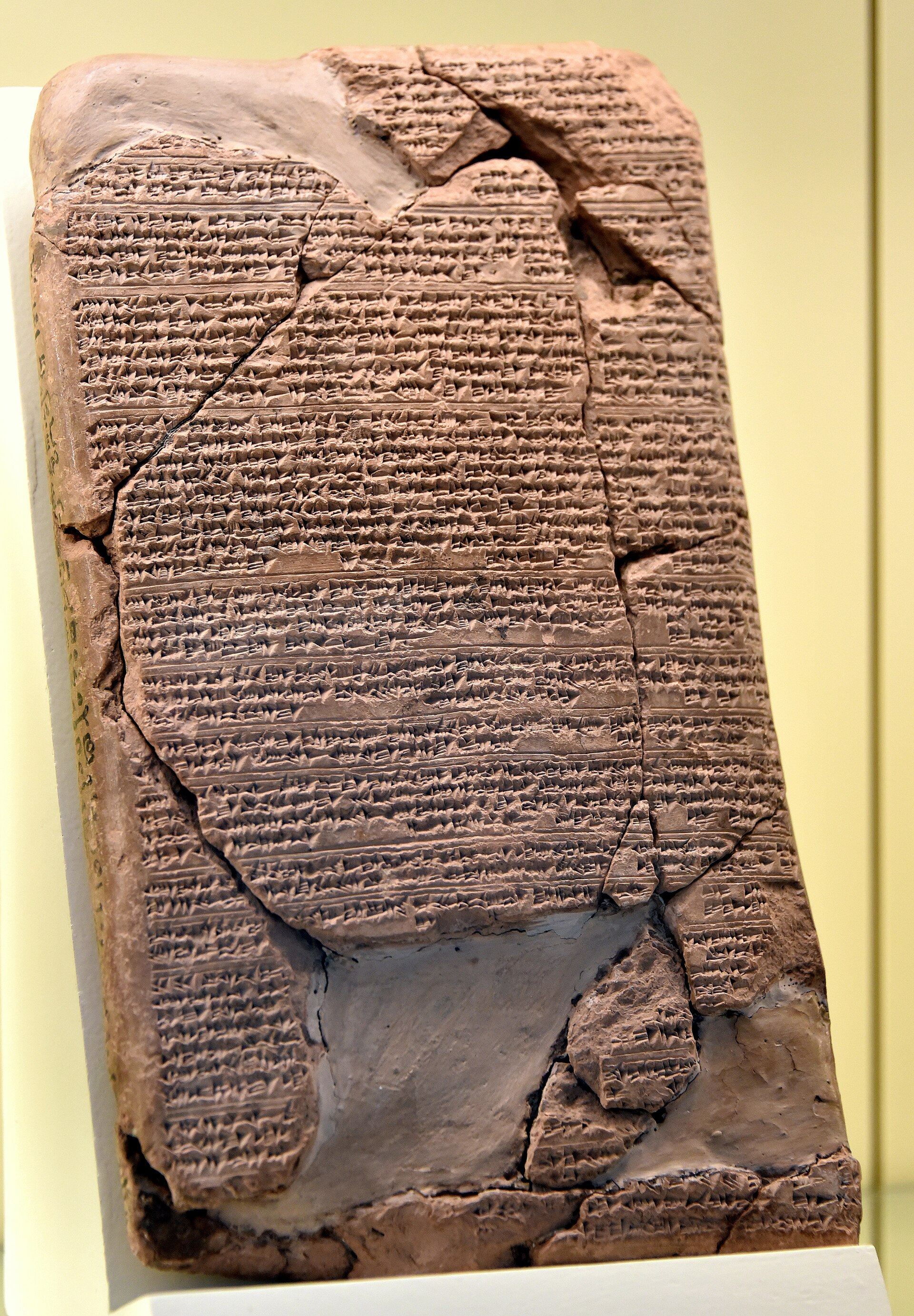
The cuneiform lingua franca of the ancient Near East for two millennia, the tongue of the Epic of Gilgamesh, finally elbowed aside by Aramaic and left to the scribes.
Died
100 CE
Dead for
1,926 yrs
Cause of death
Assimilation
Replaced by
Aramaic
The Obituary
Akkadian was the East Semitic language of Assyria and Babylonia, named for the city of Akkad. Adopting the cuneiform script from Sumerian, it became the dominant tongue of Mesopotamia and, for much of the second millennium BCE, the diplomatic lingua franca of the entire Near East. Its Babylonian and Assyrian dialects carried literature, law, and astronomy, from the Epic of Gilgamesh to the diplomatic Amarna letters sent to the pharaohs of Egypt. From the 8th century BCE, the rise of Aramaic steadily displaced it in everyday speech, and the last cuneiform texts were written around the first century CE.
Worth remembering
It was the language of the Epic of Gilgamesh and the diplomatic letters found at Amarna in Egypt.
Akkadian split into the famous Babylonian and Assyrian dialects of the great Mesopotamian empires.
Gallery
Amarna letter in Akkadian cuneiform from Tushratta of Mitanni to Pharaoh Amenhotep III, c. 1370 BCE, Vorderasiatisches Museum BerlinOsama Shukir Muhammed Amin FRCP(Glasg) · CC BY-SA 4.0
Sources
Akkadian was the East Semitic language of Assyria and Babylonia, written in cuneiform and gradually replaced by Aramaic. Wikipedia
Akkadian served as a diplomatic lingua franca across the ancient Near East before its decline. Encyclopaedia Britannica
Akkadian was spoken in Mesopotamia from about 2,800 BCE to 500 CE; its cuneiform script was adapted from Sumerian around 2,350 BCE, and it split into Babylonian and Assyrian dialects before being displaced by Aramaic from the 8th century BCE onward. Omniglot
A graveyard tradition: leave a stone to show you came, and remembered.
Buried nearby — by shared fate or a neighbouring lifespan.