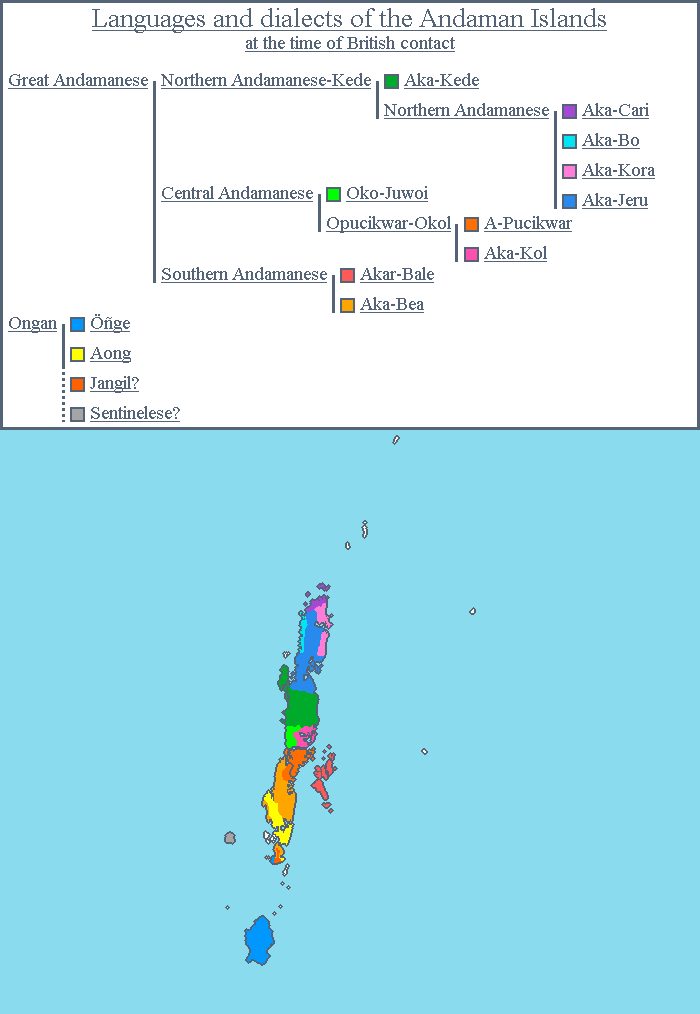
Aka-Bo was one of the Great Andamanese languages of the Andaman Islands in the Bay of Bengal — a language isolate family, not known to be related to any other tongue, that may descend from some of the first human migrations out of Africa, tens of thousands of years ago. The Great Andamanese once numbered in the thousands across a dozen tribes. British colonization in the 19th century brought disease and displacement that collapsed the population to a few dozen.
The last fluent speaker of Aka-Bo was a woman called Boa Sr, who survived the 2004 Indian Ocean tsunami and lived to about 85. In her final years she had no one to speak Bo with; she told a linguist that she felt lonely for it, and had taken to talking to the birds. She died on 26 January 2010. With her, a line of human speech that may have run unbroken for forty thousand years came to an end.
Worth remembering
- The Great Andamanese languages may trace back to one of the first human migrations out of Africa, tens of thousands of years ago.
- In her final years Boa Sr said she was lonely with no one left to speak Bo with, and had taken to talking with the birds.
Gallery

Sources
- Aka-Bo, a Great Andamanese language; last speaker Boa Sr died 2010 Wikipedia
- Boa Sr, last speaker of Aka-Bo, one of the oldest Andamanese lineages Wikipedia
- The Andamanese language family is not known to be related to any other language, making it an isolate family; the number of speakers has been steadily decreasing as the Great Andamanese population collapsed after British contact. Encyclopaedia Britannica
A graveyard tradition: leave a stone to show you came, and remembered.