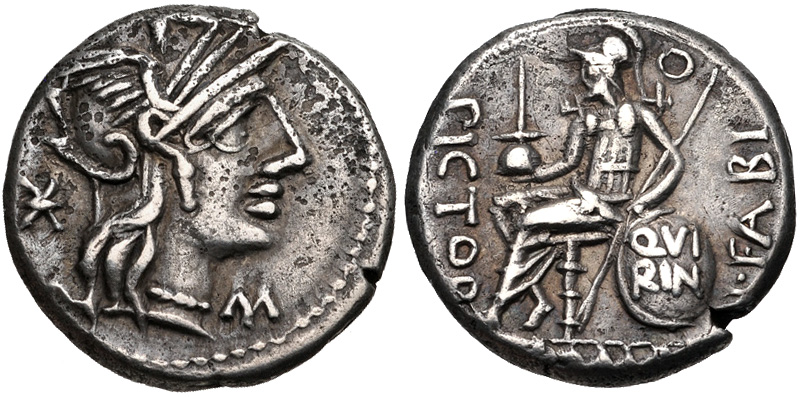
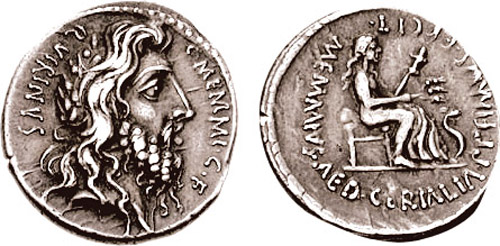
Quirinus stood among the three highest gods of early Rome. The Archaic Triad — Jupiter, Mars, Quirinus — fixed him at the top of the pantheon, and the priesthood reflected it: the flamen Quirinalis was one of three flamines maiores, the major patrician priests. He had his own festival, the Quirinalia of 17 February, marking the birthday of his temple on the Quirinal Hill, dedicated in 293 BCE by the consul L. Papirius Cursor. The hill carried his name, the Collis Quirinalis, where Sabine settlers were said to have raised his first altar. By the 2nd century BCE Romans identified him with the deified Romulus: the founder, taken up to the gods after his disappearance, became Quirinus. A god of war, of the assembled community of Roman citizens, with a priest, a temple, a hill, and a king’s apotheosis attached to his name.
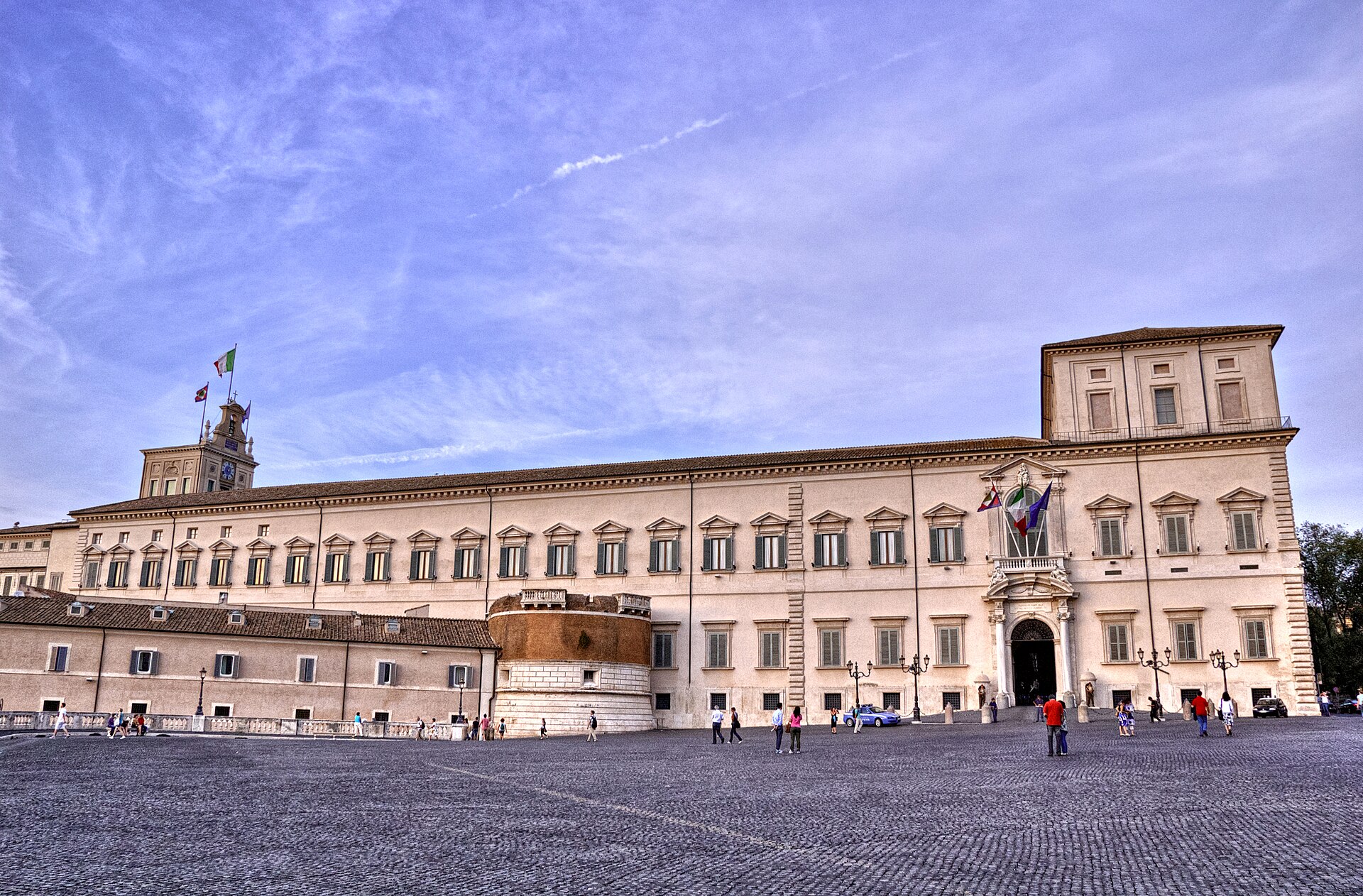
The fall was slow and quiet. The newer Capitoline Triad — Jupiter, Juno, Minerva — supplanted the Archaic Triad, pushing Mars and Quirinus out of the central cult, and by the Classical period Roman writers themselves no longer agreed on what Quirinus had even been. The flamen still walked, the Quirinalia still sat on the calendar on 17 February, but the worship behind them had thinned to ritual habit and antiquarian curiosity. When Theodosius I suppressed Roman state paganism in 391–392 CE, Quirinus was already a relic — dead as a living cult for centuries, kept alive only on the religious calendar and in the speculations of scholars like Varro and Cicero. The Quirinal Hill still bears his name. The palace built on it is now the official residence of the President of the Italian Republic, “the Quirinale” a synonym for the Italian head of state — while almost no one who passes it remembers there was once a god there at all.
Worth remembering
- Quirinus was the third member of Rome's Archaic Triad, ranked alongside Jupiter and Mars; his priest, the flamen Quirinalis, was one of the three great patrician flamines maiores.
- His festival, the Quirinalia, fell on 17 February — the dies natalis of his temple, dedicated on the Quirinal Hill in 293 BCE — and the hill itself was named for him; by the 2nd century BCE he was identified with the deified Romulus, founder of Rome.
Gallery
Sources
- Quirinus formed an archaic triad with Jupiter and Mars; the flamen Quirinalis was one of the three major flamines, though outranked by the priests of Jupiter and Mars in the ordo sacerdotum. By the Classical period Romans already questioned his significance. Encyclopedia.com (Encyclopedia of Religion)
- Quirinus was most likely originally a Sabine war god, included in the Archaic Triad with Mars and Jupiter; his chief priest was the flamen Quirinalis, one of the three flamines maiores; his festival the Quirinalia was held on 17 February; by the 2nd century BCE he was identified with the deified Romulus; he became less significant when Juno and Minerva replaced Mars and Quirinus in the later Capitoline Triad. Wikipedia
- The temple of Quirinus on the Quirinal Hill was dedicated in 293 BCE by L. Papirius Cursor; the Quirinalia on 17 February was its dies natalis; by the Augustan period Quirinus was identified with the deified Romulus (Ovid). Key to Umbria (Roman Republic reference)
A graveyard tradition: leave a stone to show you came, and remembered.