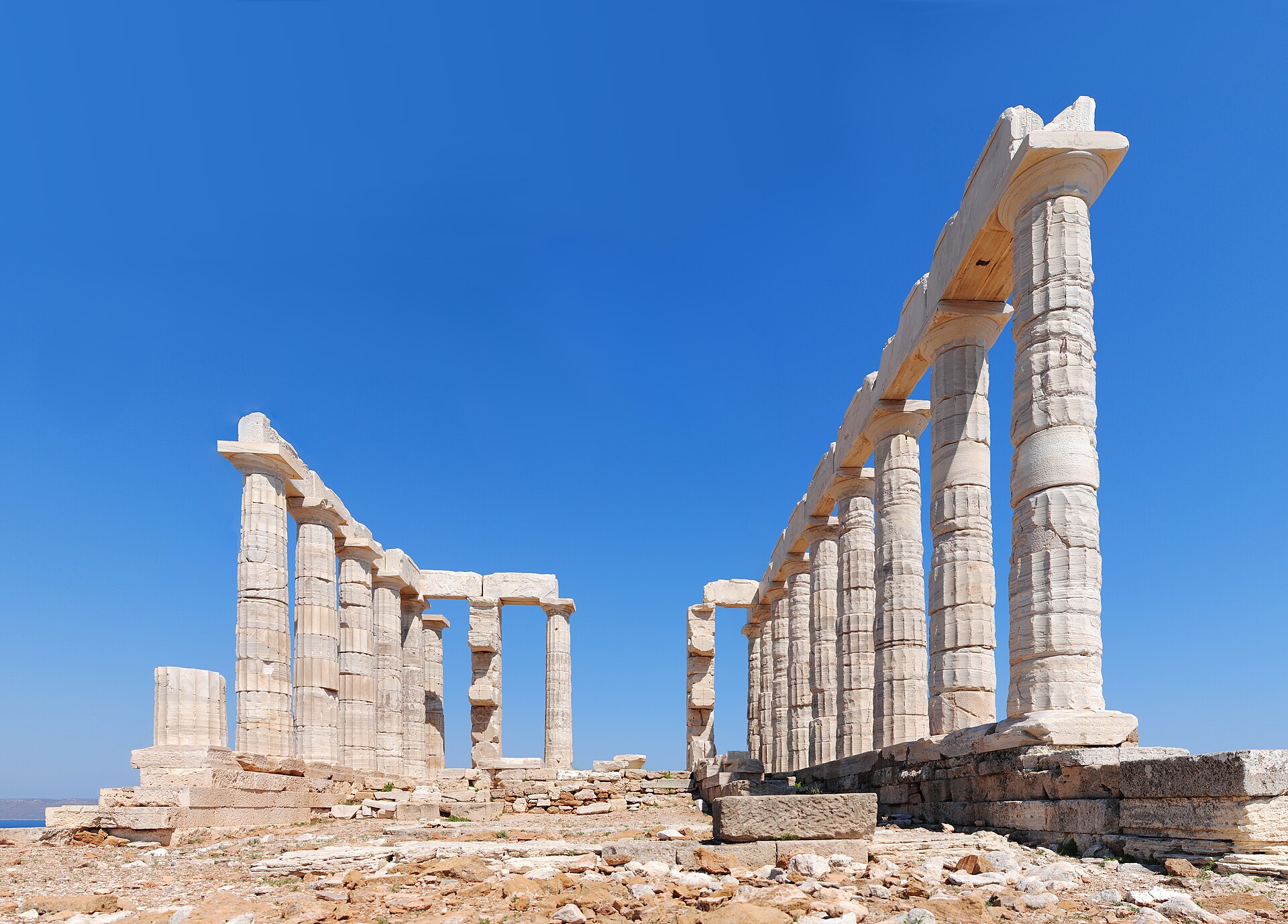
Poseidon was the sea-god of a seafaring people. Son of Cronus, brother to Zeus and Hades, he took the seas when the three drew lots to divide the cosmos, and he held the parts of the world a Greek could not control: the water that carried every ship, the earthquakes that brought down cities, the horses bred along the coasts. Sailors and fishermen left him votive offerings before a voyage; his worshippers sacrificed bulls, stallions and rams to keep the water calm. At Corinth the Greeks honoured him every two years with the Isthmian Games, chariot and horse races run in his name on the same circuit as the Olympics. His temple on Cape Sounion, marble and Doric, was raised between 444 and 440 BCE under Pericles on a cliff above the Aegean, sited so the columns stood in view of the ships steering home to Piraeus. He lost the contest for Athens to Athena, whose olive tree the city preferred to his saltwater spring and horse, but the loss did not dent the cult: he had temples and festivals from Attica to the Peloponnese, and a Greek with a sea to cross could not afford to ignore him.
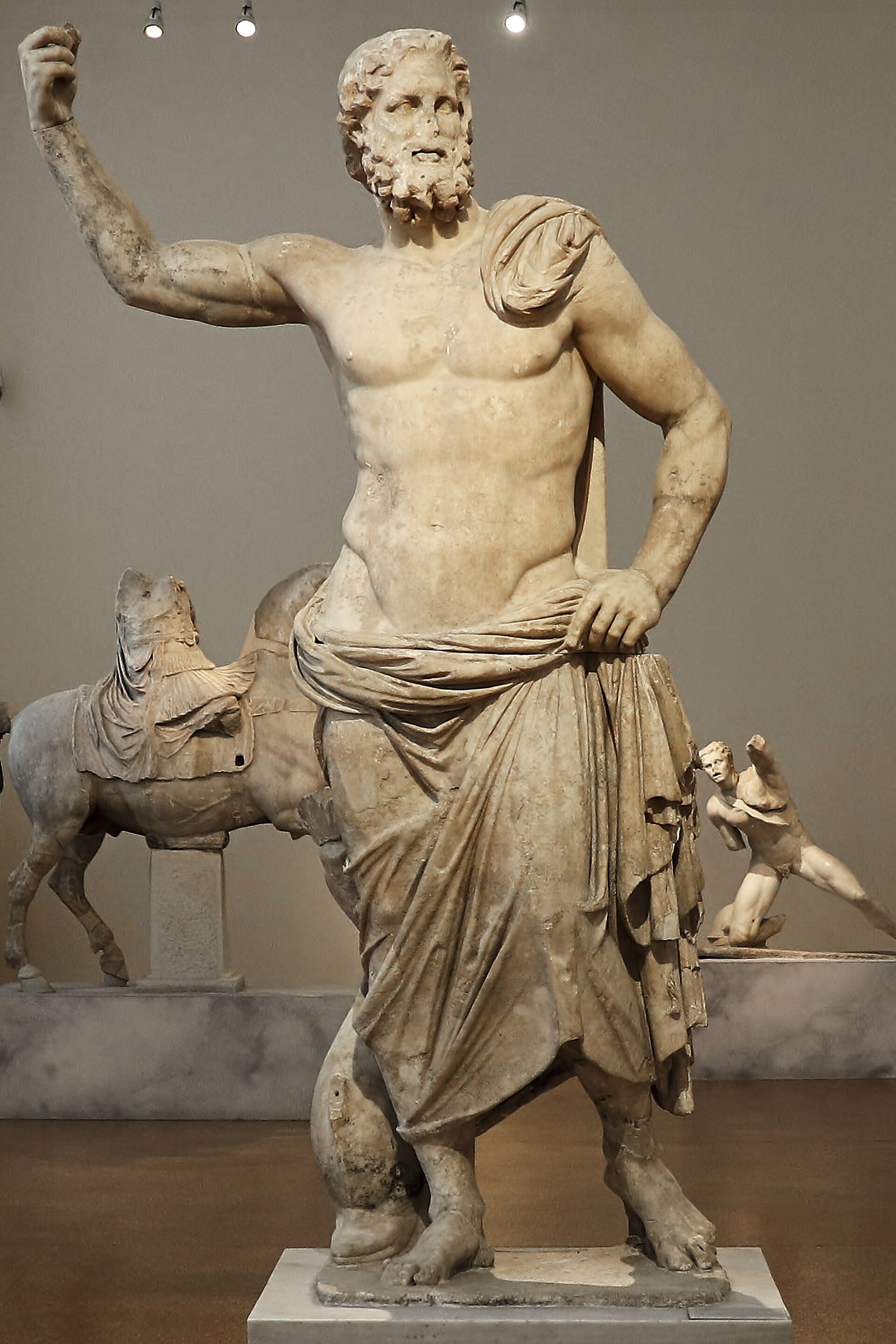
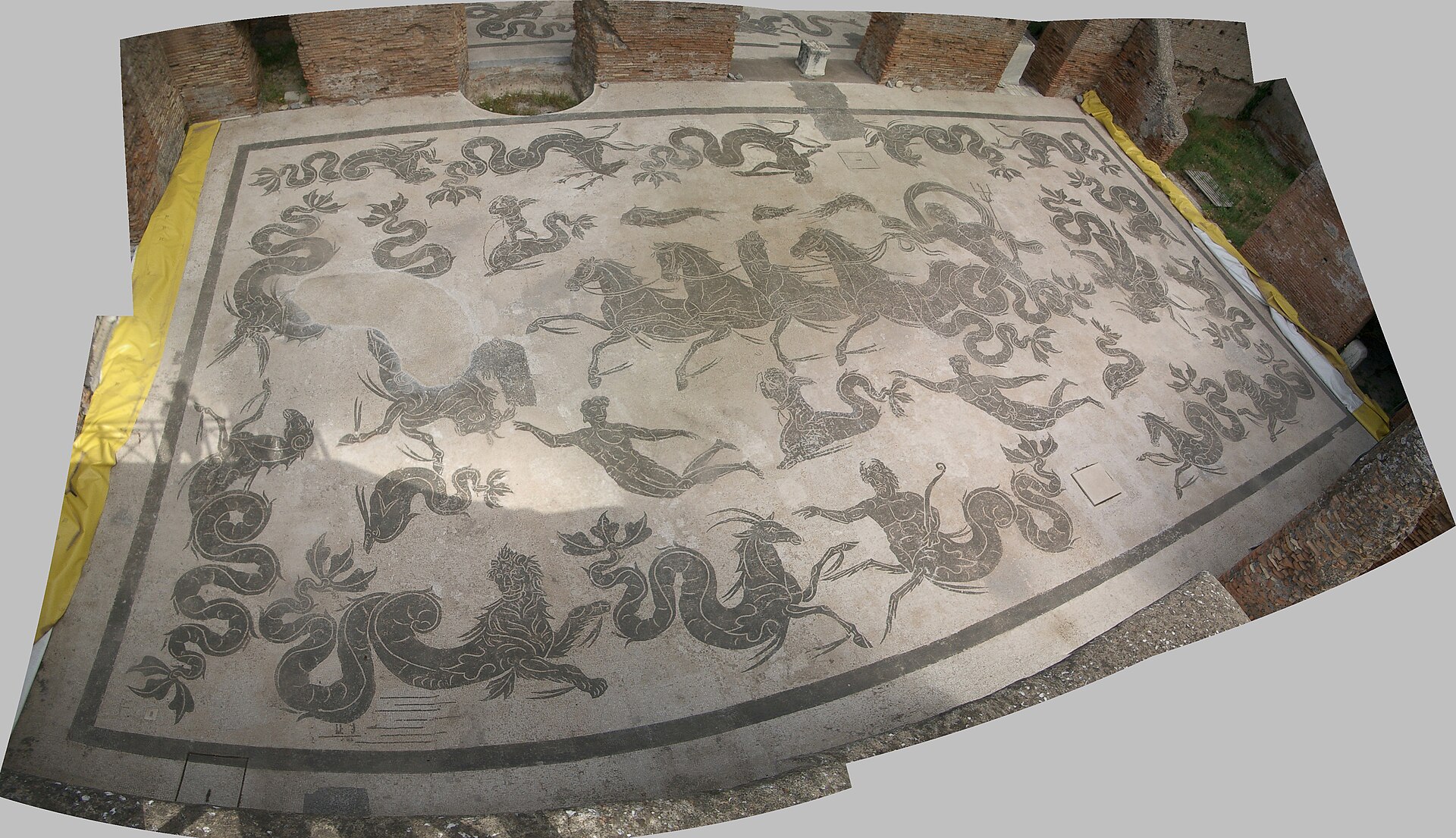
The cult ended by decree. The Edict of Thessalonica made Nicene Christianity the Roman state religion in 380 CE, and between 391 and 393 Theodosius I issued edicts that banned public and private pagan sacrifice and ordered the temples closed. The offerings to Poseidon stopped, the Isthmian Games for the gods lapsed, and the sanctuaries were abandoned or converted. What survives is stone and bronze with no worship behind it. Fifteen columns of the Sounion temple still stand on their cliff, photographed by tourists for the same sea view that once marked it for sailors; a colossal Poseidon from Milos and a Neptune mosaic from Ostia sit in museums as art. Nobody sacrifices to him. The columns and the statues are visited; the god is not.
Worth remembering
- His 5th-century BCE marble temple still stands on Cape Sounion above the Aegean, built 444–440 BCE under Pericles where it could be seen by ships rounding into Piraeus; fifteen Doric columns remain standing on the cliff.
- Mariners and fishermen everywhere made votive offerings to Poseidon for protection, and his cult sacrificed bulls, stallions and rams; at Corinth he was honoured every two years with the Panhellenic Isthmian Games of horse and chariot racing held in his name.
Gallery
Sources
- Poseidon was son of Kronos and brother of Zeus and Hades; the three brothers drew lots and Poseidon gained the seas. He was the focus of the Panhellenic Isthmian Games at Corinth, and lost the contest for Athens to Athena when her olive tree was preferred to his saltwater spring and horse. World History Encyclopedia
- The marble temple of Poseidon at Cape Sounion was built 444–440 BCE under Pericles on a promontory overlooking the sea lanes to and from Piraeus; 15 of its original Doric columns still stand on the cliff above the Aegean. Wikipedia
- With the Edict of Thessalonica (380 CE) Nicene Christianity became the Roman state religion; in 391–392 CE Theodosius I banned public and private pagan sacrifice and ordered pagan temples closed, ending organized worship of the old gods. World History Encyclopedia
A graveyard tradition: leave a stone to show you came, and remembered.