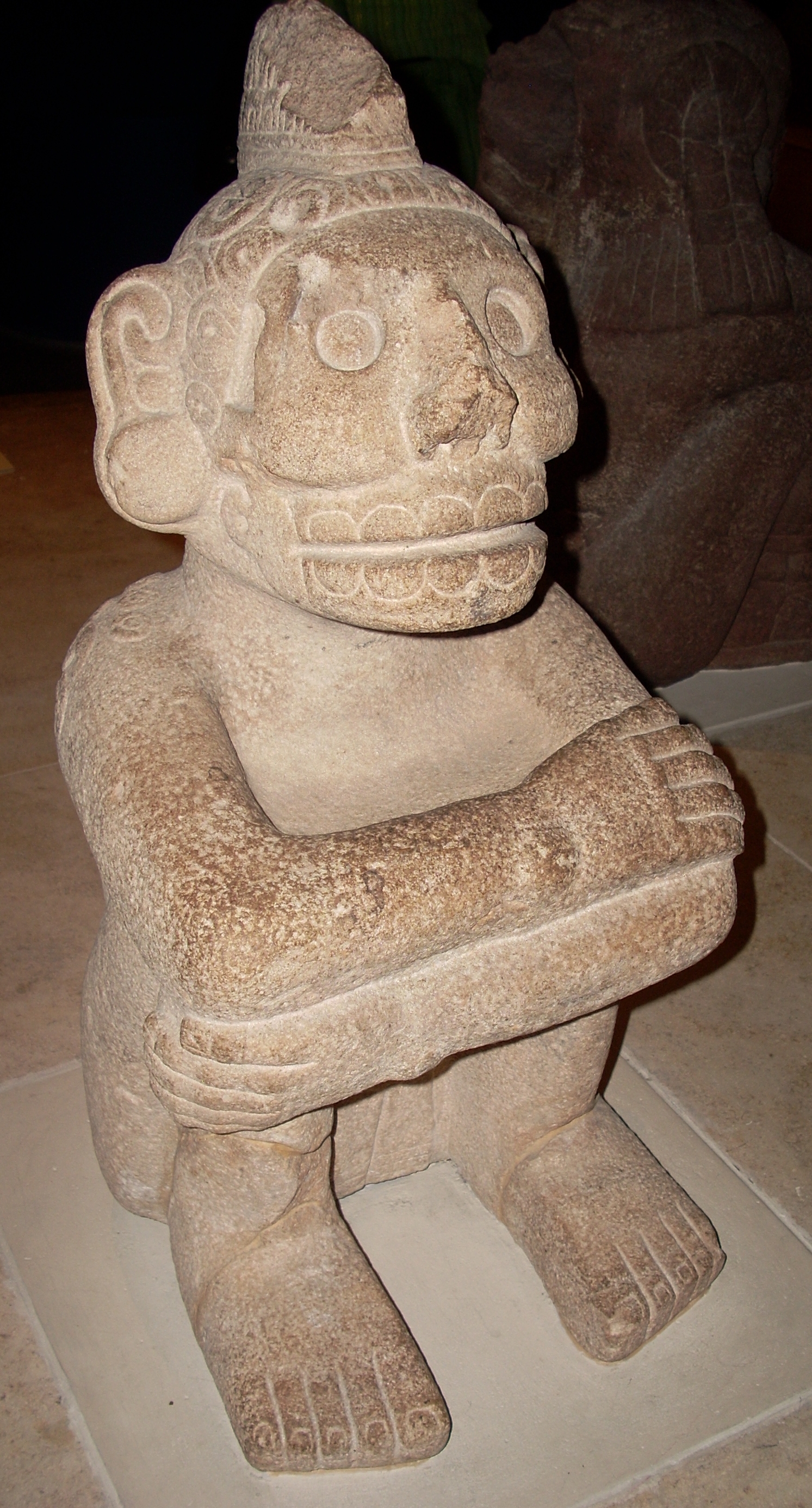
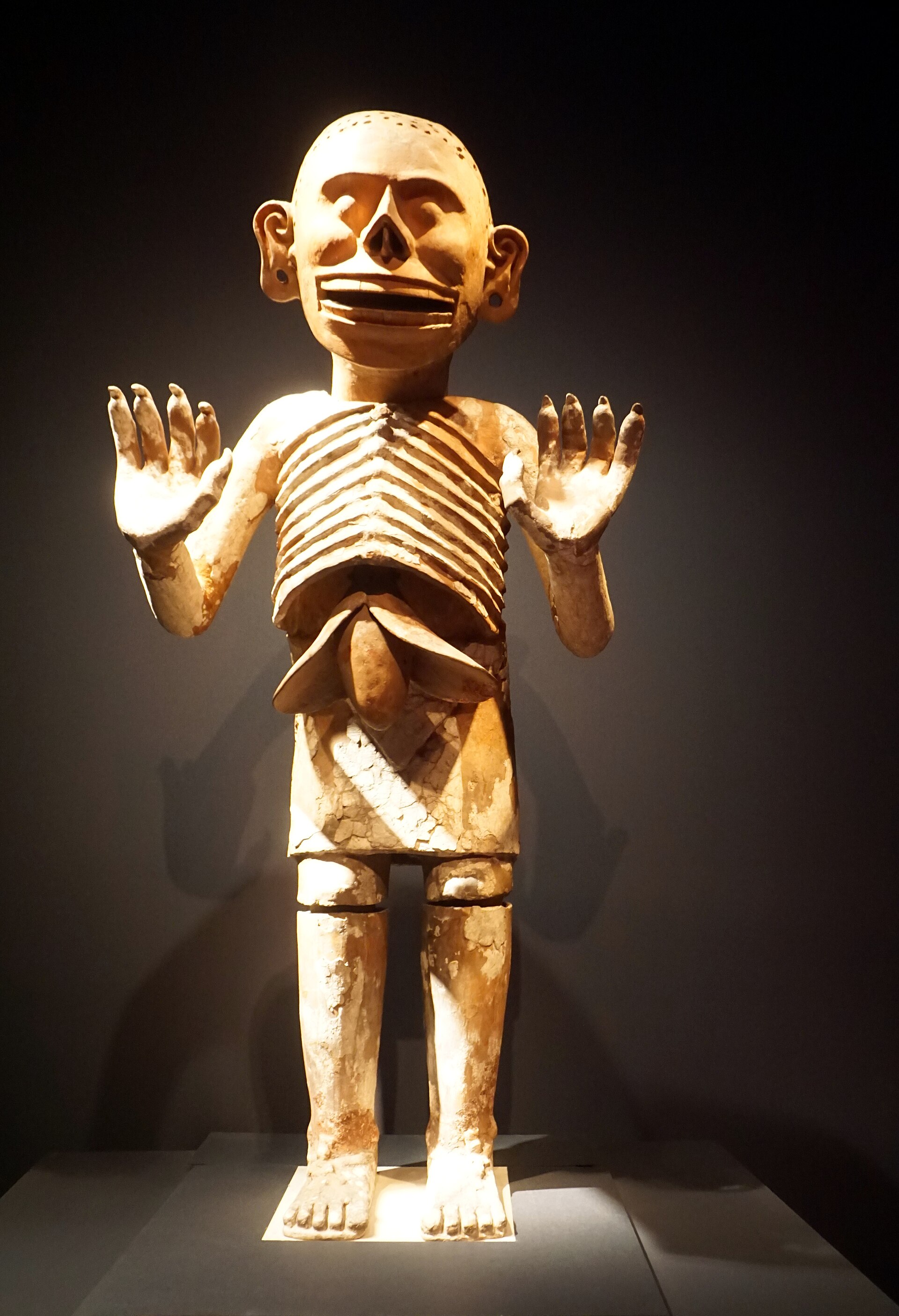
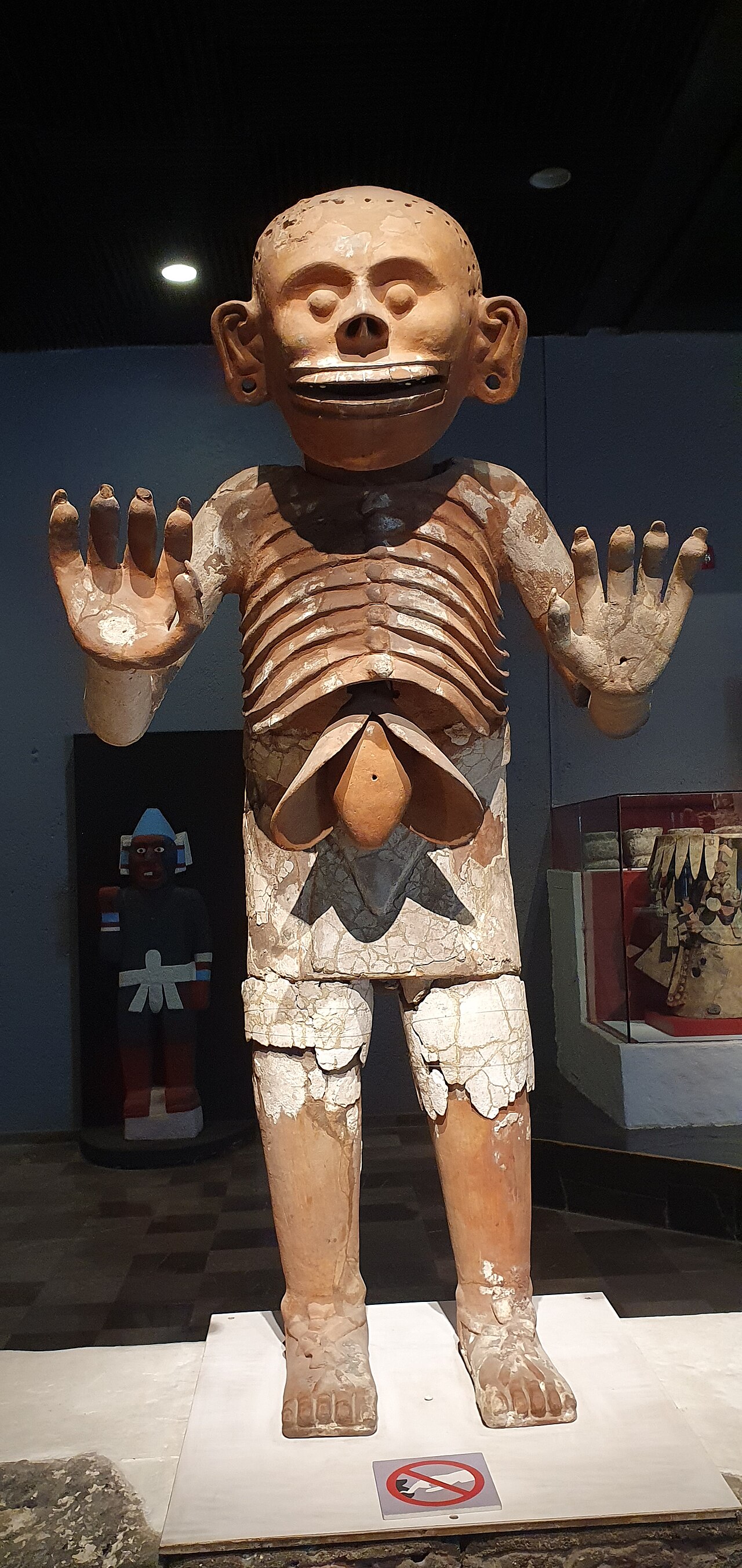
Aztec lord of Mictlan, the lowest underworld — a blood-spattered skeleton who guarded the bones Quetzalcoatl stole to remake mankind.
Born
100 BCE
Died
1521 CE
Lived
1,621 years
Dead for
505 yrs
Cause of death
Conquest · Forgotten
Replaced by
Catholicism
The Obituary
Mictlantecuhtli was the Aztec god of the dead and king of Mictlan, the ninth and lowest layer of the underworld, where most souls journeyed after a four-year passage. Depicted as a blood-spattered skeleton wearing a necklace of human eyes, he ruled alongside his consort Mictecacihuatl. In myth he guarded the bones of earlier humanity, which Quetzalcoatl stole through trickery to fashion the present race. His worship ended with the Spanish conquest of Tenochtitlan in 1521.
Worth remembering
He guarded the bones of past humanity in Mictlan; Quetzalcoatl tricked him to steal them and create new people.
He is depicted as a blood-spattered skeleton with a necklace of eyeballs, ruling the dead with his consort Mictecacihuatl.
Gallery
Large terracotta statue of Mictlantecuhtli from the House of the Eagles, Templo Mayor, TenochtitlanArjuno3 · CC BY-SA 4.0Sculpture of the Aztec death god Mictlantecuhtli in the Museo del Templo Mayor, Mexico CityJosé Luiz · CC BY-SA 4.0
Sources
Mictlantecuhtli was the Aztec god of the dead and king of Mictlan Wikipedia
He ruled the ninth and lowest level of the underworld with his consort Mictecacihuatl World History Encyclopedia
Mictlantecuhtli ruled Mictlan with his wife Mictecacíhuatl; souls of those who died ordinary deaths made a four-year journey through nine hells before disappearing or finding rest in his realm Encyclopaedia Britannica
Mictlantecuhtli was worshipped universally across the Aztec world because all souls — except those killed violently, women who died in childbirth, or victims of storms — would eventually face him; souls descended nine layers of Mictlan over four years before reaching extinction in the deepest level, Mictlan Opochcalocan World History Encyclopedia
A graveyard tradition: leave a stone to show you came, and remembered.
Buried nearby — by shared fate or a neighbouring lifespan.