
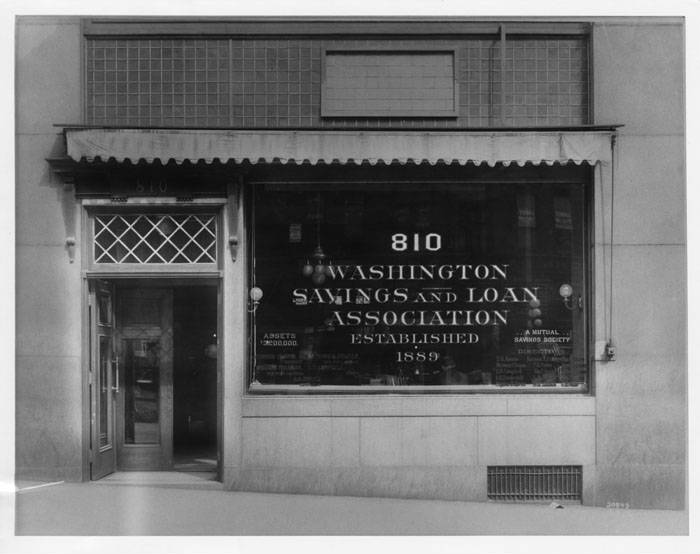
Washington Mutual began in 1889 to help Seattle homeowners rebuild after a fire destroyed the city’s business district. For a century it was a conservative thrift that took deposits and made home loans. From the 1990s it transformed itself, buying dozens of banks to become the largest savings and loan in the country. CEO Kerry Killinger pitched it as the ‘Wal-Mart of banking’ and pushed hard into subprime adjustable-rate mortgages during the housing boom.
When US house prices fell in 2007 and 2008, that mortgage book collapsed. By September 2008 credit markets had frozen and depositors had taken fright; over nine days they pulled $16.7 billion, about 9% of all deposits. On the morning of 25 September 2008 — 119 years to the day after the bank was founded — federal regulators seized it without warning and sold the banking operations to JPMorgan Chase for $1.9 billion. The $307 billion institution was gone by the end of the day, and its holding company filed for bankruptcy the next morning.
Worth remembering
- WaMu grew from a local Seattle thrift into the country's largest savings and loan by buying dozens of other institutions in the 1990s and 2000s, including multi-billion-dollar deals for Home Savings of America and Dime Bancorp.
- CEO Kerry Killinger explicitly modelled the bank on Walmart — working-class customers, cheap high-volume products — which in practice meant a heavy bet on subprime mortgages that earned fees whether or not borrowers could repay.
Gallery

Sources
- Washington Mutual was founded on 25 September 1889; by mid-2008 it held $307 billion in assets across 2,239 branches in 15 states, the largest US savings and loan. Wikipedia
- On 25 September 2008 regulators seized WaMu after customers withdrew $16.7 billion in nine days; the FDIC sold the banking operations to JPMorgan Chase, the largest bank failure in US history. Encyclopaedia Britannica
- CEO Kerry Killinger pushed to make WaMu the 'Wal-Mart of banking', expanding aggressively into subprime and adjustable-rate mortgages through the mid-2000s. Wikipedia
A graveyard tradition: leave a stone to show you came, and remembered.