Mississippi Company · the Mississippi Bubble · John Law's Company of the West
1717 CE1721 CE
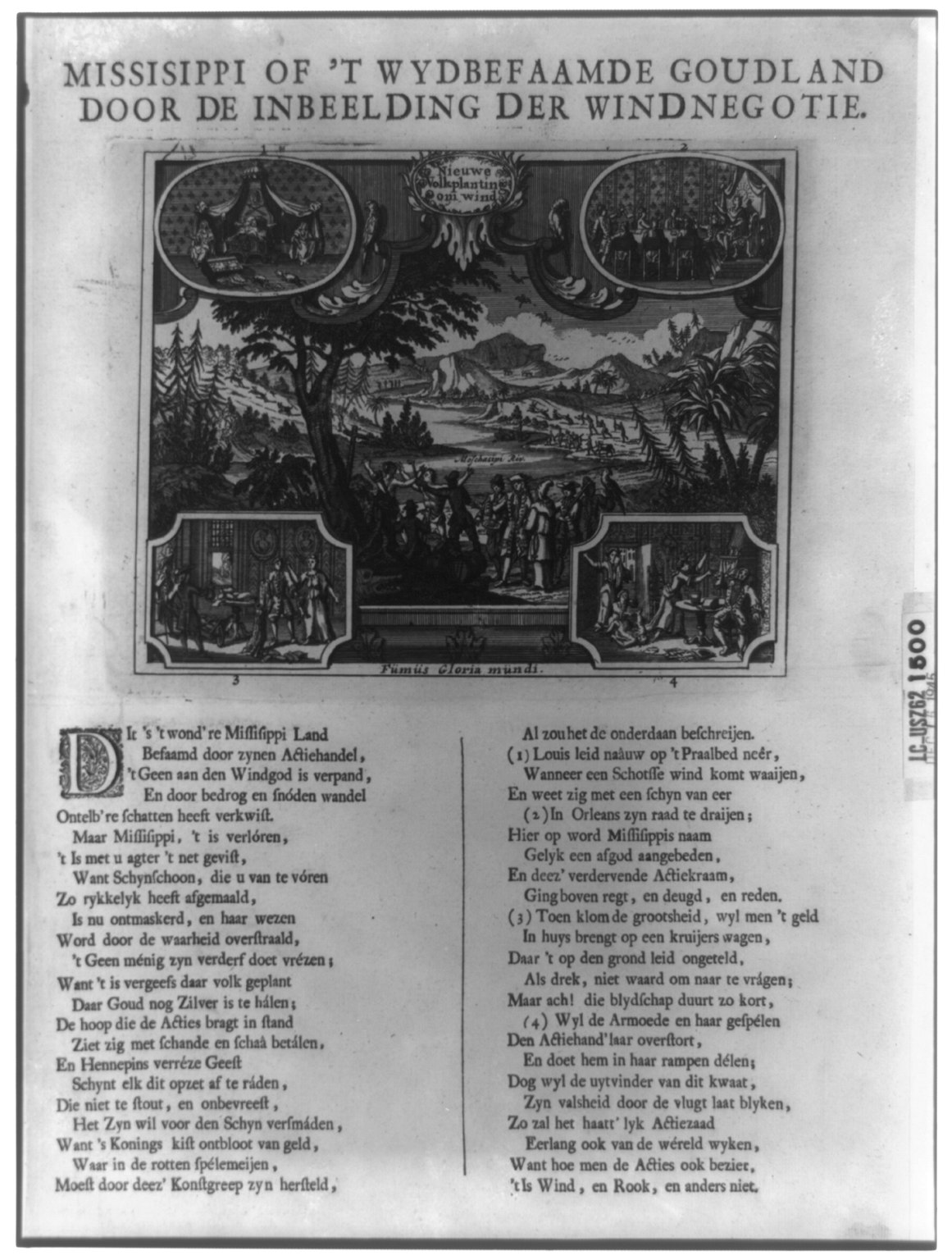
John Law's monopoly on French Louisiana inflated the Mississippi Bubble — a paper-money mania that collapsed in 1720 and bankrupted the French crown.
Born
1717 CE
Died
1721 CE
Lived
4 years
Dead for
305 yrs
At its peak
Shares peaked near 10,000 livres (from 500) in 1720
Cause of death
Overreach
The Obituary
The Compagnie du Mississippi — the Mississippi Company, reorganized in 1717 by the Scottish financier John Law from his Company of the West — held a monopoly over French Louisiana and absorbed France’s other colonial trading companies. Tied to Law’s Banque Royale, which printed paper money, the company became the engine of an experiment to refinance the crown’s debt. Speculation drove its shares from 500 to roughly 10,000 livres in 1719-1720, minting the first “millionaires.” When confidence cracked in 1720 the bubble collapsed, paper money became worthless, and Law fled France. The wreckage soured France on banknotes for generations.
Worth remembering
Shares surged from 500 to about 10,000 livres in 1719-1720 before crashing, coining the word 'millionaire'.
The company held a monopoly over France's Louisiana colony and merged with the royal bank that printed France's money.
Gallery
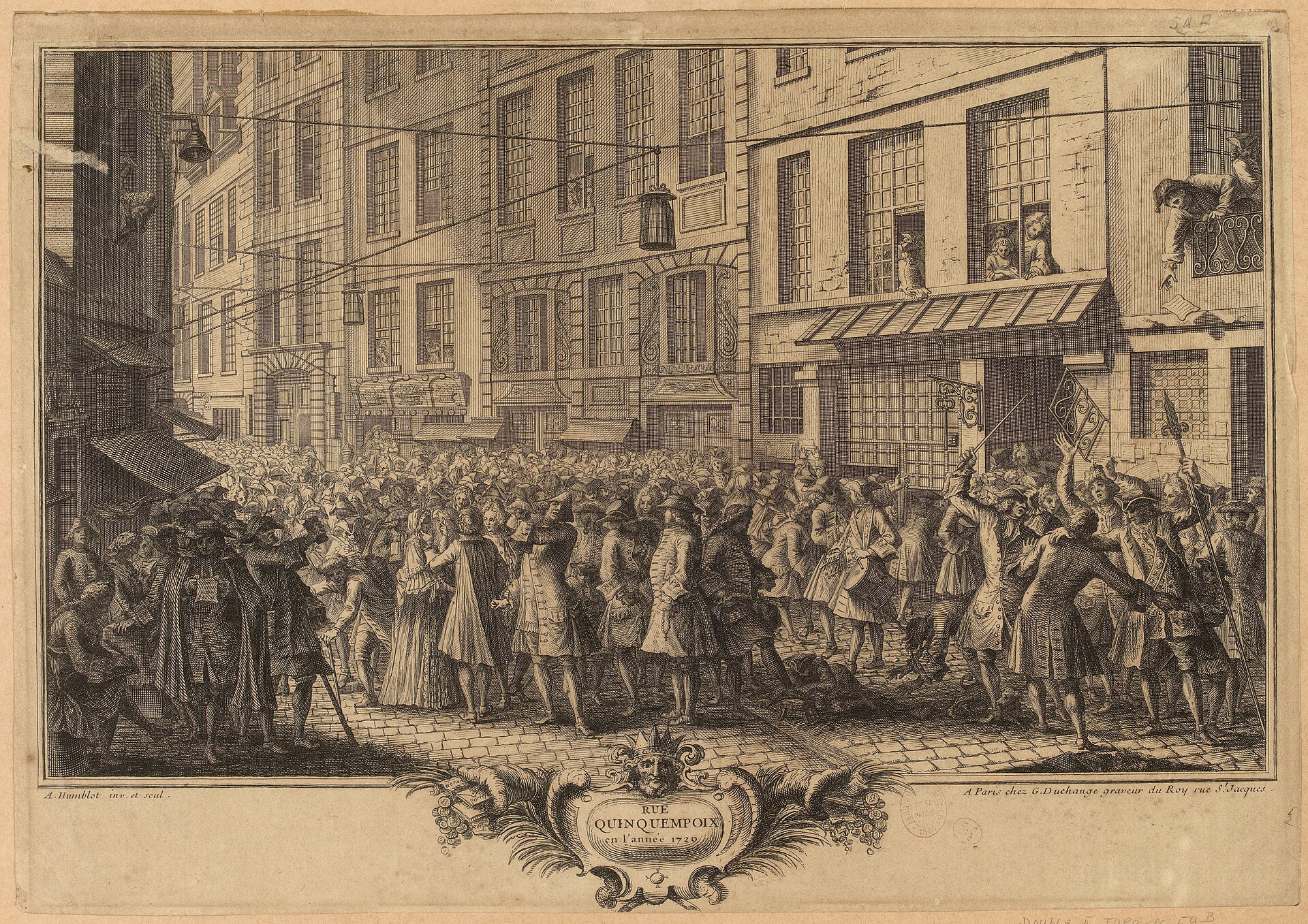
Portrait of John Law, founder of the Mississippi CompanyPublic domain18th-century engraving of the rue Quincampoix in Paris during the 1720 speculation frenzyCC0
Watch
Reinterpreting the 1720 stock market crashes: South Sea, Mississippi & Windhandel bubbles — Yale University
Sources
The Mississippi Company, controlled by John Law, fueled a 1719-1720 stock and paper-money bubble in France that collapsed in 1720 Wikipedia
John Law's monetary system tied the company to the Banque Royale; its collapse discredited paper money in France for decades Wikipedia
John Law's Mississippi Company, granted a monopoly on French trade with Louisiana, fuelled a speculative frenzy that collapsed in 1720 — the Mississippi Bubble — wiping out investors and discrediting Law's paper-money scheme. Encyclopaedia Britannica
A graveyard tradition: leave a stone to show you came, and remembered.
Buried nearby — by shared fate or a neighbouring lifespan.