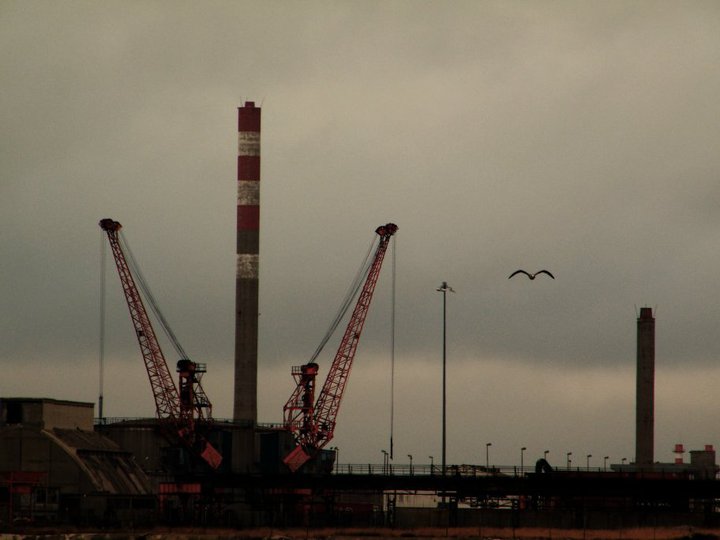
Companhia União Fabril was the largest concentration of economic power Portugal ever produced. Built up from 1898 by Alfredo da Silva and carried on by the Mello family, it grew under the long dictatorship of the Estado Novo into a conglomerate that touched nearly everything: the great chemical works at Barreiro, fertilisers and petrochemicals, tobacco, cement, beer, textiles, a major bank, an insurer, an oil-tanker line, and the Lisnave shipyards. At its height it ran more than 180 companies, employed over 110,000 people, and accounted for something like a twentieth of the entire Portuguese economy — large enough to be called the biggest group in the Iberian Peninsula and one of the largest in Europe.
It was killed by a revolution. When the Carnation Revolution overthrew the dictatorship in April 1974, the new left-leaning provisional governments nationalised the commanding heights of the economy, and under Decree-Law 532/75 of 25 September 1975 the entire CUF conglomerate passed to state control and was broken into separate state enterprises — the chemical arm becoming Quimigal, the shipyards and shipping lines becoming state bodies, the Mello family dispossessed. The group as a unified empire simply ceased to exist. The family later rebuilt and, in the privatisations of the 1990s, bought back the chemical business and revived the “CUF” name; today it marks a chemicals firm and a hospital network. But those are separate companies wearing an old brand. The thing that was once the spine of Portuguese industry died with the revolution.
Worth remembering
- Its founder Alfredo da Silva ran on the motto 'what the country doesn't have, CUF creates'; his chemical complex at Barreiro across the Tagus from Lisbon employed 16,000 by 1930 and was the largest industrial installation in the Iberian Peninsula.
- By the 1970s the group spanned chemicals, fertilisers, tobacco, cement, beer, banking (Banco Totta), insurance, shipping and the Lisnave shipyards, with its own company hospital for 80,000 employees and dependents — an economy in miniature owned by one family.
Gallery
Sources
- At its peak CUF controlled more than 180 companies, employed over 110,000 people and accounted for roughly 5% of Portuguese GDP; it was nationalised under Decree-Law 532/75 on 25 September 1975 after the Carnation Revolution Grupo José de Mello
- CUF was described as the largest economic group in the Iberian Peninsula and one of the five largest in Europe, producing some 5% of all Portuguese wealth; the original group was dismantled after 1975 Público
A graveyard tradition: leave a stone to show you came, and remembered.