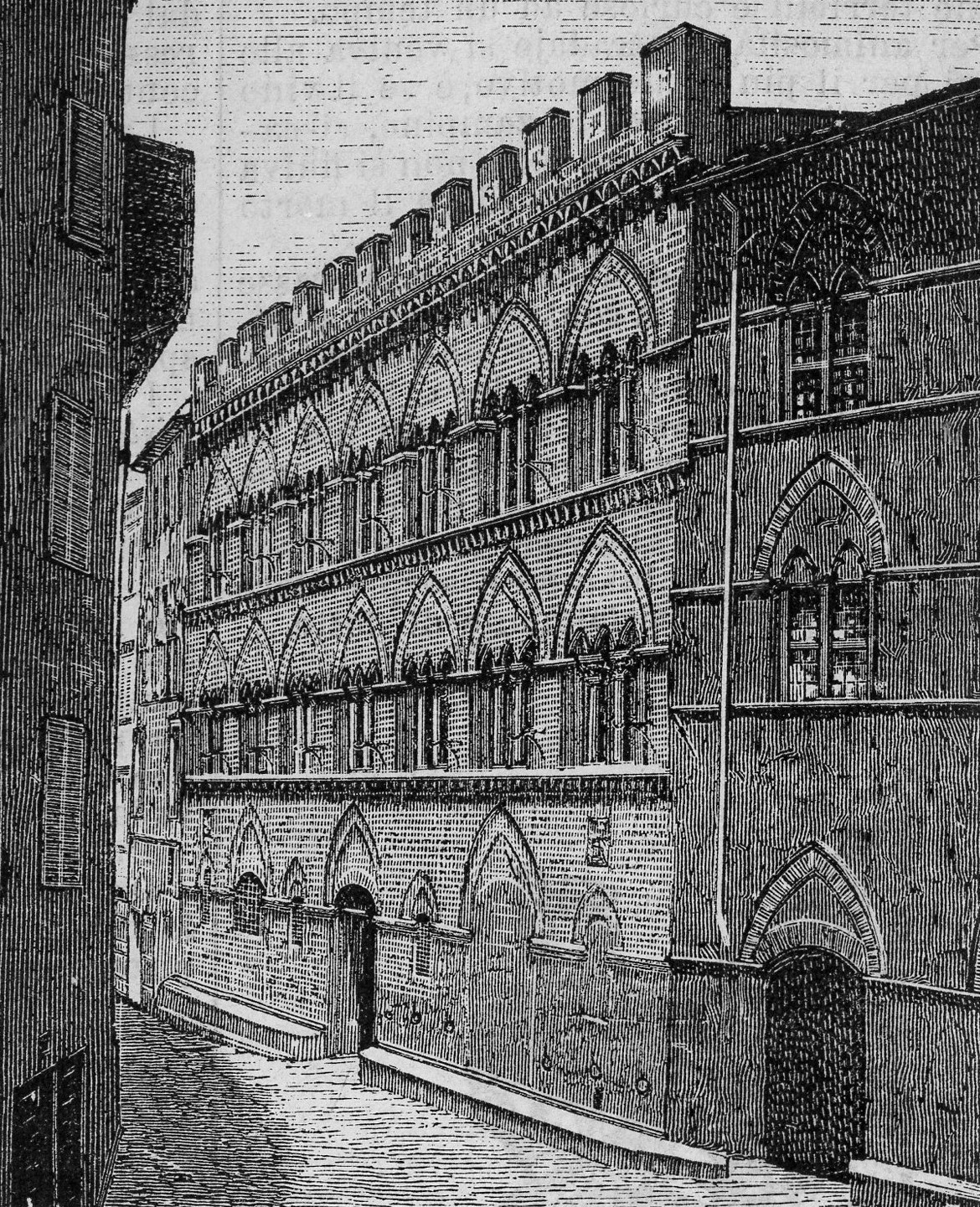
The Gran Tavola — the “Great Table” — was the dominant bank of 13th-century Europe, built in Siena by Orlando Bonsignori and elevated, by the 1260s, to the most prestigious account in Christendom: the treasury of the Pope. For a generation it collected and forwarded the taxes of the entire Catholic Church and lent to kings, financing Charles of Anjou’s seizure of Sicily. Its power rested on two clients, the papacy and the French crown, and that was its weakness.
When Orlando died in 1273 no successor held his authority, and the bank’s two pillars failed almost together. Philip IV of France quarrelled with his Sienese bankers and confiscated their assets in France; Pope Boniface VIII shifted the Vatican’s business to the rising Florentine houses. The Gran Tavola went bankrupt in 1298, wiping out 80,000 florins belonging to Pope Nicholas IV’s estate and dragging the whole Sienese banking community down with it. Florence — the direct beneficiary — inherited the papal accounts and the leadership of European finance, which it never gave back. Siena’s century at the centre of money ended in a single insolvency.
Worth remembering
- Under Pope Urban IV (1261–1264) it collected the pontifical taxes of all Christendom — a private Sienese bank serving as the working treasury of the Catholic Church.
- It financed Charles of Anjou's conquest of the Kingdom of Sicily with a syndicated loan of 200,000 livres tournois, a sum large enough to fund a dynastic war.
Gallery
Sources
- Gran Tavola founded 1255 by Orlando Bonsignori; became the exclusive papal depository in the 1260s; went bankrupt in 1298 after Philip IV's asset seizure and the loss of Boniface VIII's business Wikipedia
- The Gran Tavola was the greatest bank of the thirteenth century; its failure ruined Sienese finance and transferred papal banking to the Florentines The Tontine Coffee-House
A graveyard tradition: leave a stone to show you came, and remembered.