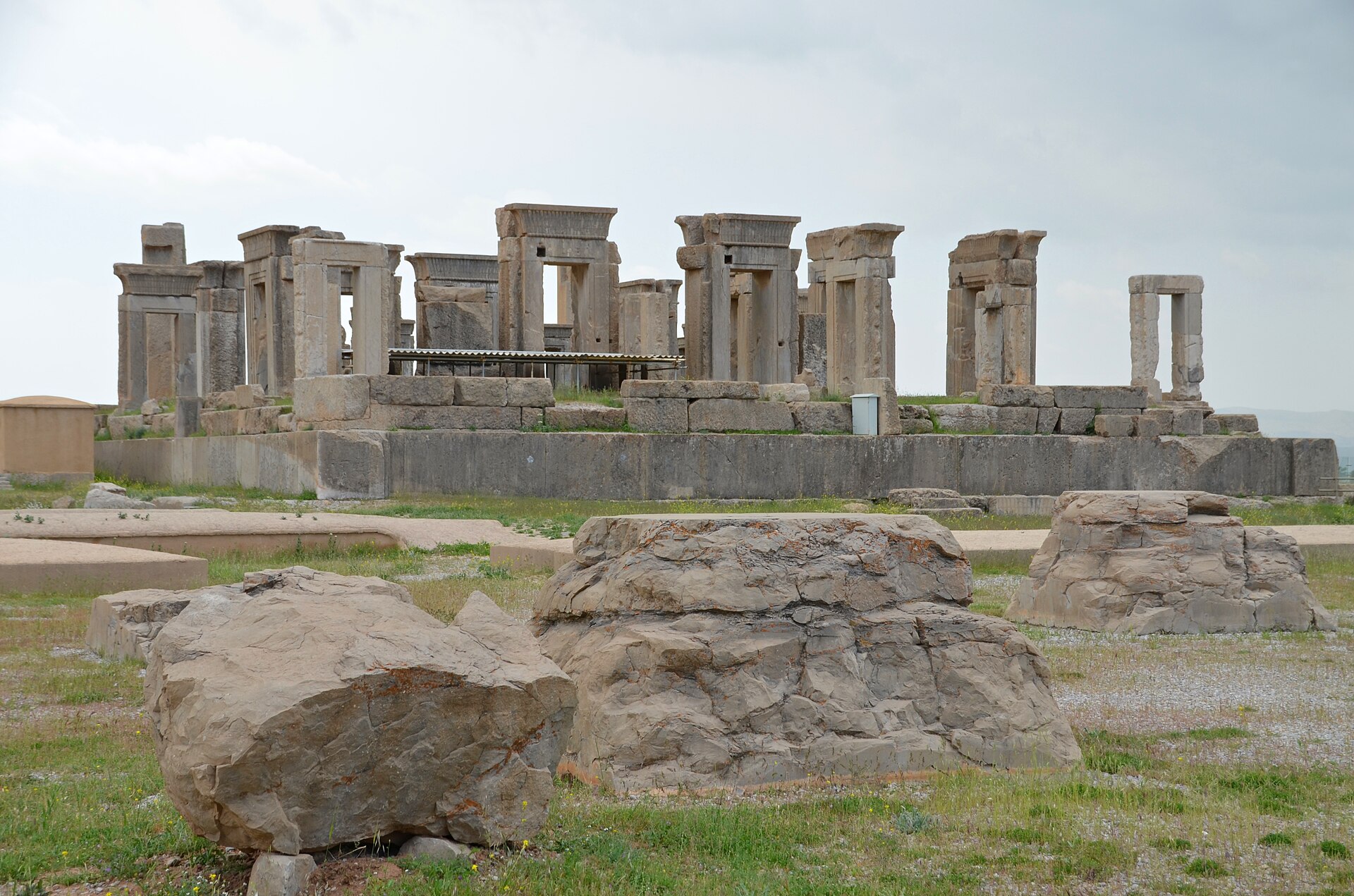
The Achaemenid Empire was the first state to deserve the word “superpower.” Founded around 550 BCE by Cyrus the Great, it stretched at its height from the Aegean to the Indus — some 5.5 million square kilometres, the largest empire the ancient world had yet seen — bound together by the Royal Road, a relay of mounted couriers, and a tolerant administration that let conquered peoples keep their gods and customs.
For two centuries it was the order against which the Greek city-states defined themselves. Then, in a single decade, it fell to one man. Alexander of Macedon shattered the Persian armies at Issus and Gaugamela, and in 330 BCE he reached Persepolis, the ceremonial capital, and burned it — by one account on a drunken impulse after a feast. The last king, Darius III, fled and was stabbed to death by his own satrap. The first empire to rule the known world ended as a looted, smouldering palace.
Worth remembering
- Its Royal Road let mounted couriers cross ~2,700 km in seven days; Herodotus's praise of them — stopped by neither snow nor rain nor night — was later borrowed as a postal motto.
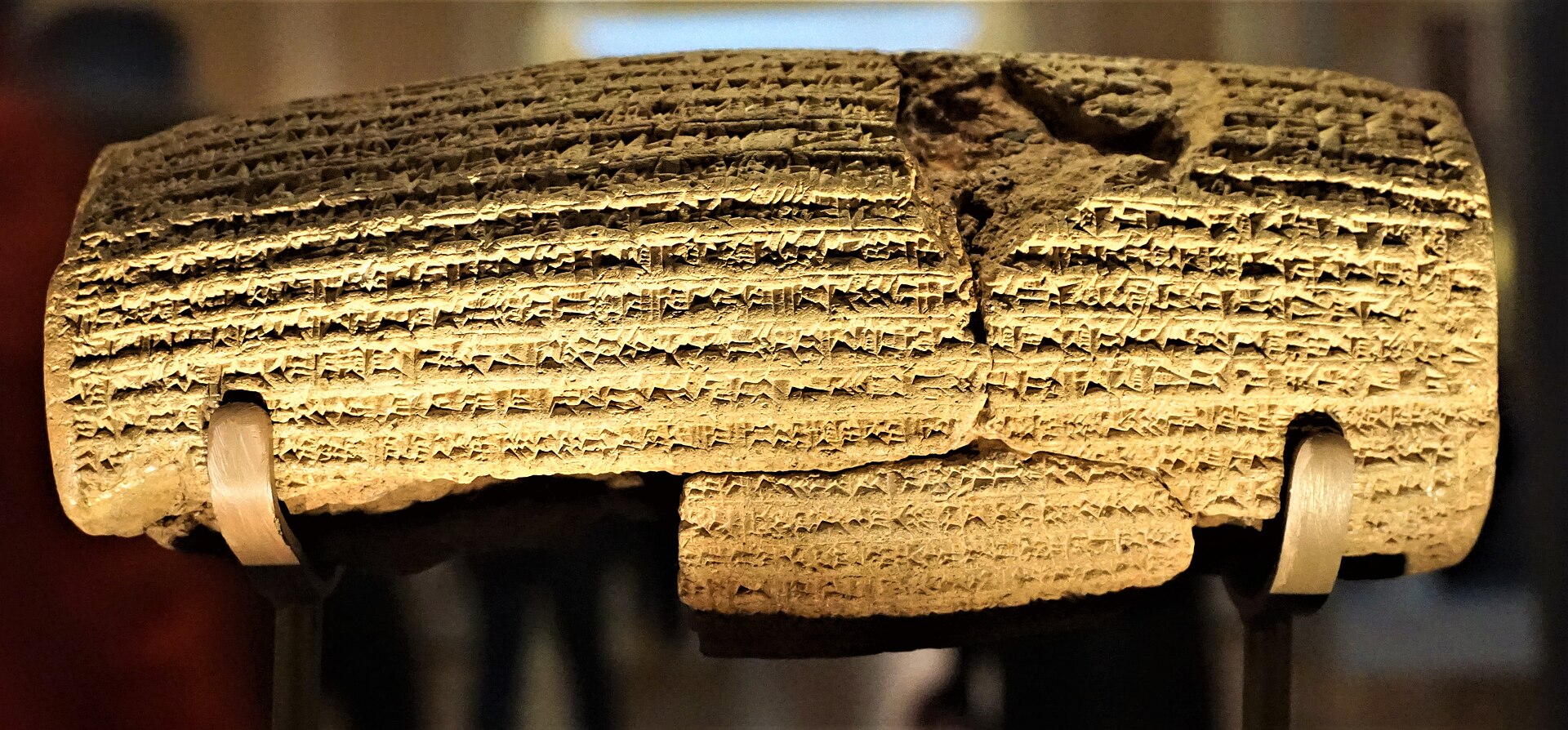
- The Cyrus Cylinder, proclaiming the return of deported peoples to their homes, is often called the first charter of human rights.
The people
-
Cyrus the Great — Founder, c. 600–530 BCE
United the Medes and Persians and conquered Babylon; the Cyrus Cylinder is often called an early charter of tolerance.
-
Darius I — Builder of Persepolis, 550–486 BCE
Created the satrapy system and the Royal Road; began the great palace complex Alexander would later burn.
-
Darius III — Last King of Kings, c. 380–330 BCE
Lost at Issus and Gaugamela, then was murdered by his own satrap Bessus as he fled.
Gallery
Watch
Further reading
Sources
- Achaemenid Empire (c. 550–330 BCE); largest empire of antiquity; fell to Alexander Wikipedia
- Persepolis, the ceremonial capital, burned by Alexander in 330 BCE Wikipedia
- Persepolis was founded by Darius I around 518 BCE as the ceremonial capital of the Achaemenid Empire; it is now designated a UNESCO World Heritage Site and is among the world's greatest archaeological sites World History Encyclopedia
- The Achaemenid Empire at its height stretched from the Aegean to the Indus, making it the largest empire the ancient world had seen; its Royal Road system connected the realm across roughly 2,700 km World History Encyclopedia
- The Achaemenid (Achaemenian) Empire, established by Cyrus the Great c. 550 BCE, fell to Alexander the Great who burned the palace at Persepolis in 330 BCE Encyclopaedia Britannica
A graveyard tradition: leave a stone to show you came, and remembered.