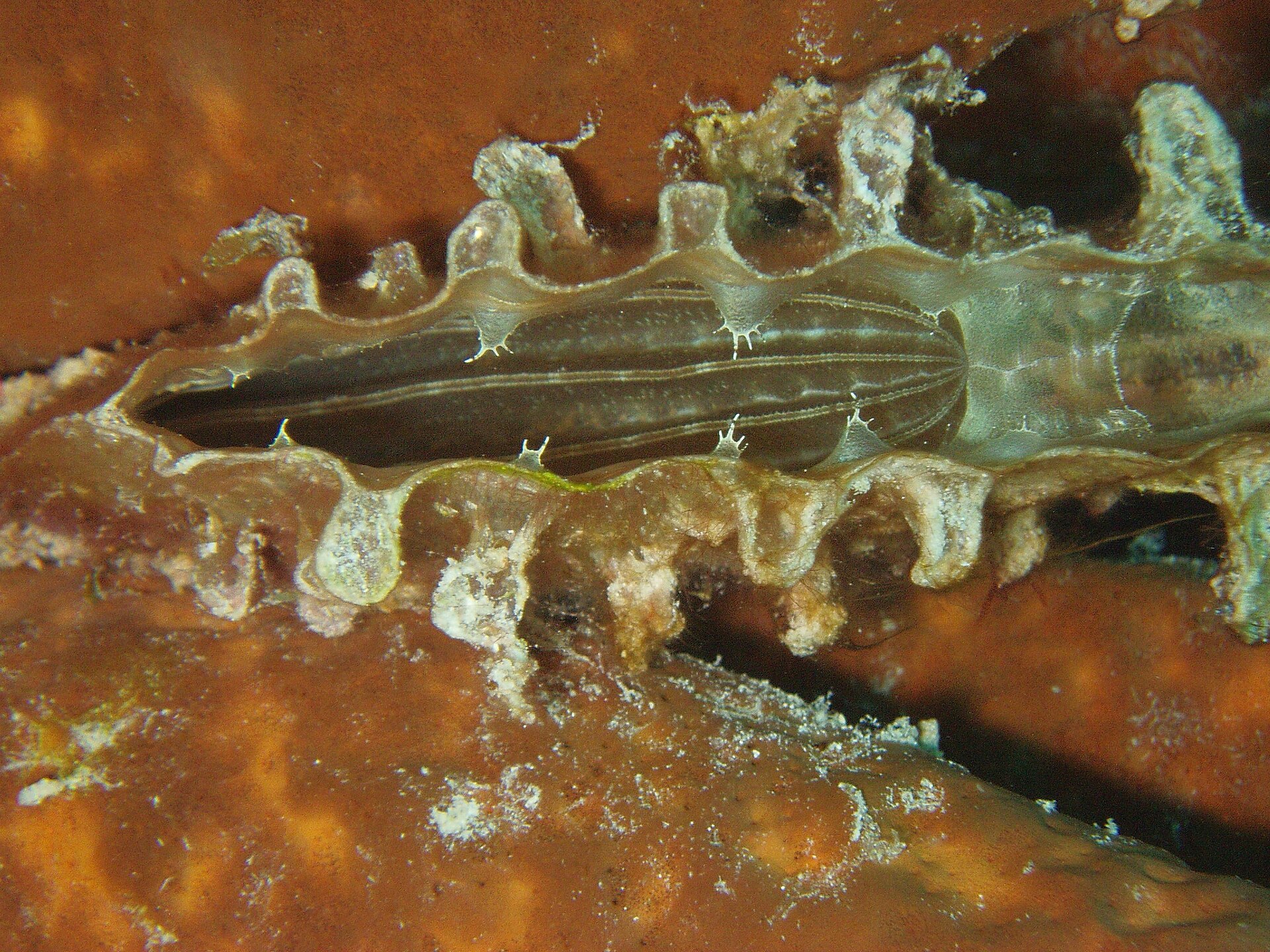
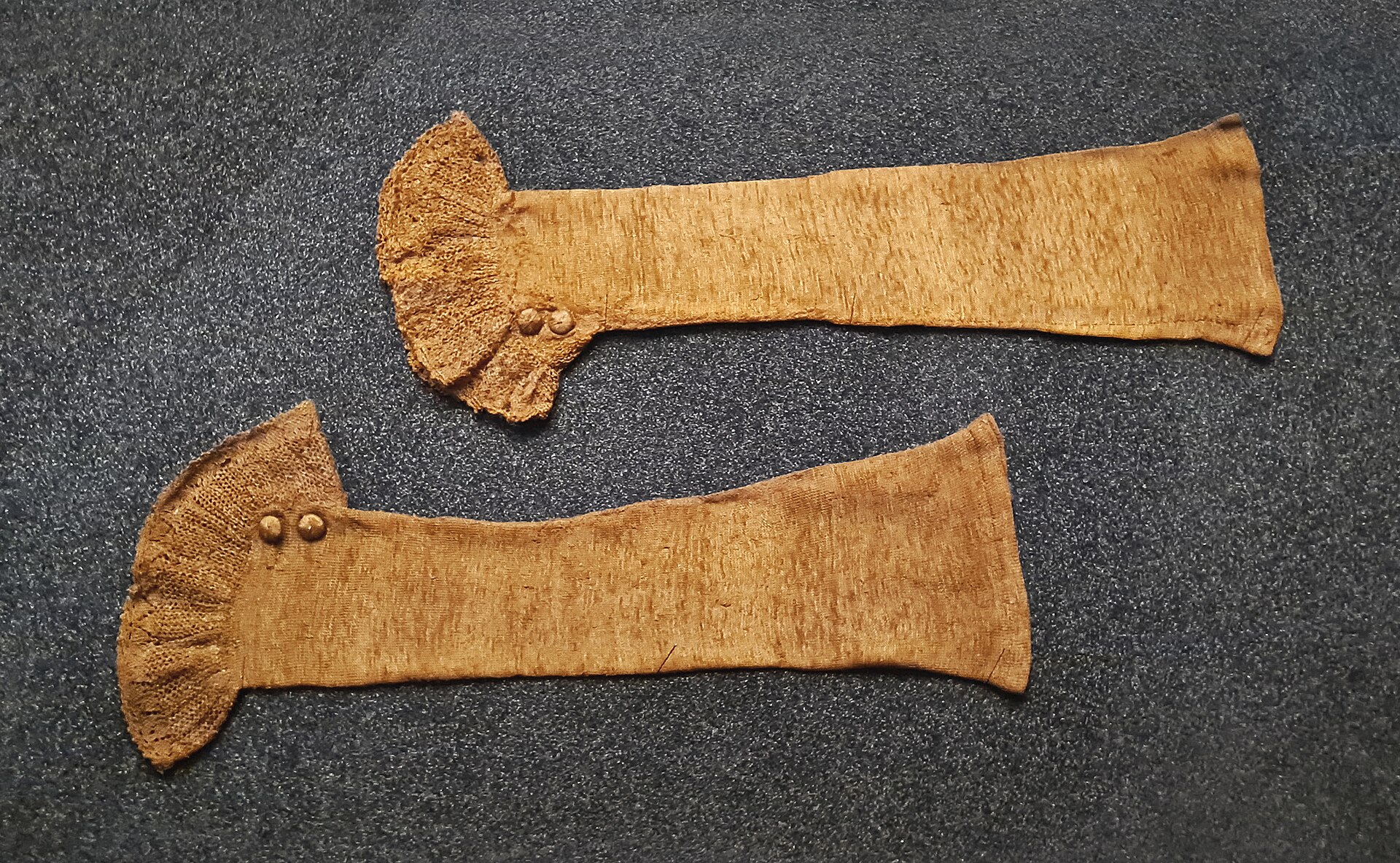
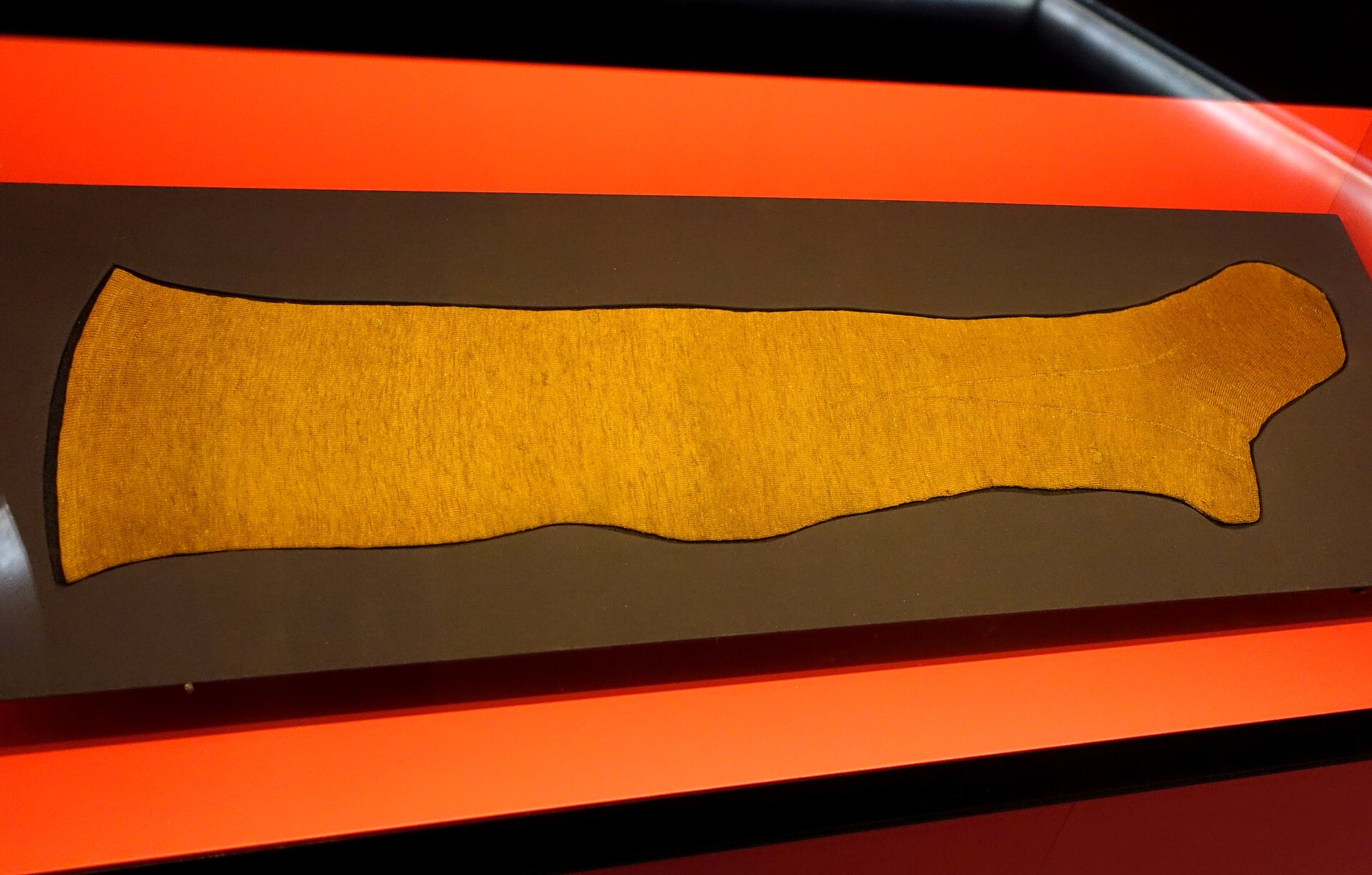
Pinna nobilis is the largest bivalve in the Mediterranean, a fan-shaped clam up to 1.2 metres long that anchors itself to the seabed with a tuft of golden-brown fibres called byssus. Those fibres — cleaned, combed, and spun — produce a fabric of remarkable properties: softer than cashmere, with a natural gold sheen that does not fade, impossible to dye because nothing bonds to its protein structure. It was documented by Aristotle and prized through antiquity, the Middle Ages, and into the 19th century, when the last workshops in the Gulf of Taranto and in Sardinia were still operating.
The craft was always a closely held secret, passed within families, never written down. It required knowledge of how to collect the byssus without killing the clam, how to clean and process fibres that stiffen on contact with air, how to spin them into thread finer than silk, and how to weave them in the particular way that preserved their lustre. As the industry shrank — to a handful of workshops, then to a single town in Sardinia, then to a handful of women — that knowledge narrowed to the point of extinction.
Today the situation is double: the craft is down to perhaps one or two living practitioners, and the source animal has been devastated. Since 2016, a haplosporidian parasite has killed an estimated 80–100% of Pinna nobilis populations across much of the Mediterranean in one of the fastest marine invertebrate collapses ever recorded; the species is now classified as critically endangered. The textile has not been commercially produced in over a century. What remains is a thread of tradition in the hands of one or two elderly women in Sardinia — and the knowledge, undocumented, that will end when they do.
Worth remembering
- The harvested byssus — golden-brown, slightly sticky threads up to 20 cm long, cut from the clam without killing it — had to be cleaned in lemon juice and fresh water, combed, spun, and woven in complete secrecy; the artisans of Sant'Antioco in Sardinia historically guarded the technique as a family secret, passing it mother to daughter.
- Ancient sources including Aristotle, Pliny, and later the Talmud mention byssus or its source animal; medieval accounts describe garments of extraordinary fineness and an irreproducible golden sheen — Chiara Vigo, the last known practitioner in Sardinia, has stated she would take the complete technique to her grave rather than commercialise it.
Gallery
Sources
- Sea silk is a rare fabric made from the long silky byssus filaments secreted by Pinna nobilis; the craft tradition of working byssus into textiles is nearly extinct, with only a handful of known practitioners remaining; the source animal Pinna nobilis has suffered a catastrophic population collapse since 2016 Wikipedia
- The byssus of Pinna nobilis has been used to make sea silk since antiquity; today the craft is critically endangered; Pinna nobilis, classified as critically endangered since 2019, experienced a mass mortality event of 80–100% in many Mediterranean areas from 2016 onward due to a haplosporidian parasite Smithsonian Magazine
A graveyard tradition: leave a stone to show you came, and remembered.