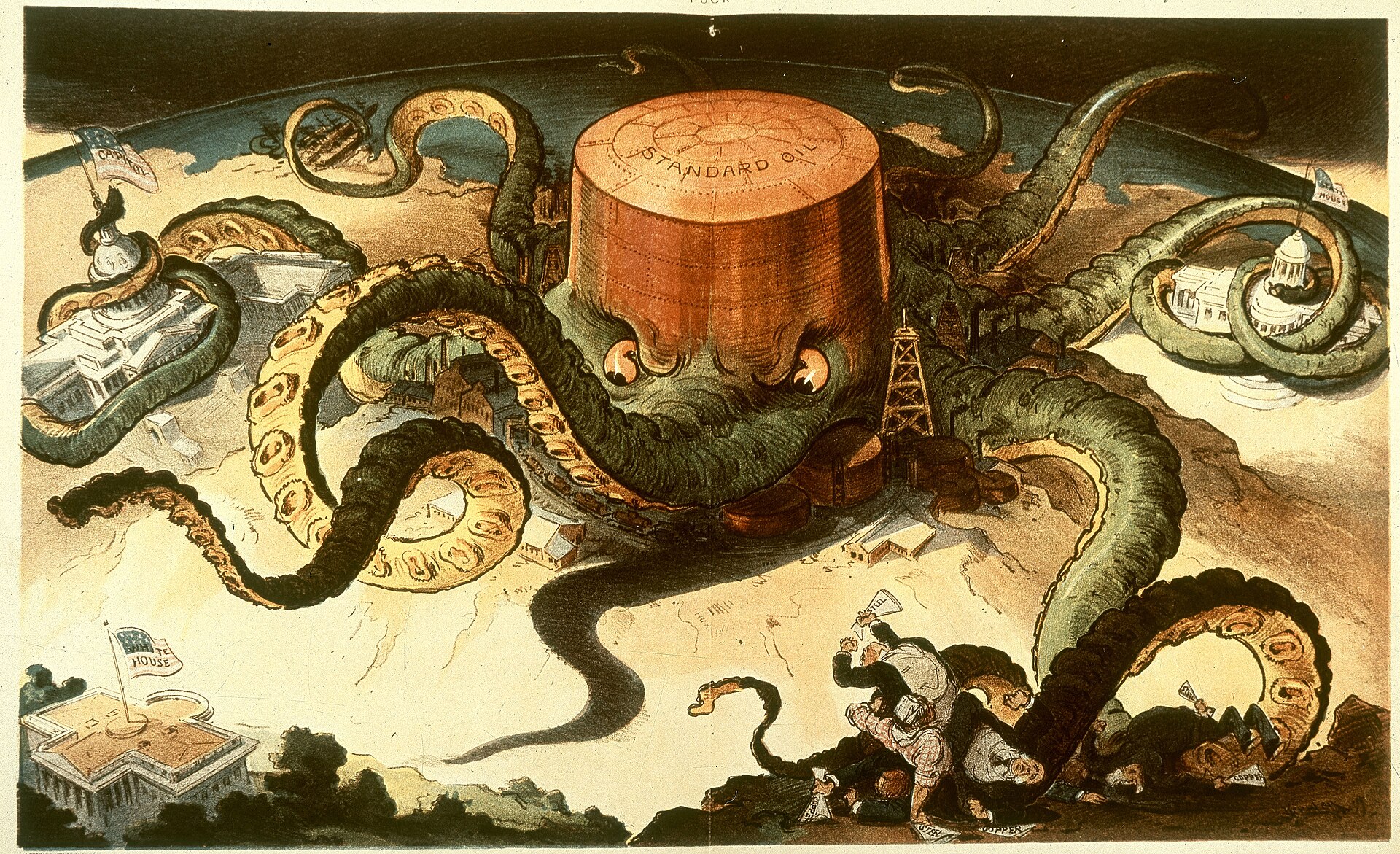
John D. Rockefeller's trust grew so total it controlled 90% of American refining — until the Supreme Court, under the Sherman Antitrust Act, split it into 34 pieces.
Born
1870 CE
Died
1911 CE
Lived
41 years
Dead for
115 yrs
At its peak
~90% of US oil refining at its height
Cause of death
Overreach
Replaced by
Exxon, Mobil, Chevron, Amoco, and other successor firms
The Obituary
John D. Rockefeller incorporated Standard Oil in Ohio in 1870 and built a monopoly through secret rebates, ruthless price wars, and the absorption of rivals. By the 1880s it refined around 90% of American oil. Its dominance triggered the muckraking era and the Sherman Antitrust Act. In 1911 the US Supreme Court ruled it an illegal monopoly and broke it into 34 separate companies, including the ancestors of Exxon, Mobil, and Chevron. Ironically, the split made Rockefeller’s holdings worth far more than the unified trust had been.
Worth remembering
At its peak it refined roughly 90% of all oil in the United States, making Rockefeller the richest man in modern history.
Ida Tarbell's 19-part investigation in McClure's Magazine helped turn public opinion and fuel the antitrust case against it.
Gallery
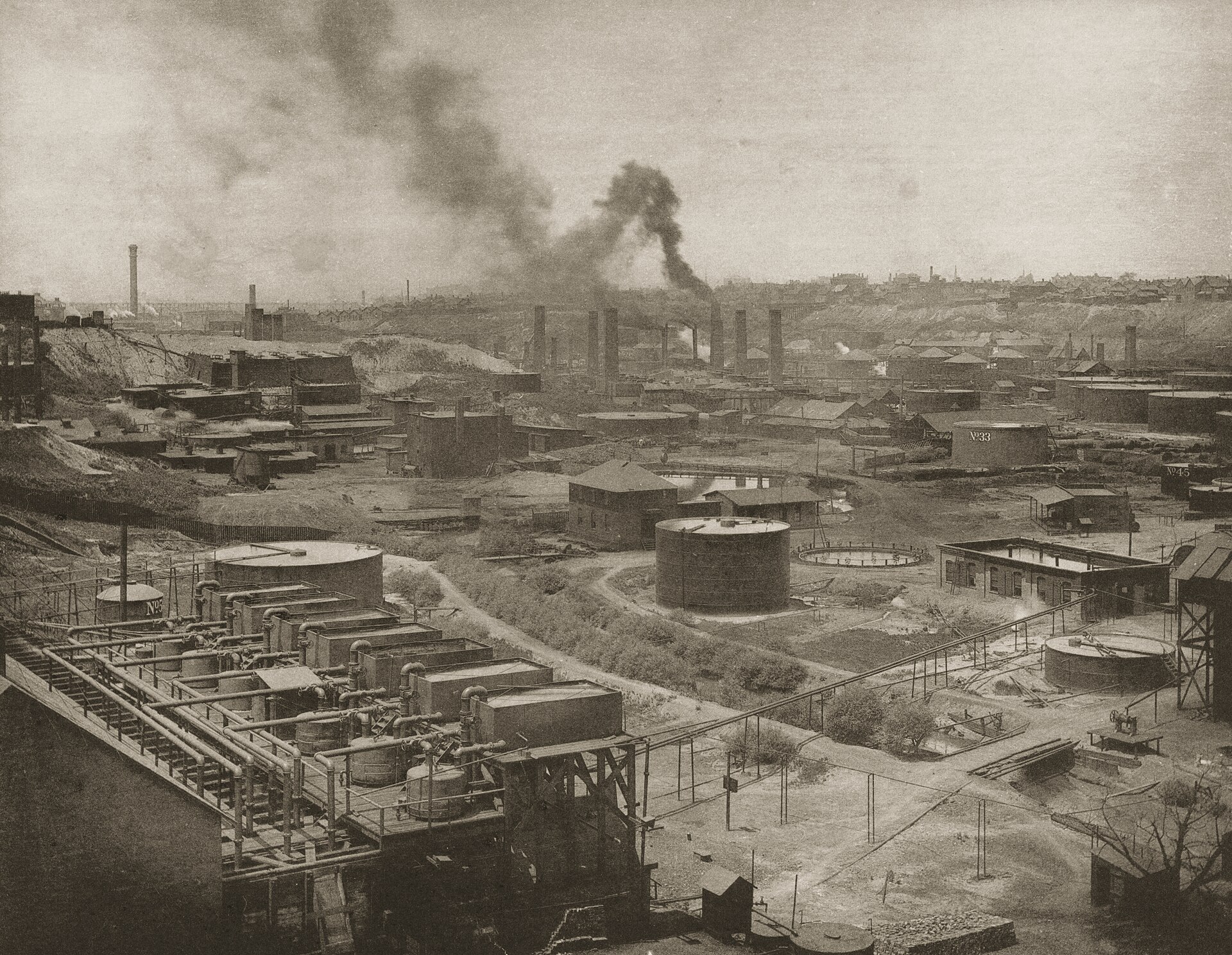
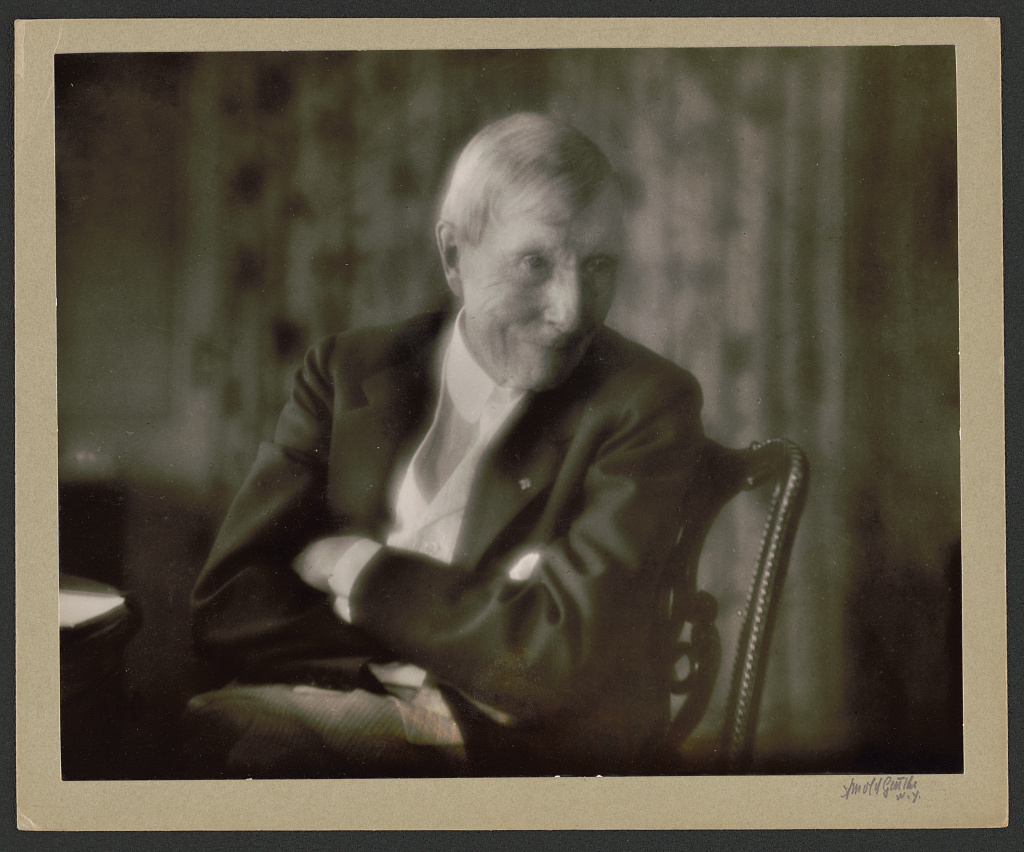
Standard Oil Company refinery on the flats, 1889Public domainPortrait photograph of John D. Rockefeller, founder of Standard Oil, 1918CC0
Watch
The Gilded Age (full documentary) — American Experience | PBS
Sources
Standard Oil was dissolved into 34 companies by the US Supreme Court in 1911 under the Sherman Antitrust Act Wikipedia
Standard Oil controlled about 90 percent of US oil refining at its peak Encyclopaedia Britannica
In May 1911 the U.S. Supreme Court found Standard Oil an illegal monopoly under the Sherman Antitrust Act and ordered it dissolved into separate companies, whose corporate descendants include ExxonMobil and Chevron. Supreme Court Historical Society
A graveyard tradition: leave a stone to show you came, and remembered.
Buried nearby — by shared fate or a neighbouring lifespan.