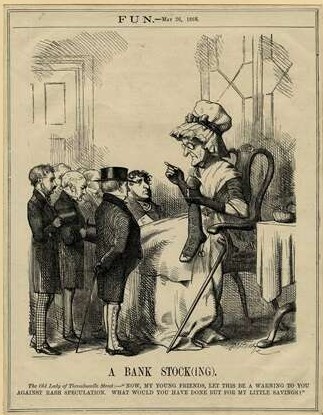
Founded in Norwich in 1800 and later run from 65 Lombard Street in London, Overend, Gurney and Company prospered for sixty years on a conservative trade: discounting short-dated commercial paper, the most liquid business in the City. In the late 1850s new managers abandoned that discipline, sinking the firm’s money into illiquid long-term bets on railways and shipping. By 1865 it held perhaps £4 million in assets against £11 million in liabilities — and rather than face the hole, it converted to a limited company and sold shares to the public at a premium, the prospectus concealing the truth.
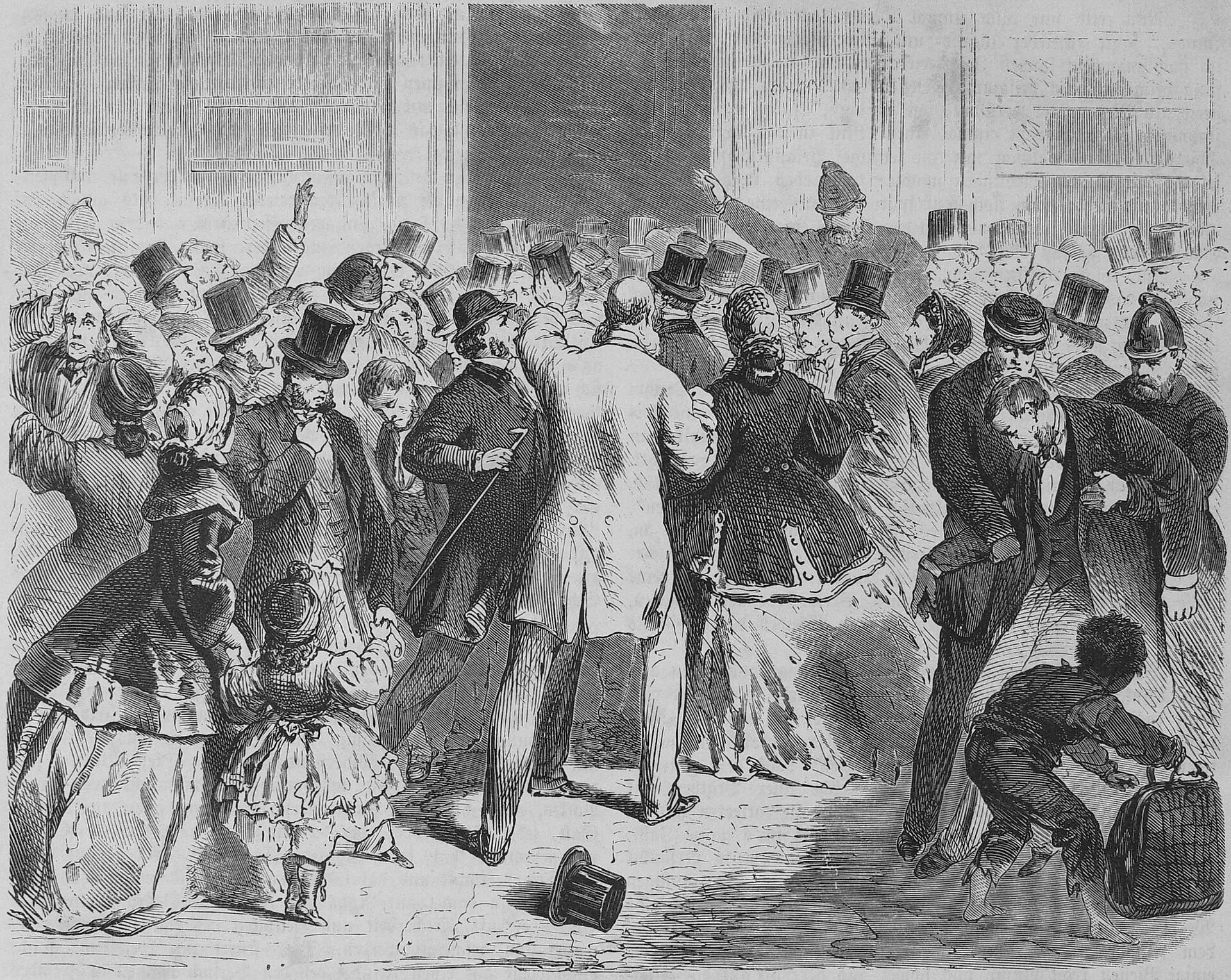
When credit tightened in early 1866 the firm could not meet its obligations. It suspended payments on 10 May — a day the City called Black Friday — and crowds gathered in Lombard Street the next morning as the panic spread. The Bank of England refused to rescue it; its own inspector had judged the firm “rotten,” insolvent rather than merely short of cash. To contain the wider damage the Bank suspended the 1844 Bank Charter Act and flooded the market with liquidity, an early act of lender-of-last-resort. The six directors were tried for fraud at the Old Bailey in 1869 and acquitted — the court finding their conduct catastrophically bad judgment, not crime.
Worth remembering
- For decades it was the greatest discounting house in the world, holding deposits equal to its three largest competitors combined and lending to other banks in the 1825 crisis — the original 'bankers' banker'.
- When it failed, the Bank of England's reserves halved to £3 million in a single day and the Bank Rate was held at 10% for three months as panic spread from London to Liverpool, Manchester and Bristol.
Gallery
Sources
- Founded in 1800, Overend Gurney collapsed on 10 May 1866 owing about £11 million and entered liquidation in June; more than 200 companies failed and the Bank Rate stood at 10% for three months Wikipedia
- A Bank of England inspector called the firm 'rotten'; its failure halved the Bank's reserves to £3 million in a day and forced the suspension of the 1844 Bank Charter Act Bank Underground (Bank of England staff blog)
A graveyard tradition: leave a stone to show you came, and remembered.