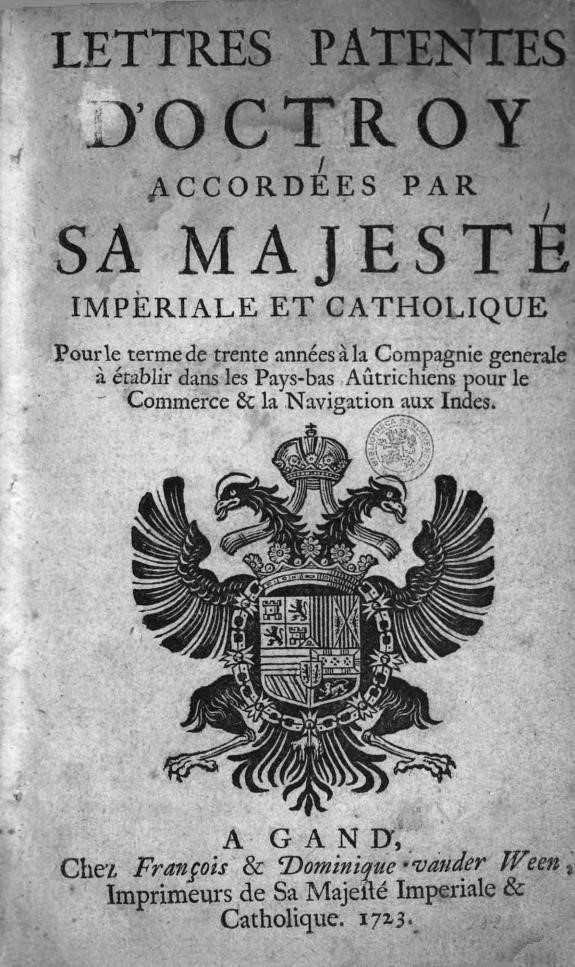
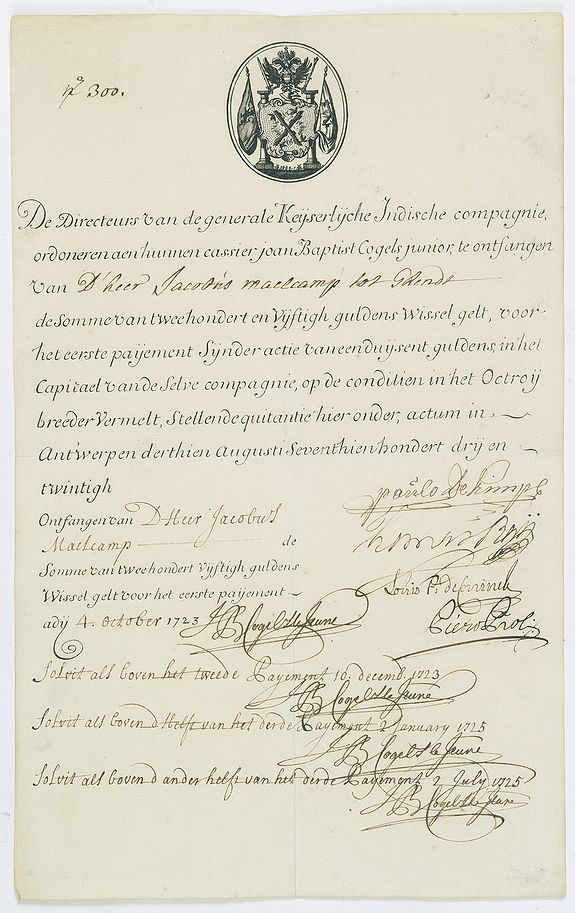
The merchants of Ostend, in the Austrian Netherlands, had been trading to China and India on their own account since 1713, and in 1722 Emperor Charles VI gave their activity a charter. Within four years the company was a real threat: it carried tea from Canton at a volume rivalling the British and Dutch giants and paid its shareholders a third of their money back in a single year. That success was the problem.
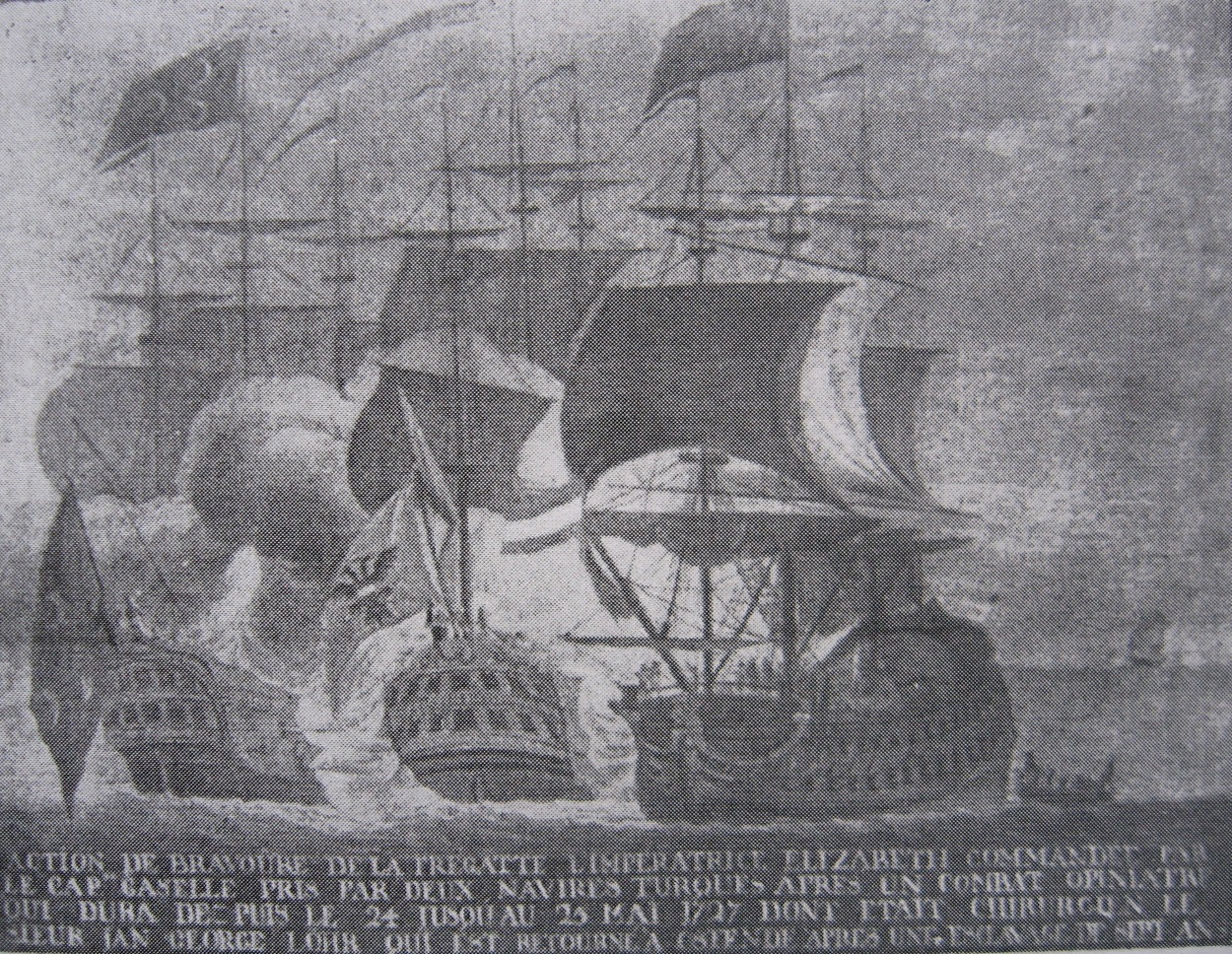
The British and Dutch East India Companies could not abide a third European competitor, and their governments turned the company into a bargaining chip. Charles VI badly needed the great powers to recognise the Pragmatic Sanction — the instrument guaranteeing that his daughter Maria Theresa could inherit the Habsburg lands. In 1727 he suspended the company’s charter for seven years as a down payment; in 1731 the Second Treaty of Vienna made its abolition permanent and explicit, the price of Anglo-Dutch support. The company ceased trading in 1734 and was wound up by 1737 — killed not by failure but by its own profitability, sacrificed so a daughter could keep a throne.
Worth remembering
- Before its charter, merchants from Ostend had already sent 34 ships to Asia between 1713 and 1723 and set up a trading post near Madras — the company simply formalised a trade that was already working.
- Between 1719 and 1728 it carried roughly 7 million pounds of tea from China to Europe, rivalling the volume of the British East India Company and paying shareholders a 33% dividend by 1726.
Gallery
Sources
- Chartered 19 December 1722, the company paid a 33% dividend by 1726 and was abolished by the Second Treaty of Vienna on 16 March 1731, ceasing trade in 1734 and winding up by 1737 Wikipedia
- Charles VI sacrificed the profitable Ostend Company to secure British and Dutch recognition of the Pragmatic Sanction guaranteeing his daughter's succession Encyclopedia.com
A graveyard tradition: leave a stone to show you came, and remembered.