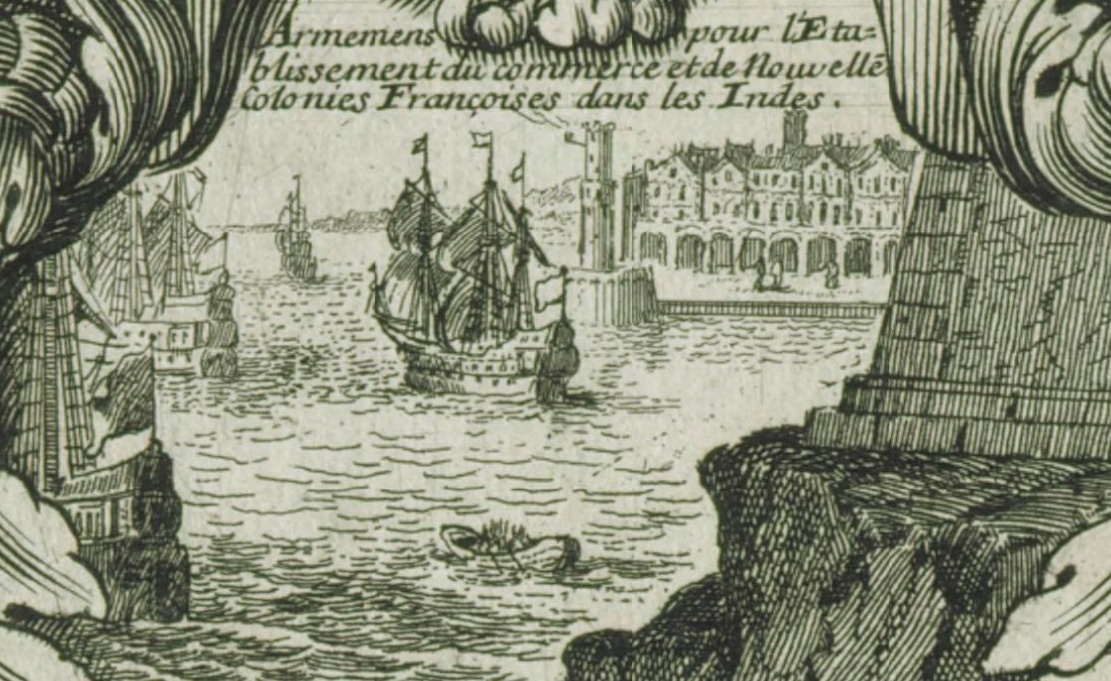
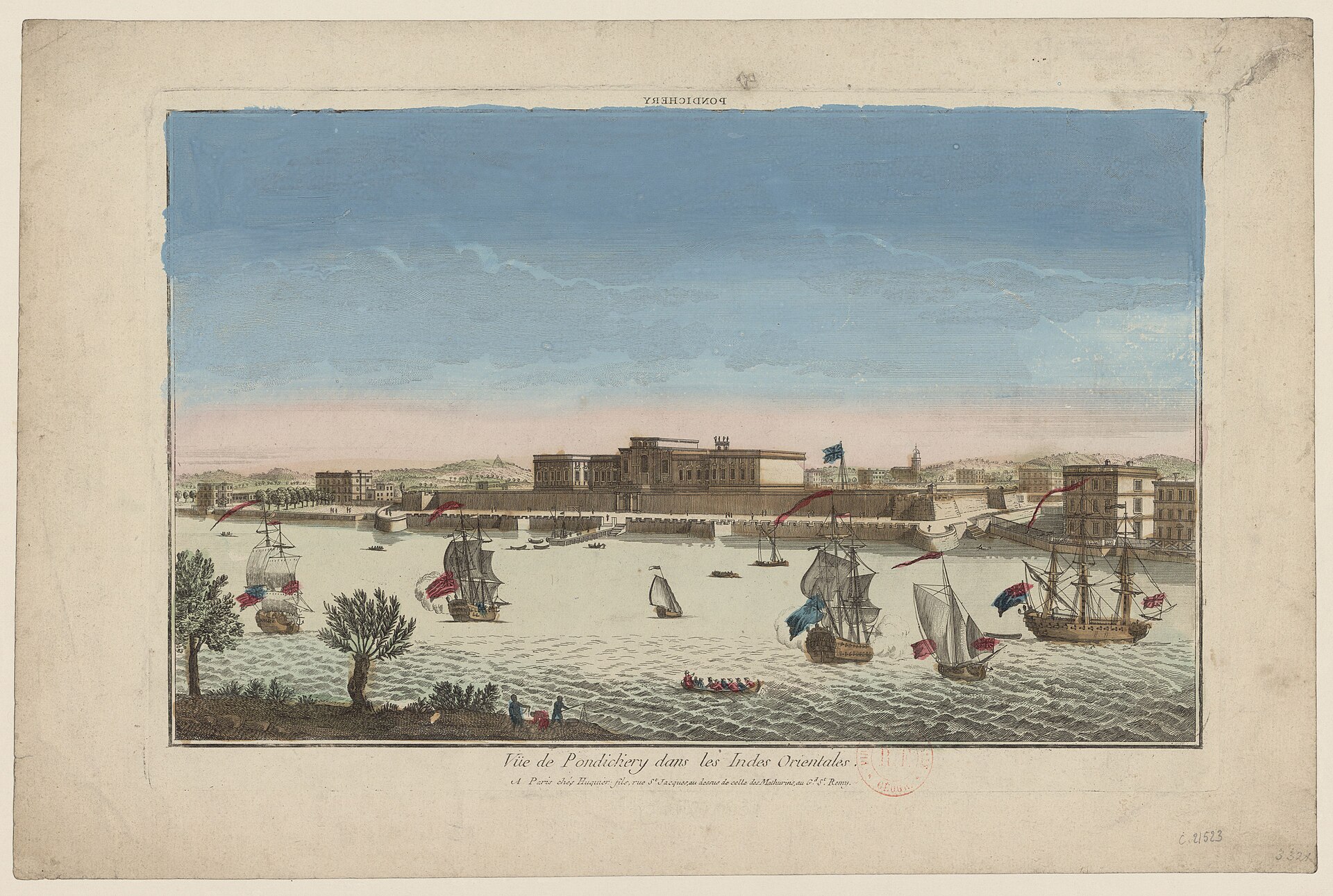
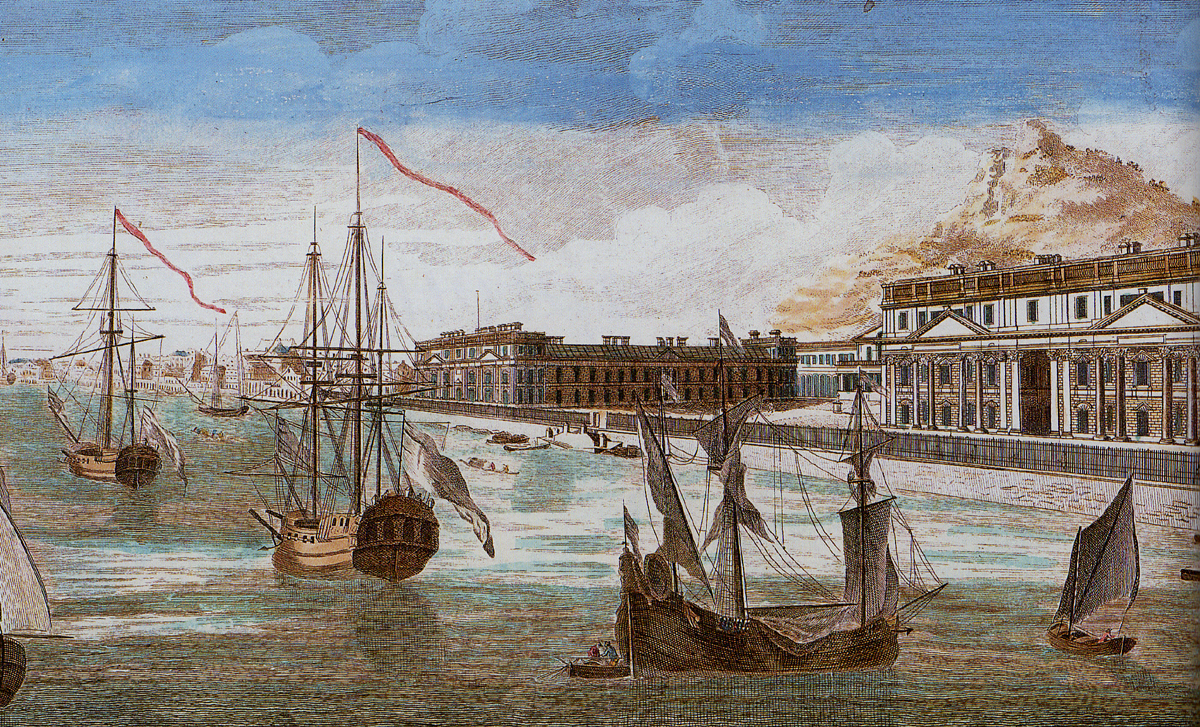
Colbert built the Compagnie des Indes orientales in 1664 as a state-backed instrument to challenge the Dutch and English in Asia, and for 130 years it lurched between ambition and insolvency. It went bankrupt, was restructured, was swallowed in 1719 by John Law’s notorious financial scheme and dragged down in the Mississippi Bubble, then rebuilt again. Its best years came in the 1740s and 1750s under Joseph Dupleix, when it controlled Pondicherry and Chandernagore and its Indian trade reached perhaps half the volume of its British rival — before the Seven Years’ War stripped France of nearly all its possessions on the subcontinent.
Paris suspended the trade monopoly in 1769, and the Revolution finished the institution. The National Assembly abolished the monopoly in 1790, and the company could not survive open competition and political chaos. Its death was a fittingly modern scandal: deputies of the National Convention, the playwright Fabre d’Églantine among them, were caught having falsified the 1793 decree liquidating the company in order to profit from its shares. They were arrested during the Terror and guillotined in April 1794 alongside Danton’s faction. The company was wound up the same year, its long institutional life ending as evidence in a revolutionary trial.
Worth remembering
- Louis XIV personally put up 3 million of the company's 15 million livres of founding capital, yet it could rarely send more than five ships a year against the 10–25 the Dutch dispatched.
- In 1746 company forces under La Bourdonnais captured Madras from the British East India Company — the only time a French force took a major British settlement in India — though it was handed back two years later by treaty.
Gallery
Sources
- Founded by Louis XIV and Colbert in 1664, absorbed into John Law's company in 1719; its monopoly was suspended in 1769, abolished in 1790, and the company was liquidated in 1794 Wikipedia
- Under Dupleix the company's Indian trade reached roughly half that of the British East India Company and it briefly captured Madras in 1746, before losing its possessions after the Seven Years' War Encyclopaedia Britannica
A graveyard tradition: leave a stone to show you came, and remembered.