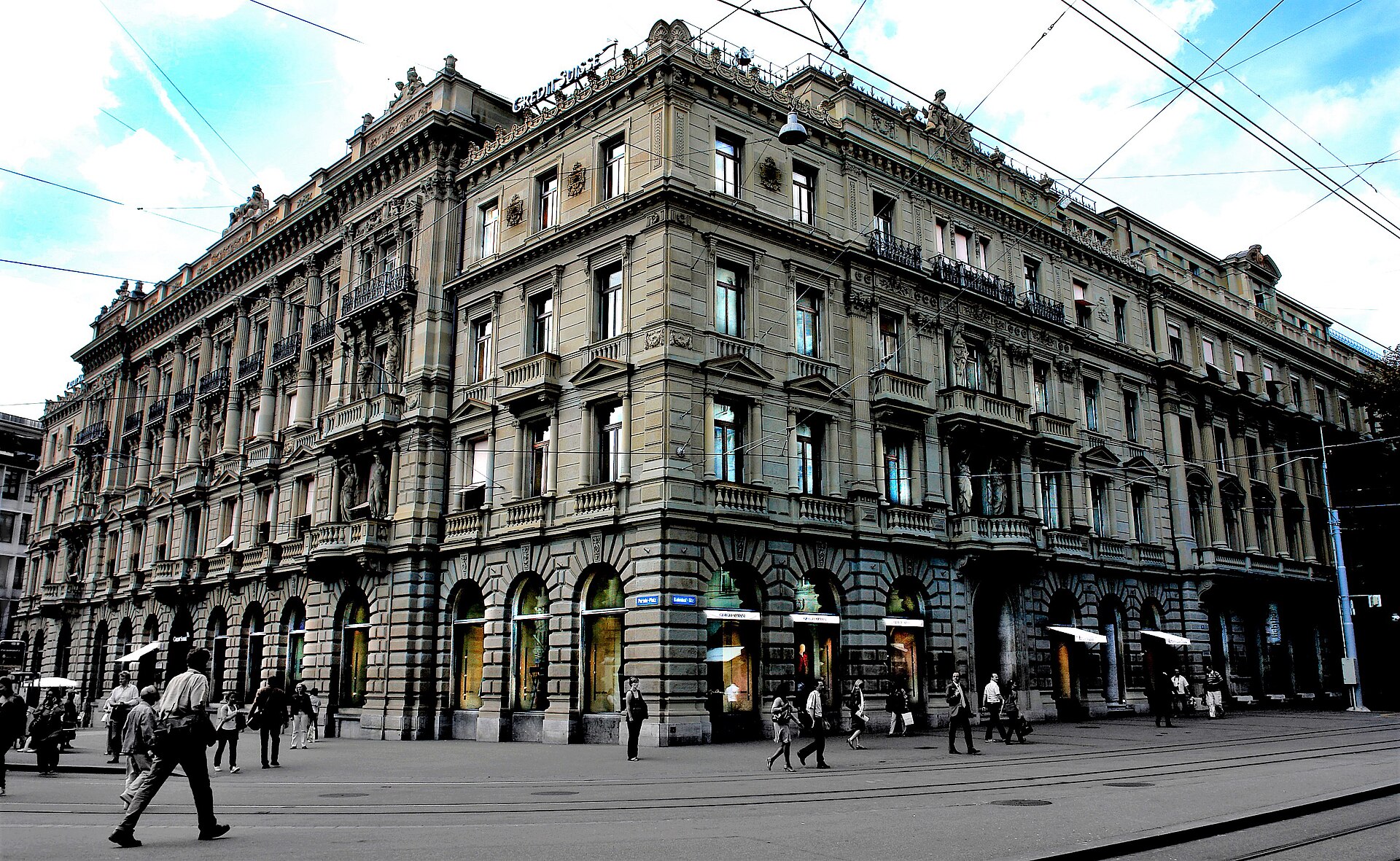
Credit Suisse was founded in Zurich in 1856, as Schweizerische Kreditanstalt, by the railway magnate and politician Alfred Escher, who wanted a Swiss institution to fund Swiss industrialization instead of leaving the country’s railways dependent on French banks. It worked: within a year the new bank drew roughly a quarter of its revenue from financing the Swiss Northeastern Railway, and by 1871 it was already the largest bank in Switzerland. It went on to help finance the Gotthard railway, completed in 1882, and to help build the Swiss currency and monetary system. For more than a century it was one of Switzerland’s “Big Three” banks, alongside UBS and Swiss Bank Corporation, until the latter two merged in 1998.
By 2007 Credit Suisse’s balance sheet had grown to roughly $1 trillion, and regulators later designated it a Global Systemically Important Bank — one of about 30 institutions worldwide whose failure was judged capable of triggering a global financial crisis, a category invented specifically because of what happened to Lehman Brothers in 2008. Credit Suisse spent its last years proving the designation’s point in reverse: a $5.5 billion loss on the collapse of Archegos Capital in 2021, roughly $10 billion in client money tied up in the collapse of Greensill Capital the same year, a 2022 criminal conviction for failing to prevent money laundering for a Bulgarian cocaine-trafficking ring (later overturned on appeal after the accused employee died, itself now under further appeal), and a steady drumbeat of downgrades and leadership churn. In the fourth quarter of 2022 alone, clients pulled CHF 110.5 billion out of the bank on rumors about its solvency.
The end came fast once it came. In March 2023, after its largest shareholder ruled out further investment, Credit Suisse’s share price collapsed within days. Over the weekend of 18-19 March, the Swiss government, the financial regulator FINMA, and the Swiss National Bank forced an emergency merger with UBS to stop the panic from spreading through the global banking system — the first time a G-SIB had failed and been rescued since the post-2008 “too big to fail” rules were written. About $17 billion in the bank’s AT1 bonds were written to zero, while shareholders kept some value, an inversion of the usual order that bondholders are still fighting in court. UBS’s takeover became legally final on 31 May 2024, when Credit Suisse AG was struck from Zurich’s commercial register and stopped existing as a legal entity; UBS has said the Credit Suisse brand itself will be phased out entirely. A bank built to make sure Switzerland didn’t have to depend on foreign capital ended up folded into its last domestic rival, 167 years and one very bad decade later.
Worth remembering
- It financed the 1882 Gotthard railway tunnel and, in its first year of business, drew about a quarter of its revenue from financing the Swiss Northeastern Railway.
- For more than a century it stood alongside UBS and Swiss Bank Corporation as one of Switzerland's 'Big Three' banks, a club that shrank to two when Swiss Bank Corporation merged into UBS in 1998.
The people
-
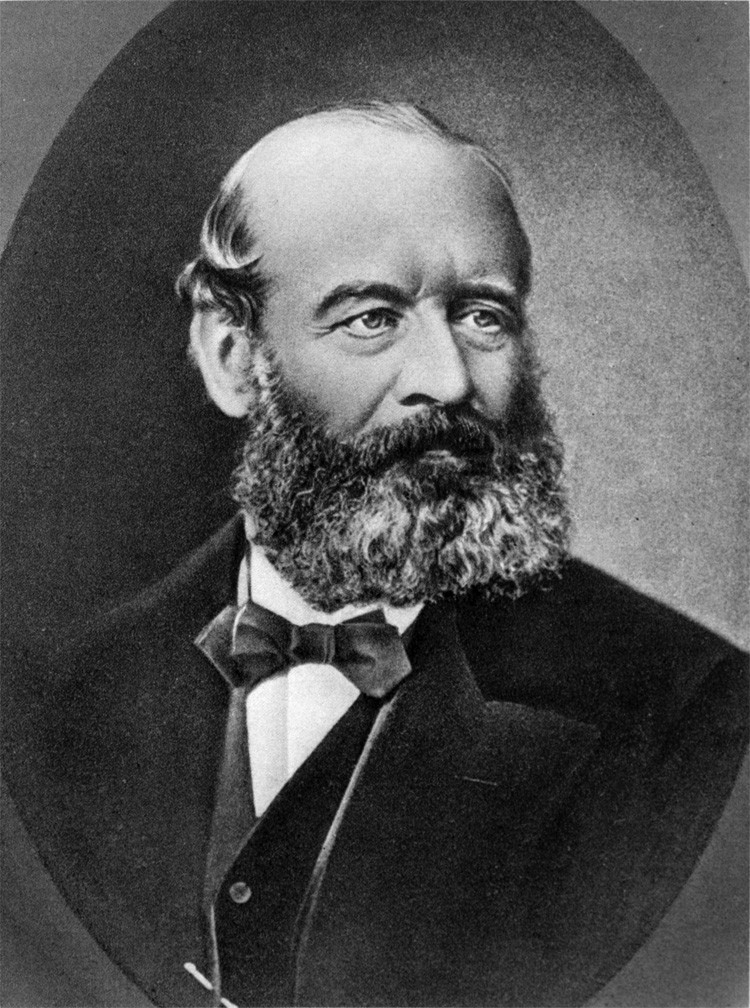
Alfred Escher — Founder, 1819–1882
Zurich railway magnate and politician who founded Schweizerische Kreditanstalt in 1856 to fund Swiss industrialization independent of French capital.
Gallery

Further reading
Sources
- Credit Suisse was founded on 5 July 1856 by Alfred Escher, Albert Dufour-Féronce and Gustaf Harkort as Schweizerische Kreditanstalt, to finance Swiss railway construction domestically rather than through French banks. Wikipedia
- About 25% of the bank's revenue in its first year came from financing the Swiss Northeastern Railway, and it went on to help finance the Gotthard railway, completed in 1882. Wikipedia
- Credit Suisse, UBS (via its predecessor Union Bank of Switzerland) and Swiss Bank Corporation formed Switzerland's 'Big Three' banks for over a century, until Swiss Bank Corporation merged into UBS in 1998. Wikipedia
- Credit Suisse's total assets peaked at roughly CHF 1.36 trillion (about $1 trillion) in 2007 before shrinking to CHF 531 billion by the end of 2022; it was designated a Global Systemically Important Bank by the Financial Stability Board, a category created after Lehman Brothers' 2008 collapse. Wikipedia
- Credit Suisse lost approximately $5.5 billion from the March 2021 collapse of Archegos Capital Management, and separately had about $10 billion in client supply-chain finance funds tied to Greensill Capital, which also collapsed in 2021. CNN Business
- In June 2022 a Swiss court convicted Credit Suisse of failing to prevent money laundering for a Bulgarian cocaine-trafficking ring, the first criminal conviction of a major Swiss bank; the conviction was later overturned on appeal in November 2024 on procedural grounds after the accused ex-employee died, and Swiss federal prosecutors appealed that acquittal to the Supreme Court in 2025. Al Jazeera
- In the fourth quarter of 2022, rumors about Credit Suisse's solvency triggered CHF 110.5 billion in net client outflows in three months, following years of scandal, losses and rating downgrades. CNBC
- On 19 March 2023, after the Saudi National Bank ruled out further investment and share prices collapsed, the Swiss government, FINMA and the Swiss National Bank forced Credit Suisse into an emergency takeover by UBS, with FINMA writing down about $17 billion of Credit Suisse AT1 bonds to zero while shareholders retained some value — an unusual reversal of the normal loss hierarchy. FINMA
- UBS Group AG completed the legal merger of UBS AG and Credit Suisse AG on 31 May 2024; Credit Suisse AG was deregistered from the Commercial Register of the Canton of Zurich and ceased to exist as a separate legal entity, with UBS Switzerland AG and Credit Suisse (Schweiz) AG merging on 1 July 2024. UBS
A graveyard tradition: leave a stone to show you came, and remembered.