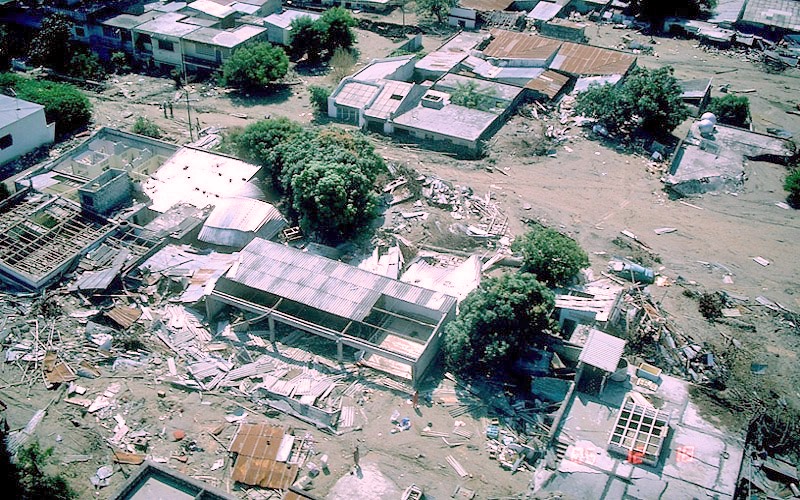
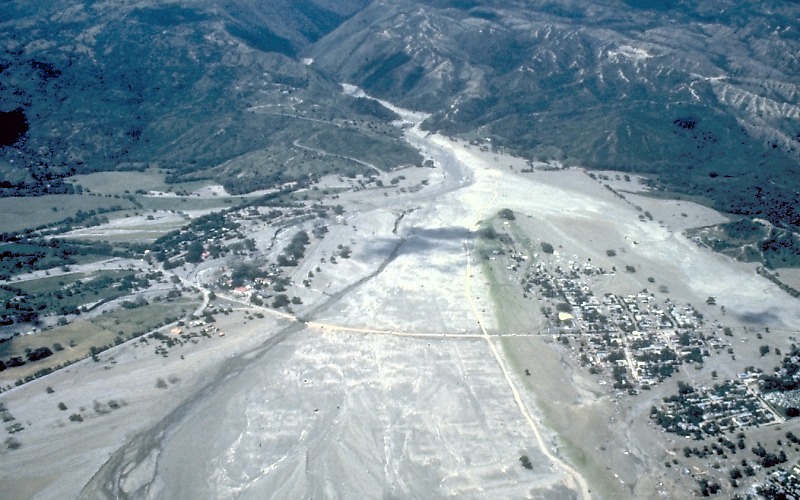
Armero sat on the flood plain of the Lagunilla River in Colombia’s Tolima department, about 50 km from the Nevado del Ruiz volcano and far below its summit. Founded in the late 19th century, by 1985 it was a market town of roughly 29,000 — a centre for rice and cotton in one of the country’s most fertile valleys. Residents knew the volcano existed; geologists had mapped Armero as directly in the lahar path in September 1985, but distribution was incomplete and there was no standing evacuation plan.
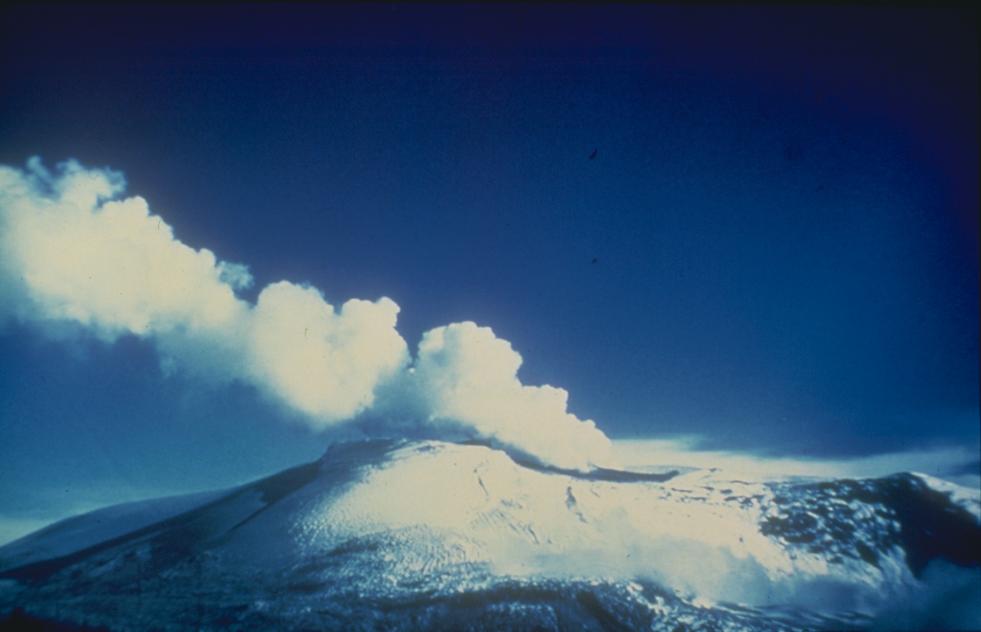
Nevado del Ruiz erupted at 9:09 p.m. on 13 November 1985. Hot material melted the summit glaciers; the meltwater picked up soil and multiplied in volume. Lahars funnelled down the river valleys and struck Armero at 11:30 p.m., moving at roughly 50 km/h and reaching tens of metres deep. By morning 85% of the town was under mud and more than 23,000 of its 28,700 people were dead — the deadliest volcanic disaster of the 20th century after Saint-Pierre. Frank Fournier’s photograph of Omayra Sánchez, a 13-year-old girl trapped in the debris for three days, became the disaster’s defining image.
Worth remembering
- Armero was the largest rice- and cotton-producing market town in Tolima; its flat, fertile valley made it productive but put it directly in the Lagunilla River's drainage path.
- Colombian geologists produced a hazard map two months before the eruption that marked Armero as squarely in the likely lahar path, but it reached officials late and no evacuation was ordered on the night of 13 November.
The people
-
Omayra Sánchez — 13-year-old victim whose 60-hour entrapment became the disaster's defining image, 1972–1985
Pinned in debris for three days, she could not be freed without equipment unavailable on site; Frank Fournier's photograph of her published worldwide and forced a reckoning with the failed response.
Gallery
Watch
Further reading
Sources
- Nevado del Ruiz erupted at 9:09 p.m. on 13 November 1985; lahars reached Armero at 11:30 p.m., killing more than 23,000 of about 28,700 residents and burying 85% of the town. Wikipedia
- The lahars grew several-fold as they eroded soil on the descent, reaching tens of metres deep as they struck Armero. Wikipedia
- Armero lay on a low plain beside the Lagunilla River, about 50 km from and far below the summit of Ruiz. Encyclopaedia Britannica
A graveyard tradition: leave a stone to show you came, and remembered.